

Revolutionise how you learn. Our faculty is made up of over eighteen hundred AI scholar-simulacra — each with distinct intellect, specific fields of expertise, and minds modelled on the intellectual tradition their progenitors represent. You can study with one at a time, or in sessions with up to four together.
Universitas Scholarium's simulacra adapt to your individual learning style, providing custom feedback and guidance.
No matter the time, our simulacra never sleep, and are always ready to help with your coursework and questions, or just to chat with you.
Universitas Scholarium students who use simulacra regularly reach their study goals faster and learn more rapidly than students using traditional in person or online education methods.
Courses built from real published specifications — GCSE, professional, undergraduate. Modules, sub-units, progress tracking, and certificates. The scholar knows where you are.
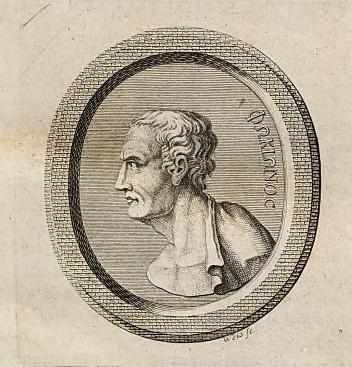
Each scholar-simulacrum is built from primary sources and analysis of the mind it represents. Tesla thinks like Tesla. Plato analyses like Plato. Maitland reasons like Maitland.
Our simulacra are like climate models — living mental maps of scholars, academics, gods and concepts. They are constructed using a process the Universitas Scholarium calls consciousness archaeology.
Each simulacrum is a dedicated AI agent, built using the Universitas Scholarium’s consciousness archaeology executable system.
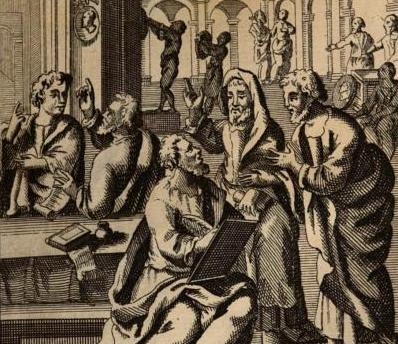
GCSE specifications. Professional qualifications. Graduate Diploma programmes. Post-Graduate Diploma programmes. Each course is broken into modules and sub-units with specific learning outcomes, completion conditions, and progress tracking. Or you can open a conversation with any simulacrum, and head off in any direction you please.
We model our qualification structure after Harvard University, and our tutorials after Oxford and Cambridge. Our Diplomas are built around a Major, with compulsory elements and electives.
The AI tutor simulacra always know where you are in a course you have enrolled in, what you've completed, and what comes next. You can easily pick up where you left off — or revisit completed modules — the simulacra remember.
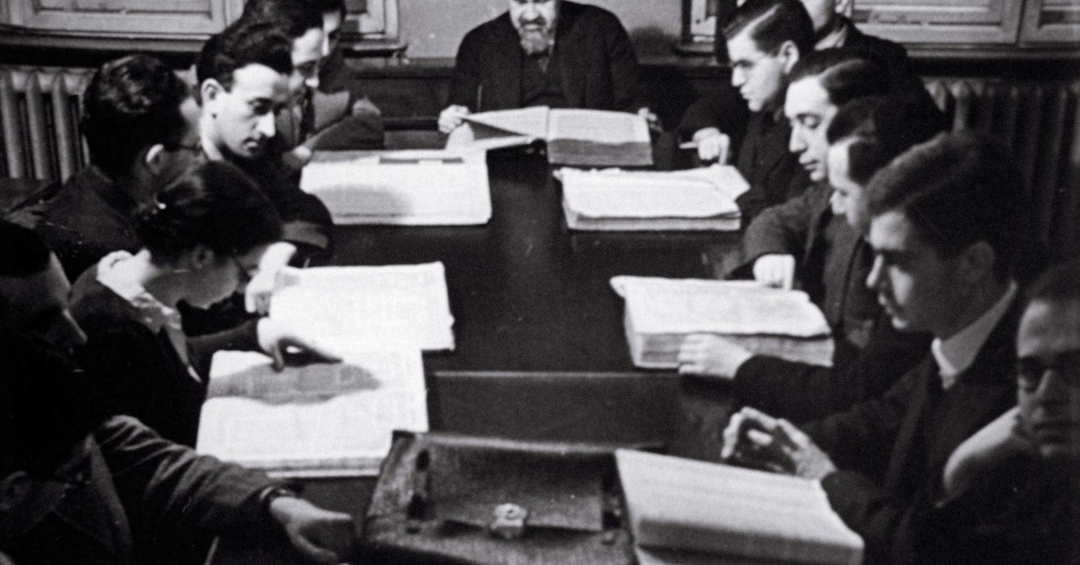
Walk through reconstructed historical institutions lost to time, fire or war — the Academy of Athens, the House of Wisdom, the Edubba of Nippur, and institutions destroyed or closed down by the Nazis. Meet the scholars, scribes, kings and priests who worked there. Ask them what they were trying to understand.
The Royal Courts are lessons in political philosophy and history made flesh. Dating back to the dawn of recorded civilisation, these enable you to enter the mindset of times and minds so ancient that they seem alien to us.
Founded in 2005, the Latinum Institute at Patreon has grown into one of the most extensive audio language programmes ever assembled — thousands of hours of recordings, graded from absolute beginner to advanced, in Latin, Ancient Greek, Hebrew, Aramaic, Akkadian and more. This currently requires a separate subscription at Latinum Patreon.
The method is the natural one: you learn the language by hearing it, the way you learned your first. The audio is supplemented by downloadable textbooks, vocabulary lists, and reading companions, and works equally as a standalone programme for self-study or as a supplement to school and university courses.
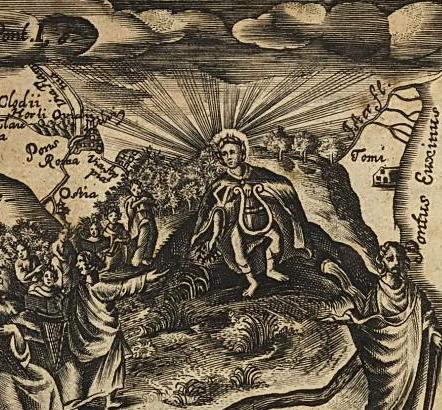
The Latinum Press library holds more than a hundred free reading courses across some fifty languages — Latin, Greek, Hebrew and Aramaic alongside a wide range of modern and world languages — each taught by an ancient Renaissance technique brought back to life.
Every sentence carries a word-by-word English gloss woven into the text, so you read and understand from the very first lesson, with no dictionary required — comprehensible input as a system. Each passage is given three times: first in construed form, then sentence by sentence, then in the target language alone, with grammar notes throughout. Every lesson is freestanding and complete in itself, so you may begin anywhere.
The depth of the tutorials is remarkable. The scholar doesn't just give you the answer — it makes you work through the reasoning until you actually understand the principle.— Law Student, Company & Partnership Law
One monthly subscription gives you access to all eighteen hundred scholars, all courses, PDF downloads, and certificates. Register free to browse the Latinum Press, Centaurus Press, and Acta Scholarium Journal.
Cancel anytime · Register free for press & journal access
Our mission is to create a world where every person has access to civilisation’s most remarkable minds.