

Abecedaria Press · Memorising for Latin
Part Six
Every Latin noun has a gender. It is feminine, masculine or neuter. You need to know the gender of a noun, because adjectives and other words must agree with it.
In this book we always give the genders in this order: feminine, masculine, neuter. Most grammar books put the masculine first. We put the feminine first, because then the masculine and the neuter stand side by side, and you will see in Book Two how closely they are related.
Very often the ending tells you the gender. Most nouns in -a are feminine, like puella. Most nouns in -us are masculine, like dominus. But not always. Some nouns look feminine, but they are masculine. Some look masculine, but they are feminine. And in the third declension the nominative often gives you no help at all. So how can you find the true gender of a noun? There is a simple method: look at its diminutive.
A diminutive is a "little" form of a noun. In English we say duck and duckling, book and booklet. Latin makes diminutives very often, by adding these endings to the stem of the noun:
For example, fīlius (son in English) becomes fīliolus (little son in English). Even the word puella (girl in English) is an old diminutive, made from puer (boy in English).
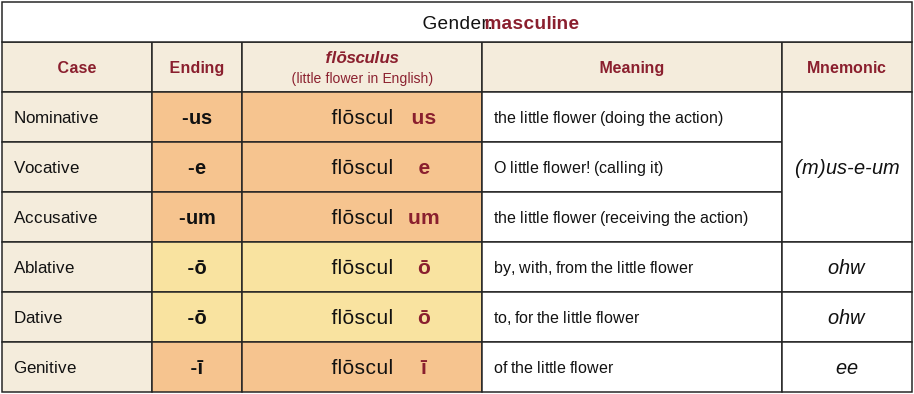
A diminutive is always a noun of the first or second declension, so you already know its endings from the rhymes. And its ending shows its gender very clearly:
Here is the key: a diminutive almost always keeps the gender of the noun it comes from. So if a noun's own ending does not show its true gender clearly, look at its diminutive. The diminutive shows it.
Diminutives were very common in spoken Latin, much less so in written Latin. So many diminutives are not found in the Roman books that have come down to us. But we know that they existed. French soleil (sun in English), for example, comes from a spoken Latin sōliculus, "little sun", a word that no Roman author wrote down. In the same way, Greeks today use diminutives all the time in everyday spoken Greek, but you do not find them in the formal written language.
So once you know the rules for making a diminutive, you may freely make one yourself, even for a noun that has no diminutive in Roman literature. We are using diminutives to help us remember the gender of a noun, and for this, your own diminutive works just as well.
The rules are simple:
When you learn a new noun and its gender, make its diminutive and say it once or twice. The diminutive will hold the gender for you.
There is a second gain. If you make the diminutive part of your practice whenever you learn a new noun, you will be repeating the noun twice: once in its own form, and once as its diminutive. This makes it far more likely that you will remember it. And this is a good thing.
Here is the noun nauta (sailor in English). It is first declension, like puella, and it looks feminine. But it is masculine.
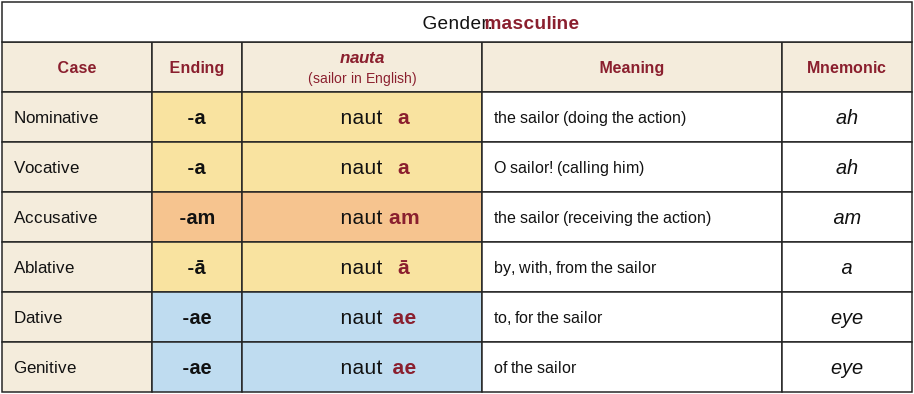
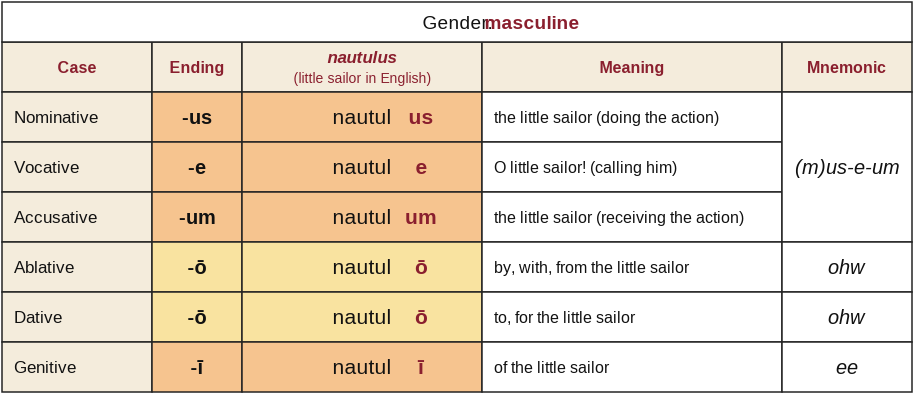
No Roman book gives us a diminutive of nauta, so we make one by the rules. Nauta is first declension, so we add -ulus to the stem naut-, because the noun is masculine: nautulus (little sailor in English). Now the ending -us tells you clearly that nauta is masculine.
There is also a related word that the Romans used: nauclērus (ship's master in English). It was borrowed from Greek, and it is not a diminutive. But it too is masculine, and its ending -us gives you a second reminder that nauta is masculine.
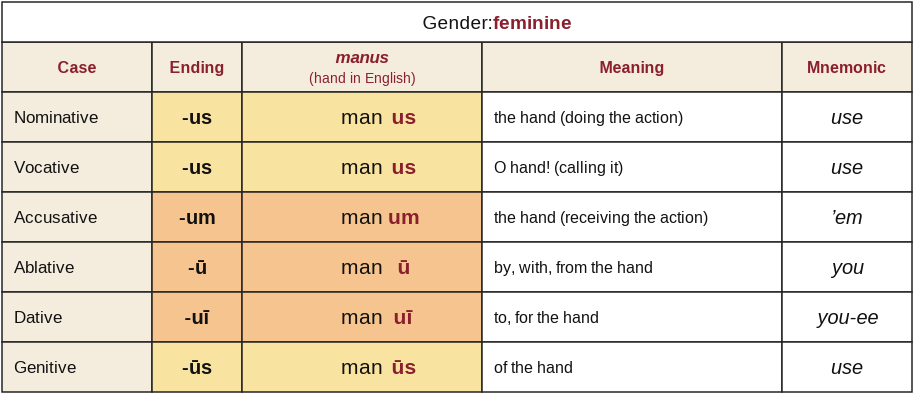
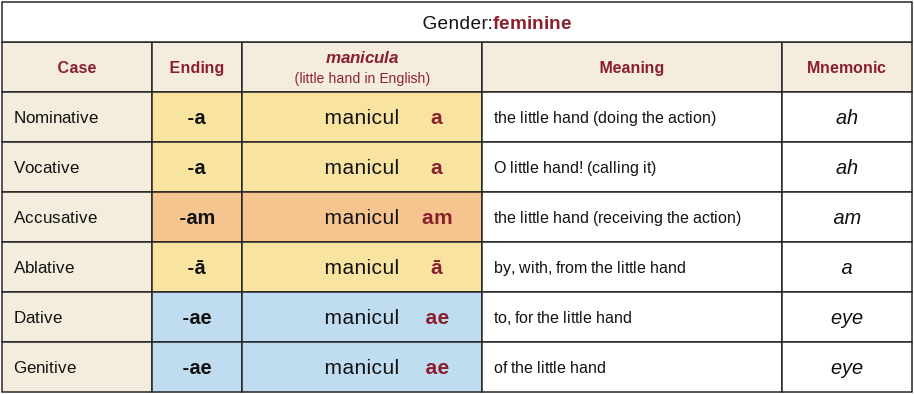
Manus (hand in English) is fourth declension. It ends in -us, so it looks masculine. But it is feminine. Its diminutive, manicula (little hand in English), ends in -a, and so it shows that manus is feminine.
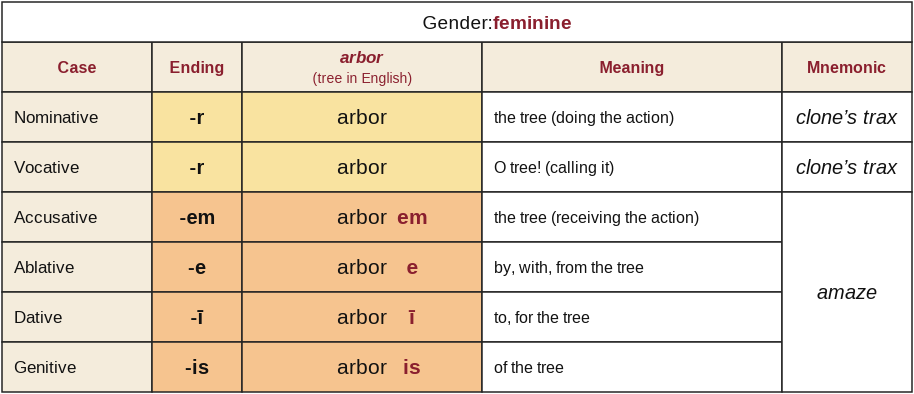
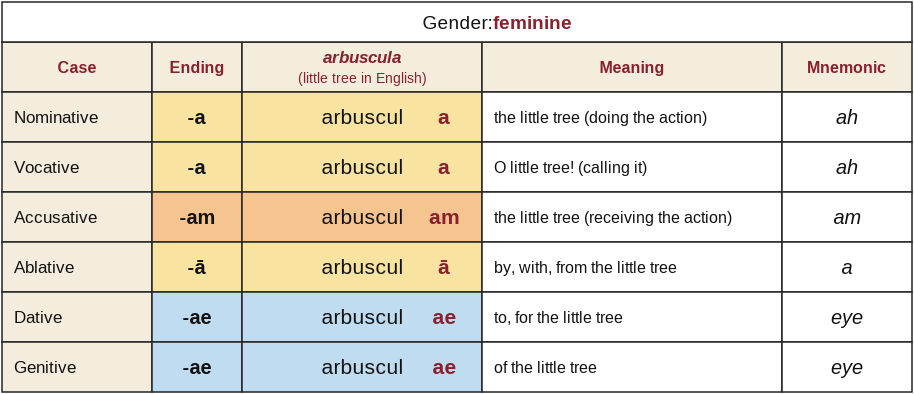
Arbor (tree in English) is third declension. Most nouns in -or are masculine, like ōrātor (speaker in English), so arbor looks masculine. But it is feminine. Its diminutive, arbuscula (little tree in English), shows this.
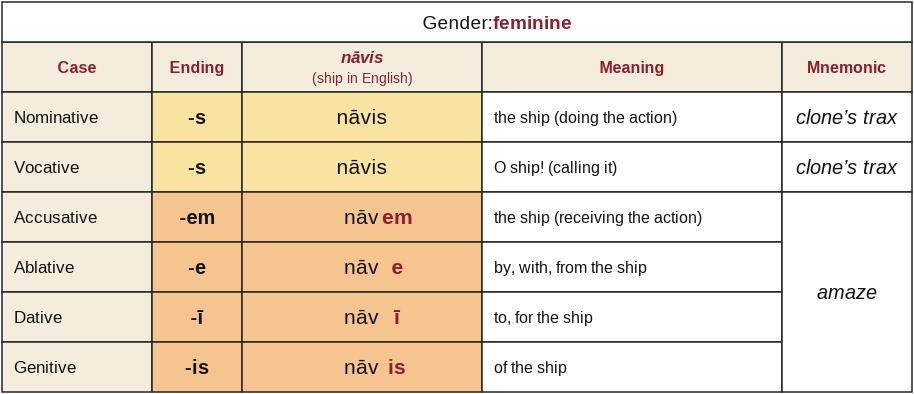
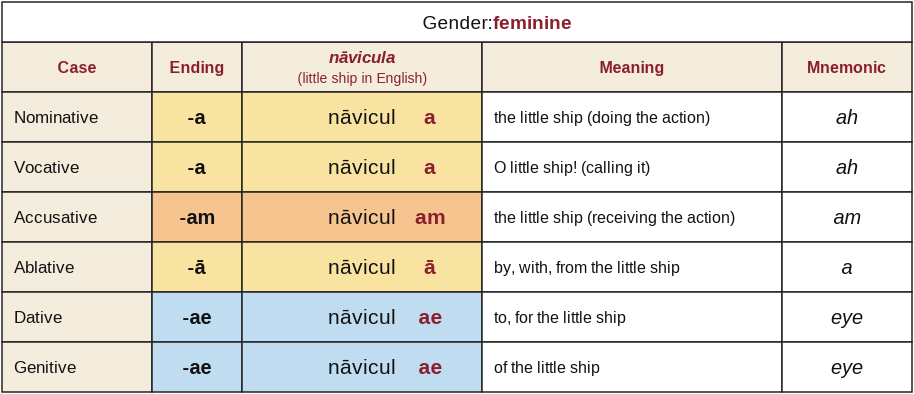
Nāvis (ship in English) ends in -is, like cīvis (citizen in English), which is usually masculine. So from its nominative you cannot tell the gender of nāvis. Its diminutive, nāvicula (little ship in English), shows that it is feminine. (The ablative of nāvis can also be nāvī.)
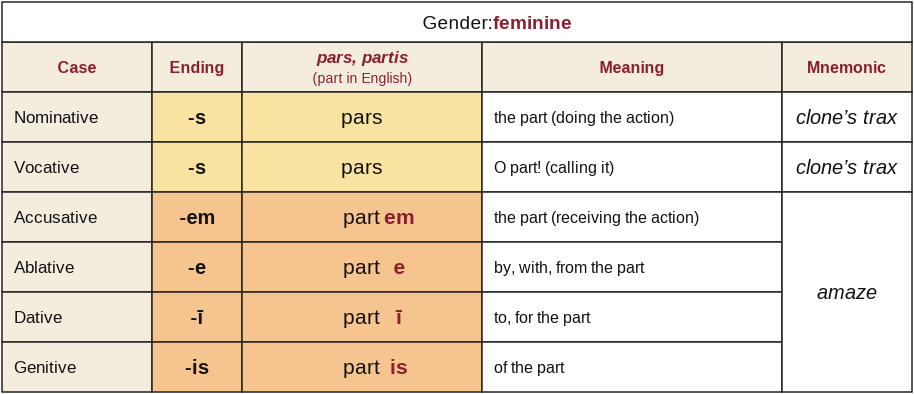
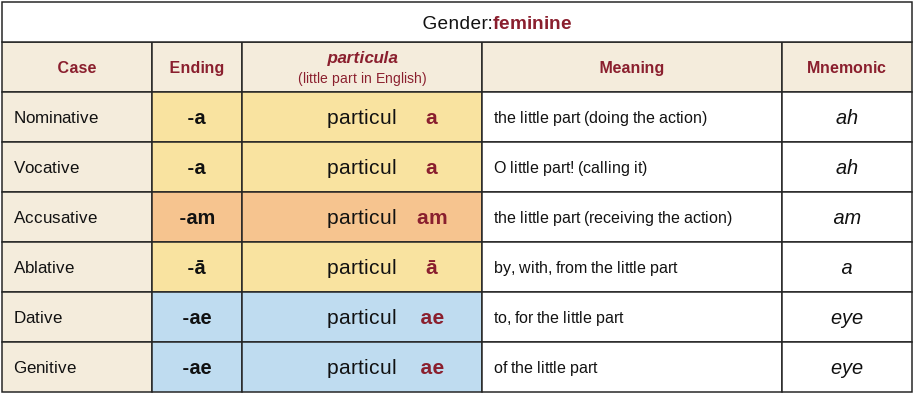
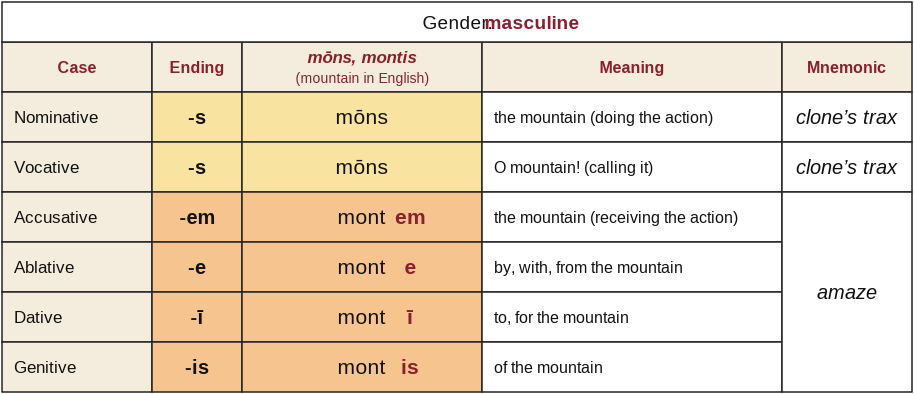
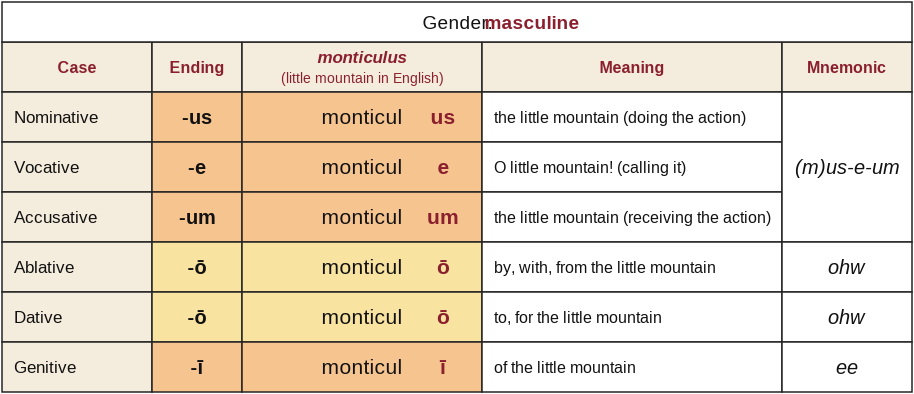
Here are two nouns that look almost the same: pars, partis (part in English) and mōns, montis (mountain in English). Both end in -rs or -ns, both have a genitive in -tis, and both are third declension. But they do not have the same gender. Their diminutives show the difference at once: particula (little part in English) is feminine, and monticulus (little mountain in English) is masculine.
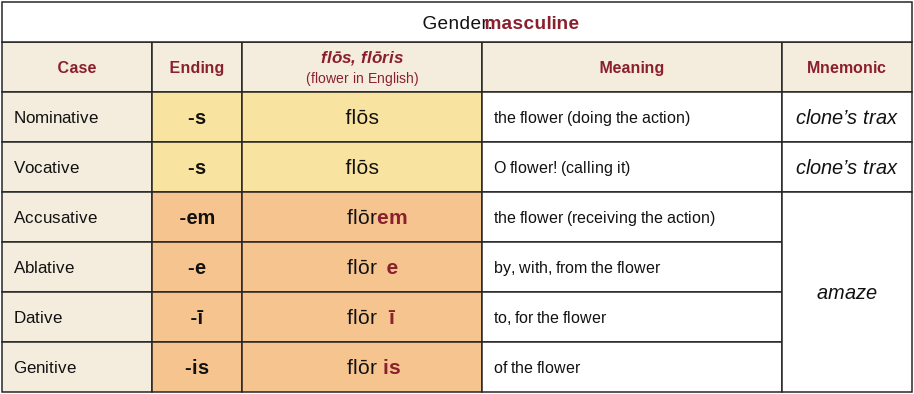
Flōs, flōris (flower in English) is third declension, and its nominative gives no clue to its gender. Its diminutive, flōsculus (little flower in English), ends in -us, and shows that flōs is masculine.
Diminutives were so common in Latin that many English words come from the diminutive, not from the main word. A particle comes from particula, not from pars. A manicule, the little pointing hand ☞ that printers put in the margin of a book, comes from manicula, not from manus. And a molecule comes from mōlēcula, "a little mass", from mōlēs.
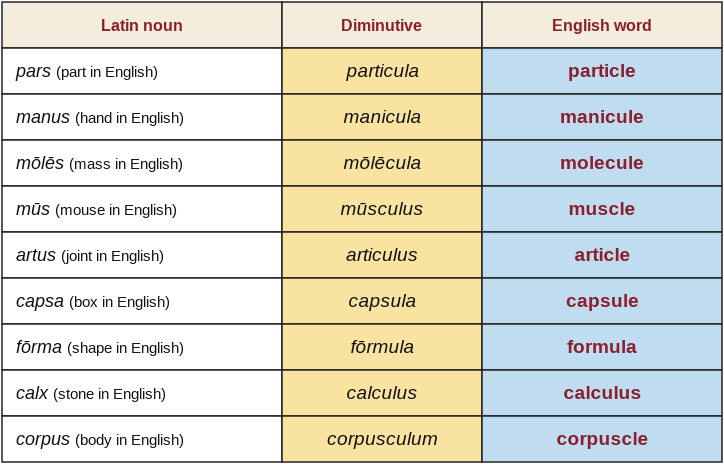
Some of these are surprising. A muscle is a "little mouse", mūsculus: the Romans thought a muscle moving under the skin looked like a little mouse. And mōlēcula is not found in any Roman book at all. It was made much later, in the 1600s, following the rules for making diminutives, just as you may do. The word is usually credited to the French philosopher Pierre Gassendi (1592–1655), who used it when he was trying to explain the ideas about atoms in the writings of the ancient Greek philosopher Epicurus.

Memorising for Latin — Book One: Nouns · Evan Millner · Published by Abecedaria Press