

Abecedaria Press · Memorising for Latin
Part Nine
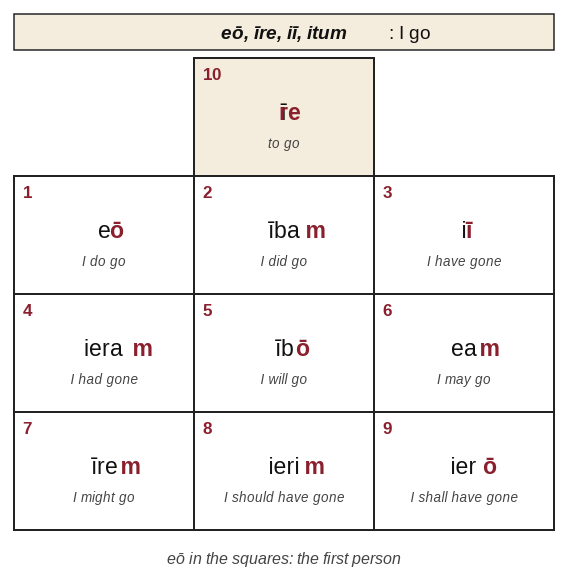
Eō is very short, and that is what makes it look strange. The stem is just i-, I go. Before a vowel, i becomes e: eō, eunt, eam. Before a consonant it stays ī: īs, it, ībam, ībō, īre. That one rule gives you almost the whole verb.
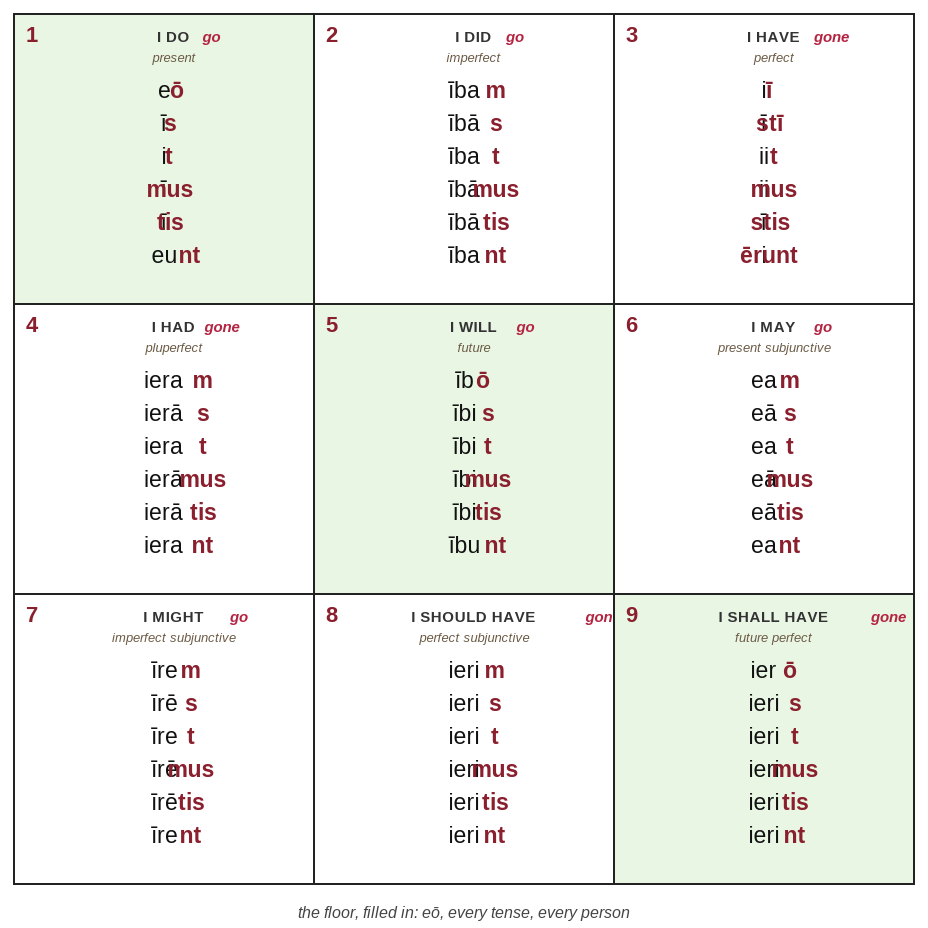
Things to notice:
English has kept eō in many words through its compounds: exit (exit, he goes out), transit (trānsit, he goes across), ambition (ambītiō, going around for votes), and initial (from ineō, I go in, I begin).
The compounds of eō go exactly like eō, with a little word in front, just as the compounds of sum go like sum: abeō, I go away; adeō, I go to; exeō, I go out; ineō, I go in; redeō, I go back; trānseō, I go across; pereō, I perish (I go through, I am lost). As before, the first person and the squares are all you need; the rest follows eō.

Memorising for Latin — Book Three: Verbs · Evan Millner · Published by Abecedaria Press