

Abecedaria Press · Memorising for Latin
Part Eleven
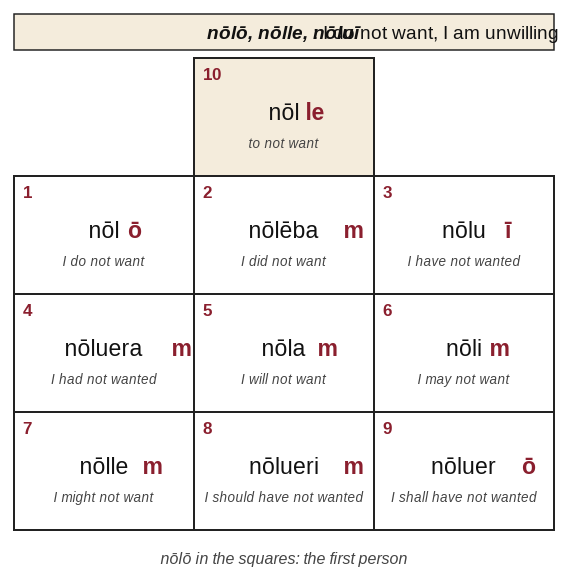
Nōlō is simply nē (not) and volō: "I do not want". Where volō begins with vol- or vel-, nōlō begins with nōl-. Where volō begins with v and no ol (vīs, vult, vultis), nōlō just says nōn in front: nōn vīs, nōn vult, nōn vultis.
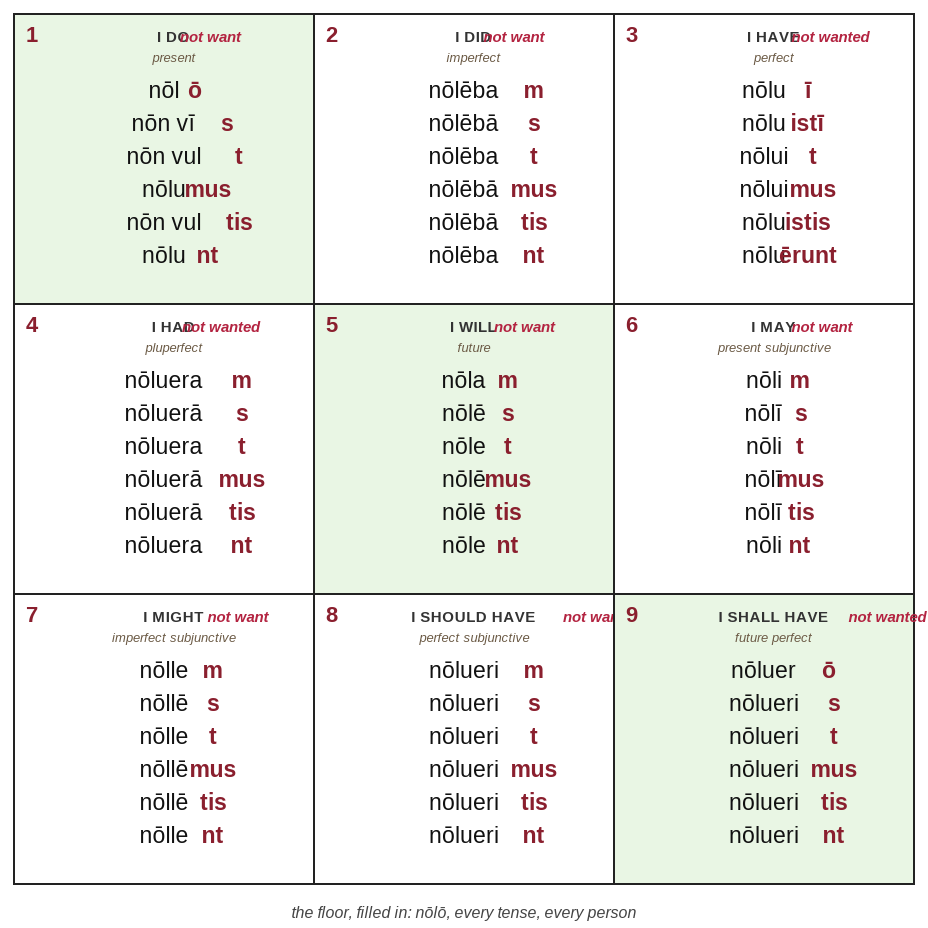
Nōlō has one form that volō does not: a command. Nōlī! and nōlīte! mean "do not want to", and with an infinitive they make the usual Latin way of saying "don't!": nōlī mē tangere, do not touch me; nōlīte timēre, do not be afraid.

Memorising for Latin — Book Three: Verbs · Evan Millner · Published by Abecedaria Press