

Abecedaria Press · Memorising for Latin
Part Five
An adjective can be compared. In English we say long, longer, longest. Latin does the same:
To make the comparative, take the stem (from the genitive: longī, stem long-) and add -ior for the feminine and the masculine, and -ius for the neuter: longior, longius. To make the superlative, add -issimus, -issima, -issimum: longissimus.
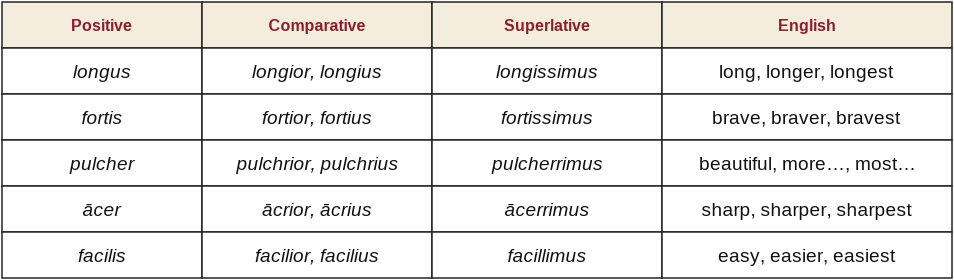
Two small groups are different. Adjectives in -er add -rimus to the masculine nominative: pulcher, pulcherrimus; ācer, ācerrimus. And six adjectives in -lis add -limus: facilis, facillimus (easy, easiest); the others are difficilis (difficult), similis (like), dissimilis (unlike), gracilis (slender) and humilis (low).
The comparative belongs to the third declension. But it is not like omnis. It has none of the spelling changes: the ablative ends in -e, the genitive plural in -um, and the neuter plural in -a. So it fits the rhymes clone's trax, clone's trax, amaze and easy bosom exactly. Here the rhymes give you every ending, just as they are.
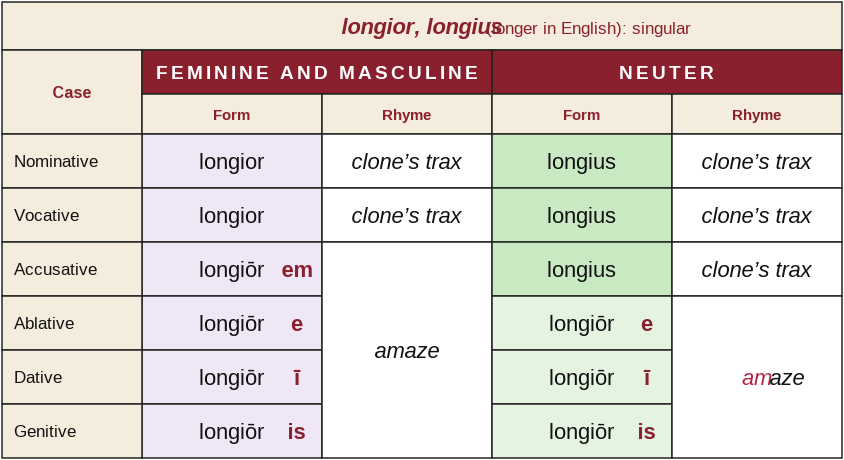
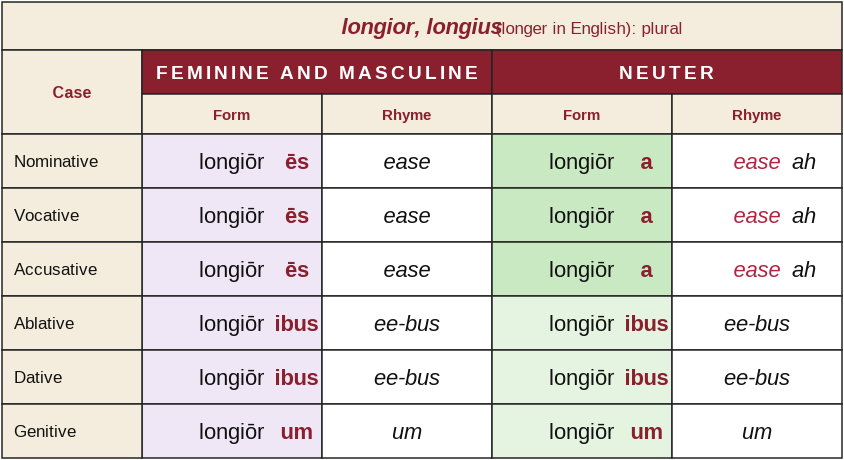
Notice the neuter again: the block of three is longius, longius, longius. The rule of three.
The superlative is easy. It declines exactly like bonus: longissima, longissimus, longissimum. You already know it.
A few very common adjectives are compared irregularly. You simply have to learn them. There are only five that really matter:
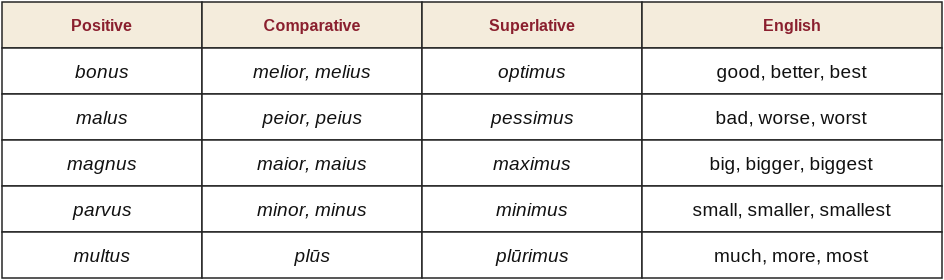
These five are a good set to put into your memory room: one in each of five squares. Plūs is a little different again: in the singular it is used like a noun, plūs pecūniae, more (of) money; in the plural it is an adjective, plūrēs, plūra.

Memorising for Latin — Book Two: Adjectives · Evan Millner · Published by Abecedaria Press