

Abecedaria Press · Memorising for Latin
Part Thirteen
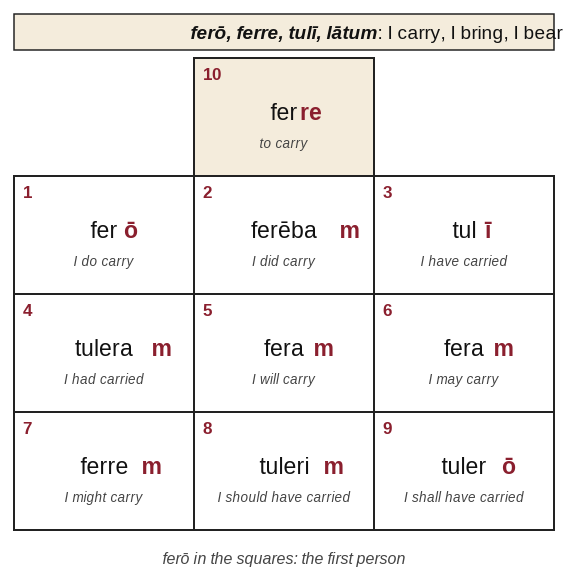
Ferō has three stems, and they are three quite different words:
The Romans took tulī and lātum from another, older verb, a relative of tollō, I lift, much as English took went from wend and uses it as the past of go.
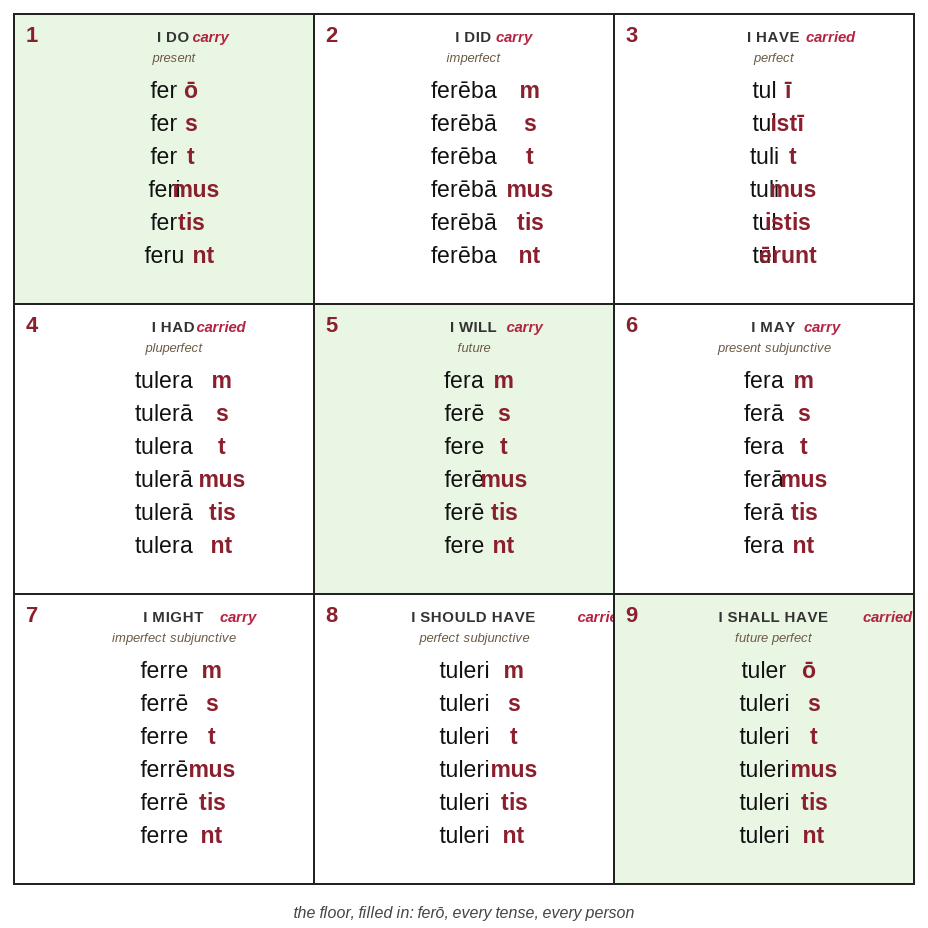
Things to notice:
The compounds of ferō are everywhere, and so are their English children: afferō, I bring to; auferō, I carry away; cōnferō, I bring together (confer); differō, I carry apart (differ); īnferō, I bring in (infer); offerō, I bring before (offer); referō, I bring back (refer); trānsferō, I carry across (transfer). And from lātum: relation, translation, collate. Only the first person and the squares are needed; the rest follows ferō.

Memorising for Latin — Book Three: Verbs · Evan Millner · Published by Abecedaria Press