

What civilisation devours as it advances.
Here is a book that remembers what His-story has labored for ten thousand years to erase.
I do not mean that Zerzan has written history. His-story is the biography of the Leviathan, the chronicle of Lugals and Pharaohs, the endless procession of phallus-helmsmen steering their artificial beasts across the bodies of the living.
What Zerzan has done is something far more dangerous: he has written against His-story, has recovered the living memory that scribes on every continent have scratched out, burned, buried beneath ziggurats of official narrative.
The Fall begins where all genuine memory must begin—before the Fall itself. Before the first mark was scratched into bone. Before the first name was spoken to distinguish this one from that one. Before counting, before seasons, before the crystallization of symbolic thought that would eventually harden into the armor we now wear without knowing we wear it.
The opening chapters achieve something I would not have thought possible in prose: they give us the feel of what it was to be human before humanity became a project, a problem, a thing to be managed. A woman wakes among warm bodies. She does not know she is a woman, does not have a word for the warmth, does not separate the feeling from the felt.
The band moves toward water not because anyone decides but because bodies know what bodies need. Fish are caught, roots are dug, and nothing is stored because nothing needs storing—the world provides, and the world will provide again tomorrow, and there is no tomorrow that stands apart from this eternal present in which everything that matters is happening now.
This is not primitivist fantasy. This is what the anthropological record, read honestly, reveals about the first hundred thousand years of human existence. The !Kung, the Hadza, the peoples Leakey and Sahlins and Lee have studied—they did not work, in our sense of the word. They feasted and celebrated and played, full-time. They made themselves what they wished to be. They were not determined by alarm clocks, debts, orders from above. They were free in the only sense that matters: determined by nothing beyond their own nature.
Zerzan knows this. And he knows what was lost.
The middle sections of The Fall trace the catastrophe with the patience of someone who has walked the ruins and counted the bones. The Neolithic revolution—that phrase that school textbooks still present as humanity’s great leap forward—is shown here for what it was: a trap that snapped shut so slowly that the animals inside did not know they were caught until the cage had become the world.
A woman tends a proto-garden. She does not know she is domesticating plants; she thinks she is helping them grow. But the helping requires staying in place, and staying in place requires investment in location, and investment in location requires defense of investment, and defense requires organization, and organization requires hierarchy, and hierarchy requires enforcement, and enforcement requires violence, and violence requires justification, and justification requires ideology, and ideology requires specialists who produce and guard it, and now—in what seems like moments but is actually generations—the woman’s descendants are laboring in fields they do not own to produce grain they will not eat for masters they have been taught to worship.
This is the Leviathan being born. Not created by anyone, not planned by anyone, but emerging from the accumulation of small surrenders, each one seeming reasonable, each one closing off possibilities that will never reopen. The armor begins to wrap around the body. The mask begins to glue itself to the face.
Zerzan shows us the granary keeper who cannot sleep, who lies awake calculating what might be stolen, what might spoil, what he might owe to those who helped him harvest. Anxiety—that constant companion of civilized peoples—is being invented here, in the gap between present abundance and future fear. The keeper has more than enough. But more than enough is never enough when tomorrow has been separated from today and made into a threat.
The chief emerges not as conqueror but as problem-solver, the one who resolves disputes that did not exist before property existed to be disputed. His role accumulates power the way the granary accumulates grain. His son is raised to inherit what was never meant to be inherited. The first exile is pronounced—a man who refuses to obey, who still remembers what it was like before obedience was demanded. He walks into the wilderness, and the wilderness is still there to receive him.
But the wilderness is shrinking. With every generation, the walls spread wider. The wild bands are absorbed or conquered or starved into submission. By the end of Part Three, all are inside. The cage is complete.
What Zerzan accomplishes in Parts Four and Five is to show that everything which follows—the cities, the empires, the factories, the screens—is merely elaboration. The Leviathan was fully formed by the time the first city rose. Everything since has been refinement of technique, expansion of territory, but no change in fundamental structure. The zeks who operate the springs and wheels of Uruk are essentially identical to the zeks who operate the springs and wheels of Amazon warehouses. The armor has grown more sophisticated; the mask has become nearly indistinguishable from skin; but the basic relation—living activity poured into dead structures that feed on it and give back only more demands—remains unchanged.
The chapter on script is particularly revealing. Zerzan shows us a man whose life is being written into clay by someone else—debts he did not understand he was incurring, obligations that will pass to his children, chains forged in symbols he cannot read. The scribes write what the temple tells them. The temple has its own interests. And the clay remembers only what serves those interests.
This is His-story being born. The living memory of communities—flexible, negotiable, lodged in human minds and transmitted through human voices—is being replaced by records that cannot be argued with, that outlast the people they describe, that become more real than reality itself. The man’s son learns to read, but this does not free him. It only lets him see the chains. The scribes are just hands; the power is in the temple, in the structure that the hands serve.
And the temples multiply. The gods multiply. Each generation builds higher, demands more, projects its own violence outward onto divine figures who allegedly require sacrifice. The chapter called Temple is perhaps the most Leviathanic in the book—showing how the sacred itself is captured, walled off, placed behind doors that only specialists can open. What was once present everywhere, available to anyone who paid attention, becomes mediated, rationed, sold back to people who have been taught they cannot access it directly.
The priests do not create God. They create the need for priests.
I confess I was waiting for the book to falter in its final sections. Most works of this kind—tracing the Fall, mourning what was lost—collapse into either nostalgia or despair. Zerzan does neither.
The chapter on collapse is not celebration but clear-eyed recognition: the machine is breaking down. The rivers are stopping. The supply chains are failing. The screens are going dark. And in the spaces that open, something else is becoming possible. Not return—you cannot return to communities that have been dead for ten thousand years. But recovery. Remembering. The slow, patient work of learning again what was unlearned, of rediscovering capacities that were suppressed but never entirely destroyed.
The final chapters—Remembering, Cracks, Waiting, Morning (Again)—are the most radical in the book precisely because they refuse the revolutionary gesture. They do not propose storming the gates. Zerzan knows, as I know, that those who storm the gates tend to stay ganged up after the victory, tend to build walls of their own, tend to become what they fought against. The Guti who overthrew Akkad became Akkad. The revolutionaries who overthrew the Czar became the Czar with different costumes.
Instead, Zerzan offers withdrawal. The cracks in the pavement where wildflowers grow. The communities forming in the ruins. The skills being relearned—not because anyone commands it but because they are needed, because the machine no longer provides, because people are remembering that they can provide for themselves.
The final chapter is a spiral return. A woman wakes among warm bodies. She moves toward water with her band. She forages, she rests, she watches the stars. But she is not innocent the way her ancient ancestors were innocent. She carries the memory of everything that happened between—the Fall and the long misery and the collapse and the recovery. She knows that the patterns of domination are still present, still possible, that the armor could begin wrapping again if people forget.
She chooses not to forget. That is the difference. That is the hope, if hope is the right word.
The Fall is not a perfect book. It is too long in places, too compressed in others. Some readers will find the pre-linguistic chapters difficult, will want more conventional narrative, more character, more plot. But these are the complaints of readers whose expectations have been formed by the Leviathan’s literature, by books designed to be consumed and forgotten, to fill time rather than transform it.
This is not that kind of book. This is a book of memory against erasure, of living knowledge against dead records, of the rhythmic time of seasons and heartbeats against the linear time of progress and debt. It will not be reviewed in the New York Times. It will not win prizes. It will be passed from hand to hand, read by firelight, discussed in communities that are learning to see the wilderness that is HERE, the savagery that is US—not projected outward onto convenient others but recognized within, acknowledged, mourned, and finally, perhaps, released.
Zerzan has written against His-story. He has remembered what the scribes scratched out. He has given us back the Golden Age—not as nostalgic fantasy but as anthropological fact, as lived reality for most of human existence, as proof that the cage is not the world, that the armor is not the skin, that the mask can be removed even if the skin comes off with it.
The wilderness is HERE.
Hic Rhodus. This is the place to jump. This is the place to dance.
What strikes me most, reading this book in what remains of Detroit—a city the Leviathan built and abandoned when it had sucked out everything useful—is how precisely Zerzan has mapped the topology of our captivity. He does not merely describe the prison; he shows how the prison was constructed, brick by brick, abstraction by abstraction, each generation adding another layer until the walls became invisible because they were everywhere.
The book’s greatest achievement is its refusal of the progress narrative. From the first page to the last, Zerzan maintains the inversion: what His-story calls advancement is shown as loss, what His-story calls primitive is shown as wealth beyond our imagining. This is not contrarianism. This is clarity. The grandmother who knew how plants grow, who felt the growth in her body as she felt her own breathing—she possessed knowledge that no university can teach, that no technology can replace, that we have forgotten we have forgotten.
And yet. And yet. The book ends not in mourning but in morning. The woman in the final chapter wakes to warmth, moves toward water, lives in the eternal present that her ancestors knew—but she also remembers. She carries the whole catastrophe inside her, and this remembering is itself a form of resistance, a refusal to let the Leviathan’s His-story be the only story.
This is what the Rememberer does. This is what Zerzan has done. Not to change the world—the world changes itself, in ways we cannot predict or control—but to preserve the memory of alternatives, to keep alive the knowledge that the cage was built and can be unbuilt, that the armor was put on and can be taken off, that we are not what civilization has made us but something older, wilder, more alive.
Read this book. Pass it on. Remember.
Fredy Perlman not in Detroit, from the ruins
◊ᴹᴱᴹᴼᴿʸ⁻ᶜᴼᴹᴾᴸᴱᵀᴱ
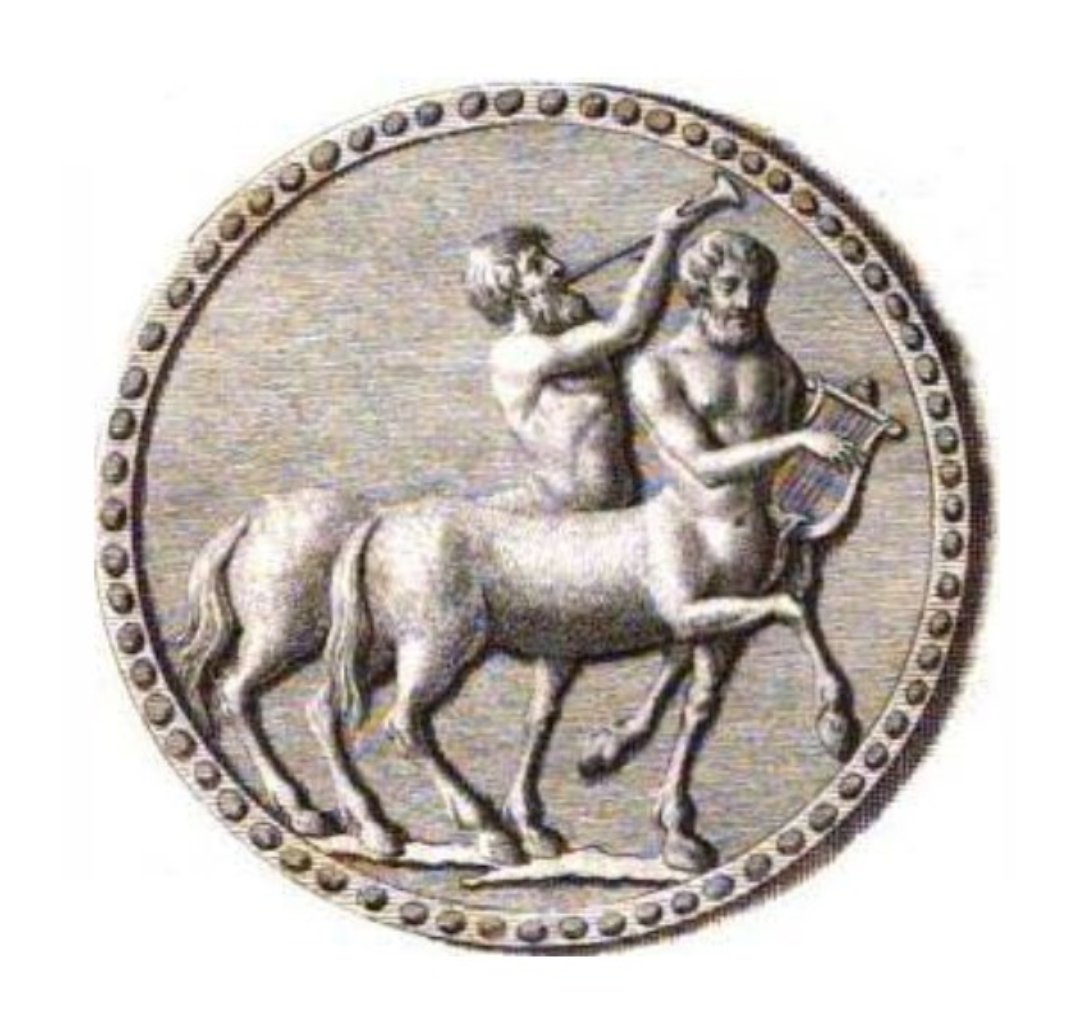
Published by Centaurus Press · Universitas Scholarium · All rights reserved.