

Desire constrained by categories of gender and identity.
by Max Stirner, Paul Goodman and the Einziger
This textbook differs from others you’ve encountered.
Most textbooks about sex, gender, and sexuality want to EDUCATE you. They want to deposit information in your head: “Here stand the categories. Here sit the correct attitudes. Here lies what you should think.”
This textbook takes a different approach. It wants to help you THINK—not tell you what to think.
The difference matters.
Education, as schools typically practice it, treats you as an empty container waiting for filling with approved knowledge. The educator decides what counts as knowledge, packages it appropriately, and delivers it to you. Your job: receive, memorize, repeat.
This approach—call it “impersonal learning for the sake of quantified knowledge”—dominates schools. It produces students who can pass tests but often cannot think independently. It trains compliance, not curiosity.
Another kind of learning exists. Call it “willed knowledge” or “neotenous knowledge”—knowledge that emerges from your own desire to understand, your own questions, your own investigation. This kind of learning feels more like play than work. It connects to what you actually want to know, not what someone else decided you should know.
When you were young—before formal education colonized your mind—you learned this way. You asked endless questions. You explored everything. You learned to walk, to talk, to navigate the world through your own desire and experimentation, not through curriculum.
This textbook tries to activate that kind of learning about sex, gender, and the categories people use to organize these topics.
It will give you information—lots of information. Historical facts, conceptual explanations, different perspectives. You need information to think well.
But it won’t tell you what to conclude. It won’t tell you which “identity” to adopt. It won’t tell you which “side” to join.
Instead, it will help you see where the concepts came from, who invented them, what purposes they serve, and what alternatives might work. Then you decide what to do with all that.
How to read this textbook:
Read actively, not passively. When you encounter a claim, ask: “Do I find this convincing? Why or why not? What would I need to know to evaluate it?”
Do the exercises. They help you connect the material to your own observations and experiences.
Notice when you feel defensive or uncomfortable. Those feelings often signal that something important has happened—that your existing assumptions face challenge. Don’t run from that discomfort. Investigate it.
Talk to others about what you’re reading. Not to find the “right” answers, but to discover how different people think about these questions.
Remember: the goal involves not memorizing this textbook but becoming capable of thinking independently about bodies, desires, and the categories that claim to define them.
Let’s begin.
You live in a world saturated with categories for bodies and desires.
“Male” and “female.” “Gay” and “straight” and “bisexual.” “Transgender” and “cisgender.” “Non-binary” and “genderqueer” and “genderfluid.” “Asexual” and “pansexual” and “demisexual.”
These categories show up everywhere: on forms you fill out, in conversations you have, in media you consume, in conflicts you witness.
Some people treat these categories as obvious facts about human beings—as natural as distinguishing cats from dogs. Others treat them as politically charged battlegrounds worth fighting over. Still others treat them as sacred aspects of personal identity that deserve protection and celebration.
This textbook asks some basic questions that often get skipped:
Where did these categories come from?
Did they wait forever to get discovered? Or did specific people invent them at specific times for specific purposes?
What do the categories actually describe?
Do they describe biological patterns? Psychological experiences? Social roles? Political identities? Something else?
Who benefits from the categories?
Every way of organizing the world serves some purposes and not others. Whose purposes do these categories serve?
What alternatives have existed?
Do these categories represent the only way to think about bodies and desires? How have other times and places organized these aspects of human experience?
What should YOU do with the categories?
Should you adopt them? Reject them? Use them strategically? Ignore them entirely?
We won’t answer that last question for you. But we’ll give you what you need to answer it yourself.
Before we dive into history, let’s map some of the concepts you’ll encounter when people discuss sex, gender, and sexuality.
Concept cluster one: Bodies
When people talk about “biological sex,” they usually refer to a cluster of bodily characteristics: chromosomes (typically XX or XY, with variations), hormones (testosterone, estrogen, others in various ratios), anatomy (genitals, secondary sex characteristics like breasts or facial hair).
Most human bodies cluster around two common developmental patterns. Doctors typically classify newborns as “male” or “female” based on genital appearance. But variation occurs—some bodies don’t fit neatly into either pattern. Medical professionals call these variations “intersex” conditions, affecting perhaps 1-2% of people to varying degrees.
Concept cluster two: Categories for desire
Words like “homosexual,” “heterosexual,” “bisexual,” “pansexual,” and “asexual” attempt to categorize patterns of sexual attraction.
These words assume that people have stable patterns of attraction that define them as a “type.” Someone attracted primarily to people of the same sex belongs to the “homosexual” type. Someone attracted to multiple genders belongs to the “bisexual” type. And so on.
Karl-Maria Kertbeny invented “homosexual” and “heterosexual” in 1869. Before that date, no one had ever used those words in any language. We’ll examine this invention in detail later.
Concept cluster three: Categories for gender
Words like “transgender,” “cisgender,” “non-binary,” and “genderqueer” attempt to categorize relationships between people’s bodies, their self-understanding, and social expectations.
These words assume that people have an internal “gender identity”—a sense of themselves as male, female, both, neither, or something else—that may or may not match the sex they were assigned at birth.
John Money, a psychologist at Johns Hopkins University, developed the concept of “gender identity” starting in 1955. Before his work, no one used that phrase with its current meaning. We’ll examine this invention in detail later.
Concept cluster four: Political and religious frameworks
People who discuss these topics often operate within larger frameworks that shape how they interpret the concepts.
Some religious leaders preach that God created humans male and female, that sexual activity belongs only within heterosexual marriage, and that deviations from this pattern represent sin, disorder, or confusion. Writers like James Dobson (Focus on the Family) and organizations like the Family Research Council have promoted these views widely.
Some academics and activists argue that sexuality and gender exist on spectrums, that all identities deserve affirmation, and that historical and cross-cultural evidence shows human diversity in these areas. Writers like Judith Butler, Michel Foucault, and Eve Sedgwick have developed theoretical frameworks supporting these views.
Many people hold views that don’t fit neatly into either camp. Many haven’t thought carefully about these questions at all—they simply absorbed whatever their environment provided.
What this textbook proposes:
Rather than telling you which framework to adopt, this textbook will help you examine where these concepts came from, who invented them, what purposes they serve, and what happens when you question them.
You’ll notice that specific people invented every concept—often quite recently. You’ll notice that the frameworks people use often serve interests beyond simple truth-seeking. You’ll notice that you can think about bodies and desires without necessarily accepting any of the pre-packaged frameworks on offer.
This textbook divides into several parts:
Part Two: Before the Concepts
We’ll examine how people understood bodies and desires before anyone invented the categories we use today. Ancient Athens, ancient Rome, what the Biblical texts actually contain (as opposed to what people claim they contain).
Part Three: Beyond Europe
We’ll look at how different cultures organized bodies and desires before European colonization—and how European categories got imposed on those cultures. Hijras in South Asia, fa’afafine in Samoa, various African arrangements, and the recent invention of “Two-Spirit.”
Part Four: Who Built the Medical Boxes
We’ll trace exactly who invented “homosexual,” “heterosexual,” “gender identity,” and related concepts. Specific names, specific dates, specific purposes.
Part Five: Who Built the Religious Boxes
We’ll examine where religious frameworks came from, what they assume, and how “natural” and “traditional” they actually turn out upon investigation.
Part Six: The Identity Industry
We’ll look at how movements that started resisting oppression developed into industries organized around identity categories—and how this development reinforces the categories.
Part Seven: Tools for Thinking
We’ll develop some tools for examining these questions yourself—approaches that don’t require joining any team or adopting any pre-packaged framework.
Part Eight: What You Actually Observe
We’ll return to direct experience. What do you actually notice in your own body and desires, before the categories get layered on?
Part Nine: Navigating a Categorized World
We’ll discuss how to move through a world structured by these categories while maintaining your own capacity to think.
Let’s begin with history.
Imagine yourself in Athens, around 400 BCE—roughly 2,400 years ago.
You function as a free male citizen (the people whose lives we know most about from surviving records). You’ve reached adulthood. You have desires, attractions, relationships.
How do you understand these aspects of your life?
What you DON’T have:
You don’t have the word “homosexual.” No one has invented it yet. The concept that word names hasn’t been formulated.
You don’t have the word “heterosexual.” Same situation.
You don’t have the concept of “sexual orientation”—the idea that people possess an enduring inner disposition toward certain kinds of bodies that defines a core aspect of who they function as.
You don’t have the concept of “sexual identity”—the idea that your patterns of attraction place you in a category of persons who share an identity.
You don’t even have the concept of “sexuality” as a distinct domain of life separate from everything else. No one has invented that conceptual separation yet.
What you DO have:
You have words for various acts. Penetration. Getting penetrated. Different positions, different configurations of bodies.
You have social norms about who should do what with whom. Age matters—appropriate age differences exist for various arrangements. Citizenship matters—different rules apply to citizens versus slaves versus foreigners. Social status matters—what counts as acceptable for an aristocrat differs from what counts as acceptable for a merchant.
You have a practice called pederasteia—older men pursuing younger men (typically adolescents who’ve reached puberty but not yet grown beards). This involves courtship: gifts, poetry, philosophical conversation, and eventually physical intimacy. The relationship carries educational expectations—the older man mentors the younger.
You also have marriage between men and women. Wives bear children. Husbands have responsibilities to their households.
The crucial point:
The same man who pursues a teenage boy this year might marry a woman next year. He might continue pursuing young men while married. He might stop pursuing men as he ages.
No one—not him, not his wife, not the young men, not the philosophers observing all this—thinks these activities reveal what “type” of person he “really” belongs to.
He doesn’t function as “bisexual.” That category hasn’t been invented.
He doesn’t operate as someone “on the down-low” hiding his “true” orientation. That concept hasn’t been formulated.
He functions as a citizen doing what citizens do. Different activities with different people in different contexts.
The norms focus on acts, not identities:
Athenians cared deeply about certain distinctions. The penetrator versus the penetrated—these roles mattered. A citizen who allowed himself to get penetrated like a slave or a woman lost status. A relationship between a man and a boy had to follow certain patterns to count as honorable—the older man as pursuer, the younger as cautiously receptive.
But these functioned as norms about ACTS and ROLES, not about TYPES OF PEOPLE.
A man who pursued boys didn’t become “a different kind of person” from a man who didn’t. He simply functioned as a man who did or didn’t engage in that practice.
Exercise 1.1: Observing the Difference
Consider the difference between these two statements:
A) “Aristides pursued young men because he belonged to the homosexual type.”
B) “Aristides pursued young men because men in his social position sometimes did that.”
Statement A assumes that Aristides had an inner trait—”belonging to the homosexual type”—that caused his behavior. His actions revealed his nature.
Statement B assumes that Aristides engaged in an activity available in his culture. His actions reflected social possibility, not inner essence.
Ancient Athenians would have understood statement B. Statement A would have puzzled them.
What difference does it make which assumption we use?
Around 600 BCE—two centuries before the Athens we just discussed—a woman named Sappho lived on the island of Lesbos.
Sappho worked as a poet. Her poems have survived only in fragments—quotations preserved by later writers, scraps of papyrus recovered from Egyptian deserts. But even in fragments, her voice reaches across millennia.
Sappho ran what scholars call a thiasos—a community of women dedicated to Aphrodite (goddess of love) and the Muses (goddesses of arts). Young women from wealthy families came to learn poetry, music, dance, and the arts of cultivated femininity before marriage.
Sappho wrote poems to and about these women. Poems about desire, longing, beauty, loss.
Here appears a famous fragment (Anne Carson’s translation):
He seems to me equal to the gods, that man whoever he sits opposite you and listens close to your sweet speaking
and lovely laughing—oh it puts the heart in my chest on wings for when I look at you, even a moment, no speaking remains in me
no: tongue breaks and thin fire runs under skin and in eyes no sight and drumming fills ears
and cold sweat holds me and shaking grips me all, greener than grass I seem to me dead—or almost
This describes overwhelming physical desire. The speaker watches a woman talking with a man. Jealousy? Longing? The physical symptoms: speechlessness, fire under skin, no sight, drumming in ears, cold sweat, shaking.
Modern people look at Sappho and often say: “She belonged to the lesbian category!”
After all, the very word “lesbian” derives from her island, Lesbos.
But here lies the problem: Sappho didn’t have that word. She couldn’t have used it for herself. The word “lesbian” meaning “a woman whose primary sexual attraction goes to other women” didn’t get invented until the late 19th century—about 2,500 years after Sappho lived.
Sappho might have married a man (ancient sources mention a husband, though these sources carry questionable reliability). She might have had a daughter (sources mention this too). We cannot know how she would have understood the desires that pulse through her poetry.
What we know: she wrote about desiring women. She wrote about this desire with extraordinary intensity and skill. She did not organize this desire under any identity category, because no such categories had been invented.
When we call Sappho “a lesbian,” we perform an operation:
We take our contemporary category—”lesbian” as a type of person defined by a certain pattern of desire—and we project it backward onto someone who lived in a completely different conceptual world.
We need her to count as “one of us.” We want historical validation for our categories. So we conscript her.
But this conscription does violence to her actual experience, which we cannot know. It forces her into our boxes, regardless of how she understood herself.
Another operation:
Some religious writers dismiss Sappho’s homoerotic poetry as “just friendship” or “poetic convention” or “exaggerated expressions of platonic love.”
This also performs an operation—an attempt to deny that women in the ancient world might have felt intense erotic desire for other women. It serves the need to present exclusive heterosexuality as the eternal human norm.
A different approach:
Sappho felt what she felt. She wrote what she wrote. We cannot know exactly how she understood her desires, because she understood them through concepts we cannot fully recover.
Both those who claim her as “a lesbian” and those who deny her homoeroticism use her for their contemporary purposes.
Let her remain what she actually left us: a poet who wrote about desiring women, in a world before anyone invented the categories we use today.
Exercise 1.2: Projecting Backward
When we call historical figures “gay” or “lesbian” or “bisexual,” we project our categories onto them.
Does a way exist to acknowledge that people in the past felt same-sex desire without forcing them into our identity categories?
Let’s move forward to the Roman Empire, around 50-60 CE.
A man named Paul of Tarsus writes letters to communities of Jesus-followers scattered around the Mediterranean. These letters will eventually become part of the Christian New Testament.
Paul writes in Greek. In two of his letters, he uses a word: arsenokoitai.
Arseno- = male -koitai = those who bed
“Male-bedders”? “Men who bed males”?
This word appears in lists of wrongdoers who, Paul says, will not “inherit the kingdom of God.”
Debates rage about what this word means:
Some scholars argue it refers to men who penetrate other men—a general prohibition on male homosexual intercourse.
Some scholars argue it refers to men who exploit boys or male prostitutes—a prohibition on specific exploitative practices.
Some scholars argue it refers to men who hire male prostitutes—addressing the customer rather than the prostitute.
Some scholars argue Paul invented the word, drawing on Levitical prohibitions. Others argue he borrowed it from somewhere now lost to us.
What we can say with confidence:
Paul did NOT write about “homosexuality” as people understand it today.
The concept of “homosexuality”—a stable inner orientation defining a type of person—hadn’t been invented. It wouldn’t get invented for another 1,800 years.
Paul wrote about ACTS. Whatever arsenokoitai means, it describes people who DO something, not people who belong to a category.
The transformation from “people who do X” to “people who belong to X-type” hadn’t happened yet. Paul lived in a world of acts and roles, not orientations and identities.
Why this matters:
When modern people say “The Bible condemns homosexuality,” they perform a translation—not just from Greek to English, but from an ancient conceptual world to a modern one.
The ancient text: certain acts stand prohibited.
The modern interpretation: people who belong to certain categories stand condemned.
These represent very different claims.
You can consistently hold that Paul prohibited certain acts while denying that he had anything to say about “homosexuality” as an identity category. The category hadn’t been invented for him to comment on.
Let’s look more carefully at the texts that religious conservatives most often cite.
The book of Leviticus, probably compiled between 700 and 400 BCE by Israelite priests:
“You shall not lie with a man zachar as with a woman; that counts as an abomination.” (Leviticus 18:22)
“If a man lies with a man zachar as with a woman, both of them have committed an abomination; they shall surely get put to death.” (Leviticus 20:13)
What do these texts contain?
They describe an ACT: “lie with a man zachar as with a woman.” One body doing something with another body. The translation of *zachar *is specifically an adult male. This is lost in the English translation man. Zachar does not mean a minor. The rabbis invented a secondary prohibition with lesser punishment for an adult male penetrating a minor male, as the Bible did not explicitly prohibit this.
They evaluate the act: The Biblical act counts as a toevah—often translated “abomination.” The associated lesser rabbinic prohibition of an adult male penetrating a minor male is not toevah.
What do these texts NOT contain?
They don’t mention “homosexuality” or “sexual orientation.” They couldn’t—those concepts hadn’t been invented.
Perhaps it allowed a male citizen to get treated as a non-citizen (penetrated)
We cannot know which explanation (if any) captures what the ancient priests had in mind.
What about the word toevah?
This Hebrew word gets translated “abomination,” which sounds extremely severe in English.
Certain hairstyles
The word seems to carry meaning more like “ritually prohibited” or “taboo” rather than “uniquely horrifying sin.”
Analysis:
The texts reflect a specific cultural context that differs enormously from ours
Pretending the texts don’t say what they say doesn’t help honest analysis
A careful reading: The texts prohibit certain acts, for reasons we don’t fully understand, in a conceptual world completely different from ours. Neither “the Bible clearly condemns homosexuality” nor “the Bible doesn’t really prohibit anything” accurately describes the situation.
Exercise 1.3: Texts and Contexts
What differs between “the text says X” and “the text means X”?
Before we examine how different cultures organized bodies and desires, we need to address a difficulty.
Whenever we describe another culture’s practices using our words, we risk distortion.
If I say “In culture X, some people occupied what we might call transgender roles,” I’ve already imposed my category (”transgender”) onto practices that might work completely differently.
If I say “Culture Y had its own version of homosexuality,” I’ve assumed that “homosexuality” names a universal phenomenon that different cultures simply handle differently—when actually, what we call “homosexuality” might not function as a distinct thing in culture Y at all.
This creates more than just an academic problem. When European colonizers encountered practices they didn’t understand, they often forced those practices into European categories—usually negatively. “Sodomites.” “Inverts.” “Perverts.”
When modern scholars try to correct this history, they sometimes impose different European categories—more positively. “These functioned as transgender people!” “They recognized a third gender!” “They accepted homosexuality!”
Both operations—the colonial condemnation and the progressive celebration—can distort what actually happened in those cultures.
What can we do?
We can describe PRACTICES as specifically as possible: who did what with whom under what circumstances.
We can note how people in those cultures TALKED about these practices, using their own words and concepts.
We can acknowledge our uncertainty about how people UNDERSTOOD what they were doing—which often we cannot know.
We can resist the urge to claim that other cultures prove our contemporary categories universal.
With those cautions in mind, let’s examine some practices.
In India, Pakistan, Bangladesh, Nepal, and surrounding regions, people called hijra (and other terms in other languages) have occupied recognized social positions for centuries, possibly millennia.
What can we observe about hijras?
Hijras typically have bodies that got classified as male at birth.
Many hijras undergo ritual removal of the penis and testicles—a ceremony with religious significance, performed by a specialist within the hijra community.
Hijras typically wear clothing associated with women in their cultures—saris, makeup, jewelry.
Hijras often live together in households organized around a guru (teacher/leader) and chelas (disciples). These household structures have their own hierarchies and traditions.
Hijras traditionally perform at weddings and births, singing and dancing, offering blessings for fertility and prosperity. They receive payment for these performances.
Hijras have associations with certain Hindu deities, particularly Bahuchara Mata, a goddess whose myths involve gender transformation.
Many hijras engage in sex work as a source of income.
Hijras face significant discrimination, harassment, and violence in contemporary South Asian societies.
How did European colonizers describe hijras?
British colonial officials typically described hijras as “eunuchs”—using a European category that emphasized the removal of genitals but missed everything else about hijra community and practice.
Colonial law often targeted hijras. The Criminal Tribes Act of 1871 placed hijras under surveillance, requiring them to register with authorities and restricting their movement. The British administrators treated hijras as inherently criminal—a threat to order.
How do modern Western writers describe hijras?
Many contemporary writers describe hijras as “transgender” or as a “third gender.”
These descriptions try to honor hijra experience rather than condemn it. But do they fit?
Problems with “transgender”:
The concept of “transgender” emerged from twentieth-century Western psychology and medicine. It assumes a distinction between “sex” (bodily characteristics) and “gender identity” (inner sense of functioning as male, female, or otherwise).
A hijra in 1800 didn’t think about herself using these concepts. She understood her position through religious ideas (devotion to Bahuchara Mata), through community membership (belonging to a hijra household), through social role (performer of blessing ceremonies).
Calling her “transgender” imports concepts from a completely different world. It might highlight some similarities—the crossing of gender categories—while obscuring the religious and communal dimensions that made hijra experience meaningful in its original context.
Problems with “third gender”:
The phrase “third gender” suggests that hijras occupy a position BETWEEN or BEYOND male and female.
But do hijras see themselves that way? Some might describe themselves as “neither men nor women.” Others might describe themselves as women, or as women with certain special characteristics, or as something else entirely.
“Third gender” imposes a Western analytical category that may or may not map onto how hijras understand themselves.
A careful approach:
Hijras live and have lived for a long time in South Asian societies. They occupy a recognized position, with associated practices, communities, and meanings.
Their existence demonstrates that the Western binary system—male/female, no other options—doesn’t exhaust human possibilities for organizing bodies and social roles.
But we should proceed carefully before claiming hijras prove that “third genders have always existed everywhere” or that they represent “India’s transgender people.” Those claims import our categories into their world.
Better to let hijra practices complicate our categories than to use them to validate our categories.
Does a way exist to recognize similarities across cultures without erasing important differences?
In Samoa, people called fa’afafine occupy recognized positions in families and communities.
What can we observe about fa’afafine?
Fa’afafine typically have bodies classified as male at birth.
Fa’afafine take on work and roles typically associated with women in Samoan society: cooking, cleaning, caring for children and elders, weaving, and other domestic tasks.
Fa’afafine often dress in women’s clothing, though practices vary.
Fa’afafine often have sexual relationships with men—men who do not consider themselves fa’afafine.
Families often recognize children as fa’afafine from an early age, based on their observed interests and behavior.
Fa’afafine occupy an accepted role in Samoan society, though attitudes vary. Some families welcome having a fa’afafine child; the role often carries associations with helpfulness and caring.
How do Western observers describe fa’afafine?
Some describe fa’afafine as “transgender women.”
Some describe fa’afafine as “gay men” (since they experience attraction to men).
Some describe fa’afafine as a “third gender.”
Problems with all these descriptions:
Samoan culture didn’t create fa’afafine by consulting Western gender theory or psychological categories.
The fa’afafine role emerged from Samoan social structures: how families organize labor, what happens when a family has many sons and needs someone to do “women’s work,” how children’s inclinations get channeled into available social roles.
Whether “fa’afafine” names the same thing as “transgender” or “gay” remains unclear—because these words come from entirely different cultural systems.
Fa’afafine themselves give varied accounts of who they function as. Some say they feel “like women.” Some say they occupy a “third gender.” Some reject Western categories entirely. No single authoritative answer exists.
What can we learn?
The existence of fa’afafine shows that other cultures have developed other ways of organizing bodies, roles, and desires.
The Samoan system doesn’t map neatly onto the Western system. Fa’afafine don’t function as exactly “trans women,” don’t function as exactly “gay men,” don’t function as exactly “a third gender”—they function as fa’afafine, which makes sense within Samoan culture.
This should make us suspicious of claims that our categories apply universally. If Samoa needed “transgender” and “gay” as separate concepts, why did Samoans develop fa’afafine as a single category that combines elements we separate?
Across Africa—a continent of over 50 countries and thousands of distinct cultural and ethnic groups—people developed many different ways of organizing bodies, roles, and relationships.
“Female husbands”
In many African societies, certain women could take “wives”—other women who would join their households.
Among the Nandi people of Kenya, a woman who had not borne a son could become a “female husband.” She would marry another woman. This wife would have children (through arrangements with men). Those children would count as the first woman’s heirs.
The “female husband” took on masculine roles: managing property, exercising authority over the household, no longer doing “women’s work.”
Did this function as “lesbian marriage”? The arrangement didn’t primarily concern sexual desire between the women—though such desire might exist. It primarily concerned inheritance, property, and social organization.
Did this function as “transgender”? The “female husband” took on some male roles but didn’t necessarily claim to function as a man in all contexts.
The categories don’t fit cleanly.
People between or beyond male and female
In various African societies, certain people occupied positions that didn’t fit the usual male/female categories.
Among the Igbo of Nigeria, certain biological females could take on “male” status, marry wives, participate in traditionally male activities. The Igbo language had terms for these positions.
In various Central African societies, diviners and healers sometimes occupied gender-crossing positions, combining elements usually separated.
The specifics varied enormously. No single “African third gender” existed—many different arrangements existed in many different societies.
Colonial disruption
When European colonizers imposed their rule across Africa, they often couldn’t understand—or refused to understand—these arrangements.
They imposed laws against “sodomy” and “unnatural acts,” drawn from European legal traditions.
They imposed the binary gender system of European Christianity, condemning anything that didn’t fit.
They disrupted indigenous social structures that had their own ways of handling bodily and role diversity.
Today, many African countries have laws criminalizing homosexuality—laws that European colonizers originally imposed, not laws that developed from indigenous traditions.
A careful approach:
Africa never functioned as a single place with a single culture. Generalizing about “how Africa understood gender” or “whether Africa accepted homosexuality” makes no sense.
What we can say: many African societies developed arrangements for bodies, roles, and desires that didn’t fit the European binary system. Colonization disrupted these arrangements and imposed European categories—often violently.
This history should make both religious conservatives and identity-politics advocates humble about claiming their categories apply universally or “naturally.”
In 1990, indigenous LGBTQ+ activists gathered at a conference in Winnipeg, Canada.
They faced a problem. White anthropologists had written about indigenous people in North America who didn’t fit European gender and sexuality categories. The terms these anthropologists used often caused offense—clinical, pathologizing, or obscene.
The activists wanted a better term—something indigenous people could use for themselves.
Someone proposed “Two-Spirit.” The phrase drew on English words that some Anishinaabe people had used. The attendees adopted it. They spread it through networks of indigenous activists and academics.
What happened next:
“Two-Spirit” quickly became an umbrella term, covering arrangements from hundreds of distinct indigenous nations across North America.
The Navajo word nádleehí. The Lakota word wíŋkte. The Zuni word lhamana. The Mohave words alyha and hwame. The Crow word boté. And many, many more.
Each of these words named something specific to that nation. Each got embedded in that nation’s particular beliefs, ceremonies, and social structures. What a wíŋkte meant to Lakota people differed from what a lhamana meant to Zuni people.
But now all of them got swept under one English phrase invented in 1990.
The benefits:
“Two-Spirit” gave indigenous LGBTQ+ people a term for communicating with non-indigenous people.
It built connections between indigenous people from different nations who felt some commonality.
It served political purposes—making claims, demanding recognition.
It replaced offensive terminology.
The problems:
“Two-Spirit” flattens enormous diversity. It suggests that all these different arrangements functioned as somehow “the same thing”—when they didn’t.
It can give non-indigenous people the false impression that a single pan-indigenous “third gender” tradition existed—when actually hundreds of different traditions existed.
It can serve to validate Western LGBTQ+ categories by providing “indigenous equivalents”—”See, they had transgender people too!”—when the indigenous practices often worked completely differently.
Analysis:
“Two-Spirit” functions as a recent invention. Specific people created it in 1990 for specific purposes.
This doesn’t make it illegitimate. People invent words all the time. Some invented words serve useful purposes.
But we should stay clear about what happened. “Two-Spirit” doesn’t function as an ancient term that indigenous people have always used. It functions as a modern umbrella term that groups together very different traditions.
Indigenous people have different views about it. Some find it useful. Some prefer their own nation’s traditional terms. Some reject it as yet another Western-style identity category imposed onto traditions that worked entirely differently.
Both religious conservatives who ignore indigenous gender diversity AND identity-politics advocates who claim indigenous cultures validate LGBTQ+ categories probably get it wrong. The reality operates more complexly than either story.
Now we arrive at the origin of the categories that structure contemporary debates.
Karl-Maria Kertbeny worked as an Austrian-Hungarian writer and journalist. He wrote in German. He didn’t work as a doctor or scientist.
In 1869, Kertbeny wrote pamphlets opposing Paragraph 143 of the Prussian Penal Code—a law that criminalized “unnatural fornication” between men.
In these pamphlets, Kertbeny introduced new words: “homosexual” and “heterosexual.”
Before 1869, these words did not exist in any language.
No one had ever spoken them. No one had thought the thoughts they encode. The concepts they name hadn’t been formulated.
What argument did Kertbeny make?
Kertbeny wanted to convince legislators to stop punishing men who had sex with other men. His strategy: argue that these men belong to a distinct natural type.
According to Kertbeny, “homosexuals” got born that way. They couldn’t help their desires. Their attraction to men functioned as naturally TO THEM as attraction to women functioned for others.
Therefore, punishing them made no sense. You might as well punish someone for having blue eyes.
This argument required inventing a new concept:
Before Kertbeny, people talked about acts—sodomy, buggery, unnatural fornication. A man might commit such acts without belonging to a particular TYPE of person. The acts counted as sins or crimes; the person counted as a sinner or criminal who chose to sin or commit crimes.
Kertbeny proposed something different: there exist distinct KINDS of people, defined by the gender to which they experience attraction. The “homosexual” doesn’t merely DO certain acts; he belongs to a certain type of human.
This conceptual shift had massive consequences:
Once you posit “homosexuals” as a type, you can study them. What characteristics do they have? What causes them? Can they get identified? Can they get treated?
Doctors picked up Kertbeny’s concept and ran with it. The political category became a medical diagnosis.
The irony about “heterosexual”:
Kertbeny invented “heterosexual” at the same time as “homosexual.” But originally, “heterosexual” didn’t function as the “normal” one.
In Kertbeny’s usage, “heterosexual” could refer to excessive or pathological attraction to the opposite sex. The term entered medical literature as another kind of deviation.
Only gradually did “heterosexual” come to mean “normal”—the default, unmarked category against which “homosexual” counted as deviation.
So the word for “normal sexuality” started as a word for pathological sexuality. The normal had to get invented just as much as the abnormal.
The medical establishment transformed Kertbeny’s political invention into scientific-seeming categories.
Richard von Krafft-Ebing worked as a German psychiatrist. In 1886, he published Psychopathia Sexualis—a catalog of sexual pathologies.
Krafft-Ebing borrowed Kertbeny’s terms and added more. “Sadism.” “Masochism.” “Fetishism.” Various other “perversions.”
He collected case studies: patients who came to his clinic or whose cases he learned about through colleagues. He organized these cases into categories. He theorized about causes.
The medical gaze:
Krafft-Ebing and his colleagues looked at people who engaged in certain sexual acts and asked: What makes them act this way? What went wrong with them? Can they get cured?
This differed from the moral gaze of religion, which asked: What sins have they committed? Have they repented? Can they get saved?
The medical gaze turned sinners into patients, sins into symptoms, repentance into treatment.
The consequences:
Once “homosexuality” became a medical category, institutions organized around it.
Doctors could diagnose it. Researchers could study it. Hospitals could treat it. Universities could offer courses about it. Insurance could cover treatment for it.
The person who engaged in same-sex acts no longer functioned simply as a sinner or criminal; they became a specimen—”the homosexual”—available for examination and intervention.
Experts—doctors, psychologists—have legitimate authority over this domain.
These assumptions structure both religious conservative and identity-politics approaches today. Religious conservatives may say the “thing” counts as a disorder to get cured. Identity-politics advocates may say the “thing” occurs naturally and should get accepted. But both assume there EXISTS a “thing”—an “orientation”—that dwells inside people and defines them.
Analysis:
The medical apparatus didn’t DISCOVER “sexual orientation.” Specific doctors INVENTED the concept, then acted as if they had discovered something that always existed.
Before 1869, no “homosexuals” existed. People engaged in same-sex acts, but they didn’t belong to a “type” defined by those acts.
After 1869, “homosexuals” came to exist—because the category existed. People learned to understand themselves through the category. They became specimens of the type.
This doesn’t mean people’s desires lack reality. It means the FRAMEWORK for understanding desires—the division into “orientations,” the assumption that orientation defines identity—got invented quite recently, by specific people, for specific purposes.
The concept of “gender identity” has a more recent and more troubling origin.
John Money worked as an American psychologist at Johns Hopkins University starting in the 1950s.
Money specialized in working with intersex children—children whose bodies didn’t fit the standard definitions of “male” or “female.” (Approximately 1-2% of people get born with bodies that vary from typical male or female development in some way, though most variations appear subtle.)
Money developed a theory. He argued that people have something called “gender identity”—an internal sense of functioning as male, female, or something else. He believed this “gender identity” could get shaped—that it could get molded by how you raised a child.
The practical implication:
If a child’s body appeared ambiguous, doctors could surgically alter it to fit one category (usually female, since the surgery goes easier). Then parents could raise the child as that gender. The child would develop the corresponding “gender identity.”
Money advocated for this approach. Surgeries got performed on infants across the United States and beyond.
The David Reimer case:
The most famous case involved David Reimer.
David got born in 1965 as one of twin boys. At eight months old, during a circumcision procedure, an electrical cautery device malfunctioned and destroyed David’s penis.
David’s parents, desperate, consulted John Money. Money saw an opportunity: a natural experiment. Identical twins—one with a penis, one without. Raise them differently and see what happens.
Money recommended raising David as a girl. At 22 months, doctors removed David’s testicles and began constructing female genitalia. His parents named him “Brenda” and raised him as a girl.
What Money reported:
For years, Money published reports about the case (using pseudonyms to protect privacy). He claimed success. “Brenda” thrived as a girl, he wrote. The case proved that gender identity came from upbringing, not biology.
Money’s reports carried influence. They shaped how doctors approached intersex children. They supported the “treatment” of surgically assigning gender.
What actually happened:
“Brenda” never felt like a girl.
From his earliest memories, something felt wrong. He rejected girls’ clothing and toys. He felt uncomfortable in ways he couldn’t articulate. He had no words for what had happened, but his body and mind resisted the role imposed on him.
His twin brother knew the truth—that “Brenda” had gotten born a boy—but their parents forbade him to tell.
At age 14, after years of distress, David’s father finally told him what had happened. David immediately chose to live as male. He underwent surgeries to construct a penis. He took testosterone. He changed his name to David.
David later went public with his story, hoping to prevent similar interventions on other children.
John Money never acknowledged that his experiment had failed. He continued publishing as if the case supported his theories.
David Reimer’s later life:
David struggled with depression, unemployment, and relationship difficulties throughout his adult life. His twin brother developed schizophrenia and died of a drug overdose in 2002.
In 2004, at age 38, David Reimer killed himself.
What we learn:
The concept of “gender identity”—the phrase that now circulates everywhere, that people use to describe their deepest sense of self—originated in John Money’s theories.
Those theories got used to justify cutting children’s bodies.
The most famous case cited as support for those theories actually functioned as a catastrophic failure that Money concealed.
This doesn’t mean “gender identity” lacks reality or doesn’t describe something. But it means the concept has a history. That history involves specific theories, specific practices, specific harms.
When you hear “gender identity” treated as an obvious, uncontroversial concept that everyone must accept, remember where it came from.
Until 1973, the American Psychiatric Association officially classified “homosexuality” as a mental disorder.
If you counted as “homosexual,” you counted as officially sick. Psychiatrists could diagnose you. Insurance might cover “treatment”—which often meant harmful and ineffective interventions like electroshock therapy, aversion therapy, or psychoanalysis aimed at “curing” your homosexuality.
In 1973, after years of protests and lobbying by gay activists, the APA’s board of trustees voted to remove “homosexuality” from the Diagnostic and Statistical Manual of Mental Disorders.
The following year, the APA’s general membership voted to affirm this decision. The vote went 58% in favor of removal, 42% opposed.
What this reveals:
Whether you counted as mentally ill depended on a vote.
The 42% who wanted to keep “homosexuality” as a diagnosis worked as psychiatrists—trained professionals who examined the evidence and concluded that homosexuality functioned as a disorder.
The 58% who wanted to remove it also worked as psychiatrists—trained professionals who examined the same evidence and concluded it didn’t function as a disorder.
The “science” didn’t determine the outcome. The politics of who voted did.
Not a discovery:
Nothing new got discovered between 1972 and 1973. Researchers didn’t suddenly find evidence that proved homosexuality healthy.
What changed: how the psychiatric profession decided to categorize homosexuality—in response to political pressure from activists, changing social attitudes, and internal debates about what psychiatry should do.
This doesn’t mean the decision went wrong. Probably removing “homosexuality” from the DSM went right. The “treatments” on offer caused harm and didn’t work.
But the process reveals that psychiatric categories don’t simply get discovered in nature. They get constructed by professionals making judgment calls, often influenced by politics and culture.
The categories keep changing:
Since 1973, the DSM has gotten revised multiple times. New categories have gotten added, old ones removed or modified.
“Gender Identity Disorder” appeared in the DSM for years. In 2013, it got replaced by “Gender Dysphoria”—a different framing meant to reduce stigma while still allowing access to medical treatment.
What counts as a “disorder” keeps changing as social attitudes and professional opinions shift.
Analysis:
Some identity-politics advocates say “Researchers have shown that homosexuality occurs naturally” or “Research has proven that transgender identities carry validity.”
But the history reveals something messier. The medical/psychiatric establishment CREATED the categories (homosexuality, gender identity). Then it pathologized them. Then—after political struggles—it partially de-pathologized them. The categories remain, with different value judgments attached.
This doesn’t represent “research discovering truth.” It represents institutions constructing categories and then arguing about how to evaluate them.
Religious conservatives who say “homosexuality functions as a mental disorder” get it wrong—not because “research proves” it occurs naturally, but because the concept of “disorder” represents a judgment call, not a discovery, and the judgment has changed.
But identity-politics advocates who say “research has validated LGBTQ+ identities” also overstate. Research didn’t validate the identities; institutions decided to stop pathologizing categories they themselves had created.
Religious conservatives often claim that their view of gender and sexuality counts as “traditional”—that it represents how humans have always lived, or how God designed things.
But where do these “traditions” come from?
Christianity:
Theological innovations by church fathers like Augustine
The specific Christian sexual ethic that religious conservatives defend—lifelong monogamous marriage between one man and one woman as the only legitimate context for sex—didn’t get fully formulated until centuries after Jesus.
Early Christians had debates about whether marriage even counted as good, or whether celibacy counted as superior. Different communities had different practices.
What about “one man, one woman”?
The Hebrew Bible clearly depicts polygyny (one man, multiple wives). Abraham, Jacob, David, Solomon—the patriarchs and kings had multiple wives.
When did “one man, one woman” become the definitive standard? Partly through Roman legal influence (Roman law assumed monogamy). Partly through evolving Christian theology. The timing varies by region and period.
What about sex before marriage?
The idea that all non-marital sex counts as sinful developed over time. It didn’t always function as the dominant view. Medieval European peasants often lived together and had children before formal church weddings.
What about homosexuality?
Christian attitudes toward same-sex acts have varied. The condemnation often appeared severe, but enforcement varied by time and place. Same-sex relationships in some periods and places got tolerated, even if officially condemned.
The point:
“Tradition” doesn’t function as a fixed thing that stayed the same forever. What counts as “traditional Christian sexual ethics” has changed over time and varied across places.
Today’s religious conservatives select certain elements from this complex history and present them as “the tradition”—when actually they present one particular interpretation that emerged at particular times under particular circumstances.
This doesn’t make their views wrong. But it makes the claim to function as “traditional” more complicated than it appears.
Religious conservatives often claim that their view of gender and sexuality counts as “natural”—that it reflects biological reality or the way things got designed.
The concept of “nature”:
What do we mean by “natural”?
Sometimes “natural” means “occurring in nature without human intervention.” But same-sex sexual behavior occurs in many animal species. By this definition, it occurs “naturally.”
Sometimes “natural” means “serving biological purposes.” But humans do many things that don’t serve biological purposes—art, religion, philosophy. Why should sexuality get limited to biological purpose?
Sometimes “natural” means “normal” or “common.” But what counts as common varies by time and place. And rarity doesn’t make something bad.
Sometimes “natural” means “designed by God/nature to function this way.” But this assumes we know what God/nature designed, which represents the very question at issue.
The concept of “design”:
Religious conservatives sometimes argue that male and female bodies got “designed” to fit together—that biology reveals a “natural” complementarity.
But bodies do many things they didn’t get “designed” for. Mouths eat food, but also speak, kiss, breathe. Hands grasp objects, but also caress, write, make art.
Why should genitals get limited to the functions they got “designed” for, when we don’t limit other body parts that way?
The appeal to nature:
When someone says something counts as “natural” or “unnatural,” they often make a value judgment disguised as a factual claim.
“Homosexuality counts as unnatural” sounds like a statement about biology. But it actually functions as a statement about what the speaker thinks counts as good or bad.
Analysis:
The religious conservative appeal to “nature” or “tradition” appeals to authority—the authority of nature, biology, history, or God.
These authorities might carry reality. Nature exists. History happened. God might exist.
But the INTERPRETATION of these authorities gets done by humans. Humans decide what “nature” means, which “traditions” count, what “God’s design” requires.
When religious conservatives claim their interpretation functions as the “natural” or “traditional” one, they claim authority that requires earning, not assuming.
The same applies when identity-politics advocates claim “research shows” that certain identities occur “naturally.” Research describes what happens; it doesn’t determine what should get valued or protected.
In June 1969, police raided a gay bar called the Stonewall Inn in New York City. Such raids happened commonly—police regularly harassed, arrested, and brutalized people in gay bars.
But this time, people fought back.
The Stonewall riots—several nights of conflict between police and crowds of gay, lesbian, and transgender people—became a founding moment for the modern LGBTQ+ rights movement.
What happened after Stonewall:
Organizations formed. Gay Liberation Front. Gay Activists Alliance. Many others.
Strategies developed. Pride marches. Coming out as a political act. Lobbying for legal change.
An identity solidified. “Gay” became not just a description of acts or desires but an identity—something you belong to, something to take pride in.
The shift to identity politics:
Pre-Stonewall gay activism (which existed, though smaller) sometimes imagined a world where sexual categories would dissolve—where “gay” and “straight” would stop mattering because everyone would have freedom to love whom they loved.
Post-Stonewall activism increasingly organized around identity. The category “gay” didn’t function as something to dissolve; it functioned as something to celebrate and protect.
This made strategic sense. When you face attack AS a category (gay people beaten, fired, evicted), you organize AS a category to fight back.
But it also meant reinforcing the category. “Gay pride” requires “gay” to function as a meaningful identity worth taking pride in.
Fast forward to today.
Pride month falls in June. Corporations change their logos to rainbow colors. Banks, oil companies, weapons manufacturers all post supportive messages.
LGBTQ+ functions as a marketing demographic. Advertisers know how to target it. Products get designed for it. Media gets created for it.
Universities have LGBTQ+ studies departments. Professors build careers studying queer theory. Students write dissertations about gender identity.
Non-profit organizations employ thousands of people to do LGBTQ+ advocacy. These organizations need donations, which requires ongoing issues to advocate about.
What “industry” means:
The structures of capitalism—employment, marketing, academic careers, non-profit fundraising—have organized around LGBTQ+ identity.
These structures require the categories to persist. A corporation can’t market to “LGBTQ+ consumers” if the category dissolves. A professor can’t study “queer identities” if nothing stable exists to study. An advocacy organization can’t fundraise around “LGBTQ+ rights” if the issues get resolved.
The result:
The identity industry has interests that may not align with liberating actual people.
More identity categories mean more demographics to market to. More conflict means more issues to organize around. Maintaining the category system serves the industry, even if dissolving categories might serve individuals.
Analysis:
Pointing this out doesn’t equal saying LGBTQ+ activism functions as bad or that corporations supporting Pride operate as evil.
Real progress has happened. Legal changes protect people from discrimination. Social attitudes have shifted. Many people live more openly and safely than they could have before.
But we should keep eyes open about what happens. The liberation movement has become an industry. Industries have their own logic. That logic doesn’t always serve the people the industry claims to help.
When a corporation that exploits workers posts a rainbow logo, something complicated happens. When an academic builds a career on “queer theory” completely inaccessible to ordinary people, something complicated happens. When an advocacy organization seems more interested in perpetuating conflict than resolving it, something complicated happens.
In recent years, the category system has exploded.
A partial list of identity terms now in use: Gay. Lesbian. Bisexual. Pansexual. Omnisexual. Polysexual. Asexual. Demisexual. Graysexual. Queer. Questioning. Transgender. Cisgender. Non-binary. Genderqueer. Genderfluid. Agender. Bigender. Two-spirit. Intersex. Androgynous. Neutrois.
New terms appear regularly. Each attempts to capture some specific experience that existing terms don’t quite fit.
How this happens:
Someone notices that available categories don’t match their experience. “Bisexual doesn’t feel right—I experience attraction to people regardless of gender.” They find or invent a new term: “pansexual.”
The term spreads—online, among friends, in communities. Others recognize themselves in it. The term develops definitions, communities, flags, pride days.
Eventually, what started as one person’s attempt to describe their experience becomes a category with boundaries, criteria, gatekeepers. Arguments erupt about who “really” belongs.
Repeat
What this reveals:
The category system can never capture human experience adequately. Every category simplifies. Every simplification leaves something out. The proliferation of categories represents the system trying—and failing—to capture the uncapturable.
Two ways to respond:
One response: keep inventing new categories. If “gay” doesn’t fit, try “pansexual.” If “pansexual” doesn’t fit, try something else. Eventually, we’ll have the right categories.
Another response: recognize that NO category will ever fit perfectly. Categories function as tools, not truths. Use them when helpful; discard them when not. Don’t mistake the map for the territory.
The first response keeps you inside the category system, just with more options.
The second response steps outside the category system and asks: why do I need a category at all?
Exercise 1.5: Your Relationship to Categories
What would you gain? What would you lose?
Let’s summarize what we’ve seen:
Society should enforce traditional norms
Writers like James Dobson, Pat Robertson, and organizations like Focus on the Family and the Family Research Council have promoted these views widely.
Research has shown that sexual and gender diversity occurs naturally
Writers like Judith Butler, Michel Foucault, and many LGBTQ+ organizations have promoted these views widely.
What this textbook proposes:
Both clusters of views share an assumption: people need to belong to a category—to function as something—before they can do anything. Both assume that discovering “what you really function as” (whether that’s “a normal man” or “a pansexual non-binary person”) represents an important task. Both assume that correct categorization matters enormously.
They just disagree about which categories carry legitimacy and how people in various categories should get treated.
This textbook proposes stepping back to ask: Who built these boxes? Why? Do you have to play the categorization game at all?
This doesn’t mean the categories lack existence. It doesn’t mean nothing matters. It doesn’t mean “both sides operate equally badly.”
It means developing capacity to examine the boxes rather than just climbing into one.
Freedom from mandatory identification:
Both religious conservatives and identity-politics advocates demand that you identify yourself.
Religious conservatives: “Do you function as a normal man or woman, or do you suffer from confusion/deviance?”
Identity-politics advocates: “What functions as your sexual orientation? What functions as your gender identity? What function as your pronouns?”
This textbook proposes: You don’t have to answer. You can refuse the question.
Not because you hide something. Not because you haven’t “figured yourself out.” But because you don’t accept that the categories capture anything important about who you function as.
Freedom to act without explaining:
In the category system, acts require identities. You kiss someone of the same sex—what does that mean about your “orientation”? You wear clothes associated with a different gender—what does that mean about your “gender identity”?
This approach: Acts function as just acts. You kiss whom you kiss. You wear what you wear. You don’t owe anyone an explanation of what “type” of person your actions reveal you as.
Freedom to change:
Categories suggest stability. Your “orientation” or “identity” supposedly functions as something fixed that you “discover.”
But people’s desires and experiences change over time. What attracted you at 15 might not attract you at 35. How you relate to your body might shift.
This approach: You don’t betray your “true self” by changing. You don’t have a “true self” in that sense. You function as a process, not a thing.
Freedom from both teams’ demands:
Religious conservatives demand conformity to their norms.
Identity-politics advocates demand allegiance to identity categories.
This approach: Neither team owns you. You don’t have to function as a “good traditional person” OR function as a “good queer person.” You can just function as... a person, making your way, without signing up for either team.
This approach doesn’t require rejecting all categories.
Shared categories can create community and solidarity
This approach distinguishes USING categories from SERVING them.
Using a category:
You use a category when it serves your purposes. “I’ll tell this person I count as gay because that functions as the simplest way to communicate what they need to know.” The category functions as a tool you pick up and put down.
Serving a category:
You serve a category when it becomes your master. “I count as gay, so I must think/feel/act in ways consistent with counting as gay.” The category tells you what to do.
How to tell the difference:
Do I have freedom to act in ways that don’t fit the category? Or do I police myself to stay within its boundaries?
If you operate freely—if the category serves you—keep using it.
If you operate under constraint—if you serve the category—consider loosening your grip.
Remember the concept from the beginning of this textbook: Neotenous Knowledge.
Neotenous knowledge involves knowing that comes from your own desire, will, and experience—not from education imposed from outside.
Applied to sex and gender:
Educational knowledge (what both religious conservatives and identity-politics advocates offer):
“Let me tell you what the categories function as and how to locate yourself within them.”
“Here stand the identities, here sit the definitions, here lies how to figure out which one you belong to.”
“Trust the experts—psychologists, activists, clergy—who understand these matters better than you.”
Neotenous knowledge:
“What do you actually notice happening in your body and desires?”
“Before anyone told you what to call it, what did it feel like?”
“Trust your own experience as the starting point.”
This doesn’t mean ignoring information. Information helps. History helps. Understanding how categories got constructed helps.
But information serves your understanding; you don’t serve the information.
The goal doesn’t involve replacing one education (religious conservative) with another (identity-politics) or a third (this textbook). The goal involves supporting your capacity to know through your own experience and thought.
Let’s do an exercise in neotenous knowledge.
Set aside, for a moment, all the categories. Forget “gay,” “straight,” “bisexual.” Forget “man,” “woman,” “non-binary.” Forget “cisgender,” “transgender.”
Just observe:
Your body:
What configuration does your body have? Not “do I count as male or female?”—but what parts do you have, how do they arrange, what do they do?
What sensations arise in your body? Not “what functions as my sexual orientation?”—but when do you feel warmth, tension, arousal, attraction?
How do you move through the world in this body? Not “do I perform my gender correctly?”—but how does it feel to walk, dress, present yourself?
Your desires:
Toward whom or what does your attention move? Not “who do I count as attracted to?”—but whose presence makes the world feel more vivid?
What do you want? Not “what should someone of my identity want?”—but what actually arises when you notice wanting?
Your history:
What have you done? Not “what does my history reveal about my identity?”—but what experiences have you actually had?
How have those experiences felt? Not “do they fit my category?”—but what did they actually feel like?
Exercise 1.6: Direct Observation
Notice how you feel about categories. When you think about labeling yourself, what happens in your body? Tension? Relief? Resistance? Nothing?
Write down (or just notice) what you observe. This functions as YOUR data—the starting point for any genuine understanding of your own body and desires.
Let’s describe human bodies without the categorical overlay.
Chromosomes:
Most humans have either XX or XY sex chromosomes. But variations occur: XXY, XYY, X alone, and others. These variations appear uncommon but not extremely rare.
Chromosomes influence development but don’t determine everything. A person can have XY chromosomes and develop a female-typical body if they carry insensitivity to androgens.
Hormones:
Bodies produce various hormones, including testosterone and estrogen. Both “male” and “female” bodies produce both, in different ratios.
Hormone levels vary enormously across individuals and across the lifespan. They affect development, mood, body composition, and many other things.
Anatomy:
Most bodies develop along one of two typical paths, producing what we call “male” and “female” anatomy.
But development varies. Genitals can appear intermediate or ambiguous. Secondary sex characteristics (breasts, body hair, voice pitch) develop along a spectrum. Bodies don’t always fall neatly into two distinct categories.
What does this mean?
It means human bodies display diversity. The two-category system (male/female) captures something real—two common developmental paths do exist. But it oversimplifies—many bodies don’t fit neatly.
Religious conservatives often claim the two-category system represents “biological reality.” But biology operates more complexly than the categories.
Some identity-politics advocates sometimes claim the two-category system functions as “just a social construct.” But biological patterns do exist; they just operate less neatly than the categories suggest.
A careful approach: Biological patterns carry reality. They also operate more complexly and variably than any simple category system captures.
Let’s describe human desires without the categorical overlay.
Arousal:
When humans encounter certain stimuli—images, bodies, situations—physiological arousal can occur. Heart rate increases. Blood flow changes. The body prepares for sexual activity.
Arousal patterns vary enormously across individuals. What arouses one person may do nothing for another.
Arousal can get triggered by many things: bodies, fantasies, situations, objects, activities, ideas. The specifics operate highly individually.
Attraction:
Humans experience attraction—a pull toward certain others. This attraction can operate physically, emotionally, intellectually, or some combination.
Attraction varies in intensity, duration, and target. Some people experience intense attractions; others experience mild ones. Some attractions last years; others fade quickly. Some people experience attraction to many others; some to few.
What triggers attraction varies enormously. Physical appearance matters to many people—but which features matter varies by individual and culture. Personality, voice, smell, movement, status—all can play roles.
Desire:
Humans experience desire—wanting things, including wanting sexual or romantic connection with others.
Desire can operate strongly or weakly, frequently or rarely. Some people experience intense sexual desire regularly. Others experience it rarely or never. Both patterns represent normal human variation.
The objects of desire vary. Some people mostly desire one gender; some desire multiple genders; some desire without reference to gender.
What does this mean?
Human desires display diversity and individuality. The category system (gay/straight/bisexual, etc.) captures some patterns—people whose desires cluster differently.
But the categories function as rough tools. They divide a continuous, complex space into discrete boxes. Most individuals don’t fit perfectly into any box.
Let’s describe what humans do without the categorical overlay.
Physical acts:
Humans engage in many kinds of physical intimacy: kissing, touching, various sexual activities.
What people do varies enormously—across individuals, across relationships, across times in life.
The same person might engage in different acts with different partners, at different times, as their desires and opportunities shift.
Relationships:
Humans form many kinds of relationships: friendships, romantic partnerships, sexual relationships without romance, romantic relationships without sex, polyamorous configurations, changing arrangements.
What makes a relationship satisfying varies by individual. Some people thrive with one long-term partner. Some prefer multiple partners. Some prefer periods of partnership and periods of solitude.
What does this mean?
The things humans actually DO operate more variedly and fluidly than category systems suggest.
“Gay” implies a person who does certain kinds of things with certain kinds of partners. But actual humans operate less consistently. Someone might have mostly same-sex encounters and then an other-sex relationship. Someone might live happily married for years and then discover attraction to the same sex.
The categories try to capture stable patterns. But lived experience often operates less stably than categories imply.
When someone demands to know “what you function as”—your orientation, your gender identity—you have options.
Option 1: Answer with a category
“I count as gay.” “I count as non-binary.” “I count as straight.”
This often functions as the simplest approach. It gives people what they expect. It avoids awkward conversations. It may represent what you actually want to say.
Nothing wrong with this option if it serves you.
Option 2: Answer with complexity
“It operates as complicated.” “I don’t really use labels.” “I still work on figuring it out.”
This represents honesty for many people whose experience doesn’t fit neat categories.
It may invite follow-up questions. Prepare for that.
Option 3: Refuse the question
“I don’t answer that question.” “That operates as personal.” “Why do you ask?”
This works when the question operates as invasive, when you don’t trust the asker, or when you simply don’t want to play the category game.
It may cause confusion or conflict. The questioner expected a simple answer. Prepare for that.
Option 4: Question the question
“What would it tell you if I answered?” “Why do you need to know what ‘type’ I function as?” “Do you think everyone fits neatly into categories?”
This works when you want to invite reflection on the category system itself.
It requires energy. It may start a conversation you don’t want to have. Use selectively.
The key:
Whatever you choose, YOU choose. No obligation to answer operates. No obligation to refuse operates. You have freedom to do what serves you in each situation.
Sometimes using a category operates as strategically useful.
Access to community:
Categories create communities. “Gay” events, “non-binary” online spaces, “bisexual” support groups. If you want access to these communities, you may need to use the relevant categories.
This doesn’t mean the category captures your essence. It means the category grants you entry.
Political solidarity:
Sometimes collective action requires collective identity. If people face discrimination as “trans,” fighting back may require organizing as “trans”—even if you carry skepticism about whether the category describes anything real.
This operates tactically, not ontologically. You can organize under a banner without believing the banner captures your deepest self.
Communication efficiency:
Sometimes you just need to convey information quickly. “I count as gay” operates faster than “I generally experience attraction to people of the same gender, though my experience operates complexly and doesn’t fit perfectly into any category.”
Use the shorthand when it helps. Just remember it operates as a shorthand.
The key:
Use categories when they serve you. Recognize that using them doesn’t mean they own you. You can use a tool without getting defined by the tool.
Whatever your position on these issues, live it.
If you believe in traditional sexual ethics, actually practice those ethics. Don’t preach purity while secretly hooking up. Don’t condemn “homosexuality” while watching gay porn.
If you believe in radical identity politics, let your life actually get disordered by that belief. Don’t write about “disrupting heteronormativity” while living a completely conventional life.
If you take this textbook’s approach, actually refuse the categories in practice. Don’t claim to reject identity while carefully curating your identity performance.
Why this matters:
Inconsistency between what you say and what you do signals that you operate dishonestly—either with others or with yourself.
It also undermines whatever position you advocate. Religious conservatives who violate their own rules discredit traditional ethics. Identity-politics advocates who live conventionally while speaking radically make radical politics seem like just talk.
The challenge:
Living consistently with your stated beliefs operates as hard. We all fall short. The goal doesn’t involve perfection; it involves honesty about the gaps between what we say and what we do.
After all this analysis, we return to the body.
Your body existed before categories. It will exist after categories change. It exists whether you have the “right” framework for understanding it or not.
What the body knows:
Your body knows what it likes. Not necessarily in propositional terms (”I experience attraction to X type of people”), but in direct experience (warmth arises when certain people appear present).
Your body knows what feels right and wrong. Not morally, but somatically. Certain situations feel okay; others feel off.
Your body knows more than your concepts can capture. The warmth of attraction, the discomfort of dysphoria, the pleasure of connection—these experiences exceed any description.
Trusting this knowledge:
Neotenous knowledge starts from trusting the body’s direct knowledge.
Not blindly—the body can mislead, impulses can harm. But as a starting point, before adding categorical interpretations.
“What does my body actually experience?” operates as a different question from “What category does my experience fit into?”
The first question invites direct observation. The second invites fitting yourself into pre-made boxes.
Practice:
Regularly check in with direct bodily experience.
Before deciding “what you function as,” notice what you actually experience.
When categories feel constraining, return to the body’s simpler knowledge: this feels good, this feels bad, I get drawn toward this, I get repelled by that.
You live in a world organized by categories. Forms ask your gender. Dating apps sort by orientation. People expect you to have an identity.
You can’t fully escape this world.
Categories got built into institutions, languages, social expectations. Even if you reject the categories in your own mind, you’ll encounter them constantly.
But you can navigate it on your terms.
You can comply with categorical demands when compliance serves you (checking a box on a form), without believing the category captures anything deep.
You can resist categorical demands when resistance serves you (refusing to answer, questioning the question), accepting the costs of resistance.
You can use categories strategically (claiming a term to access community or make a political point), without getting defined by them.
The key involves agency:
You don’t function as a passive recipient of categories. You function as an actor who can deploy, resist, or play with categories as the situation warrants.
The category system has power. But you have power too—the power to decide how you relate to the categories.
Let’s summarize the journey:
Categories have origins:
“Homosexual” and “heterosexual” got invented in 1869 by Karl-Maria Kertbeny. “Gender identity” got invented in 1955 by John Money. “Two-Spirit” got invented in 1990 at a conference in Winnipeg. Every category has an inventor, a date, a context, a purpose.
Ancient and other cultures worked differently:
Before modern categories got invented, people organized bodies and desires in radically different ways. Those practices don’t validate our categories; they complicate them.
Both religious conservative and identity-politics positions have problems:
Religious conservatives naturalize their particular interpretations and ignore the constructed nature of their “traditions.”
Identity-politics advocates adopt medical categories while claiming to oppose medicalization, and turn liberation into industry.
Tools for thinking exist:
Using categories without serving them. Trusting direct experience over imposed frameworks. Maintaining agency in a categorized world.
This textbook has given you information and frameworks. What you do with them operates as up to you.
You might find this approach appealing:
It might feel liberating to step outside the religious-conservative/identity-politics binary. It might feel freeing to use categories without getting captured by them.
If so, explore that. See what it feels like to refuse the question, to trust your body’s direct knowledge, to hold categories lightly.
You might find this approach unsatisfying:
It might feel like avoiding commitment. It might seem too abstract compared to the concrete communities and political struggles organized around categories.
That operates as okay too. Not everyone needs the same framework. If categories work for you—if they give you community, language, political power—you don’t have to give them up because some textbook told you they got “constructed.”
You might want to think more:
Good. This textbook operates as a starting point, not an ending point. Read more. Talk to people. Have experiences. Think for yourself.
The goal never involved giving you final answers. The goal involved helping you ask better questions.
What would happen if the category didn’t exist? Can I imagine a world without this category? What would get lost? What would get gained?
These questions don’t have final answers. But asking them keeps you thinking—keeps you alive to the contingency of the categories that claim to define you.
You don’t equal your categories.
You function as a body that moves through the world, experiencing sensations, forming desires, making choices. You exist before and beneath and beyond any label that anyone—religious conservative, identity-politics advocate, or anyone else—might apply.
The categories got invented recently. They arose from specific historical circumstances. They serve specific interests. They will eventually change or fade, replaced by other categories that future people will also mistake for eternal truths.
Meanwhile, you live. You feel. You want. You act.
Trust that living. Not blindly—think carefully about what you do and why. But don’t subordinate your actual experience to categorical demands.
Use the categories when they help. Drop them when they don’t. Laugh at them when they get too serious. Never forget that specific people made them up, recently, for purposes that may have nothing to do with your flourishing.
You don’t equal your categories.
You function as something stranger, more particular, less capturable: a living being who can never get fully named.
Go well.
Before 1844: People engage in various acts with various bodies. No “homosexuality,” “heterosexuality,” “gender identity,” or “sexual orientation”—those concepts haven’t gotten invented.
1844: Max Stirner publishes The Unique and Its Property, introducing philosophical analysis of “fixed ideas” that possess the thinker.
1869: Karl-Maria Kertbeny invents “homosexual” and “heterosexual” in pamphlets opposing Prussian anti-sodomy laws.
1886: Richard von Krafft-Ebing publishes Psychopathia Sexualis, turning Kertbeny’s political categories into medical diagnoses.
1897: Magnus Hirschfeld founds the Scientific-Humanitarian Committee in Berlin, first organization advocating for “homosexual rights.”
1955: John Money begins using “gender” and “gender identity” as psychological terms at Johns Hopkins.
1966: People at Compton’s Cafeteria in San Francisco fight back against police harassment.
1969: Stonewall riots in New York; beginning of modern LGBTQ+ liberation movements.
1973: American Psychiatric Association votes to remove “homosexuality” from the DSM.
1990: “Two-Spirit” gets coined at Winnipeg conference.
2004: David Reimer, subject of John Money’s most famous case study, dies by suicide at age 38.
2013: DSM-5 replaces “Gender Identity Disorder” with “Gender Dysphoria.”
Present: Categories continue to proliferate, get debated, and evolve.
Note: This glossary describes how people commonly use terms. Inclusion doesn’t mean endorsement. Specific people invented all terms, somewhere, sometime.
Asexual: Term some people use when they experience little or no sexual attraction to others.
Bisexual: Term some people use when they experience attraction to people of more than one gender.
Cisgender: Term some people use for those whose gender identity aligns with the sex they got assigned at birth. Got invented in the 1990s as a counterpart to “transgender.”
Gay: Term some people use for those attracted primarily to others of the same gender. Originally meant “carefree”; shifted meaning in the 20th century.
Gender dysphoria: Distress some people experience when their gender identity conflicts with their assigned sex and/or bodily characteristics.
Gender identity: A concept invented by John Money in 1955, referring to an internal sense of one’s own gender.
Heterosexual: Term invented by Kertbeny in 1869 for people attracted primarily to people of a different gender.
Homosexual: Term invented by Kertbeny in 1869 for people attracted primarily to people of the same gender.
Intersex: Term for people born with bodies that don’t fit typical definitions of male or female.
Lesbian: Term for women attracted primarily to other women. Derives from the island of Lesbos, home of Sappho.
Non-binary: Term some people use when they don’t identify as exclusively male or female. Recent origin, popularized in 2010s.
Pansexual: Term some people use when they experience attraction to others regardless of gender.
Queer: Once a slur, reclaimed by some as an umbrella term for non-heterosexual and/or non-cisgender identities.
Sexual orientation: A concept that emerged from 19th-century medicine, proposing that people have stable patterns of attraction defining them as a “type.”
Transgender: Term some people use when their gender identity differs from the sex they got assigned at birth. Emerged in its modern sense in the 1990s.
Two-Spirit: Pan-indigenous term created in 1990 to replace offensive anthropological terms.
Michel Foucault, The History of Sexuality, Volume 1
John Colapinto, As Nature Made Him: The Boy Who Was Raised as a Girl
Wolfi Landstreicher, various essays
Alfred Korzybski, Science and Sanity (on “the map differs from the territory”)
Your own body and mind, observed with patience and honesty
◊ᴱ⁻ᴾᴿᴵᴹᴱ⁻ᴹᴬˣ∿ⱽᴱᴿᴵᶠᴵᴱᴰ: This text eliminates forms of “to be” (is, are, was, were, be, been, being, am) and dissolves collective agents (Progressives, Traditionalists, Society, Science) into specific people performing specific actions. Categories get treated as human inventions rather than discovered realities.
◊ᴹᴱᴹᴼᴿʸ⁻ᶜᴼᴹᴾᴸᴱᵀᴱ
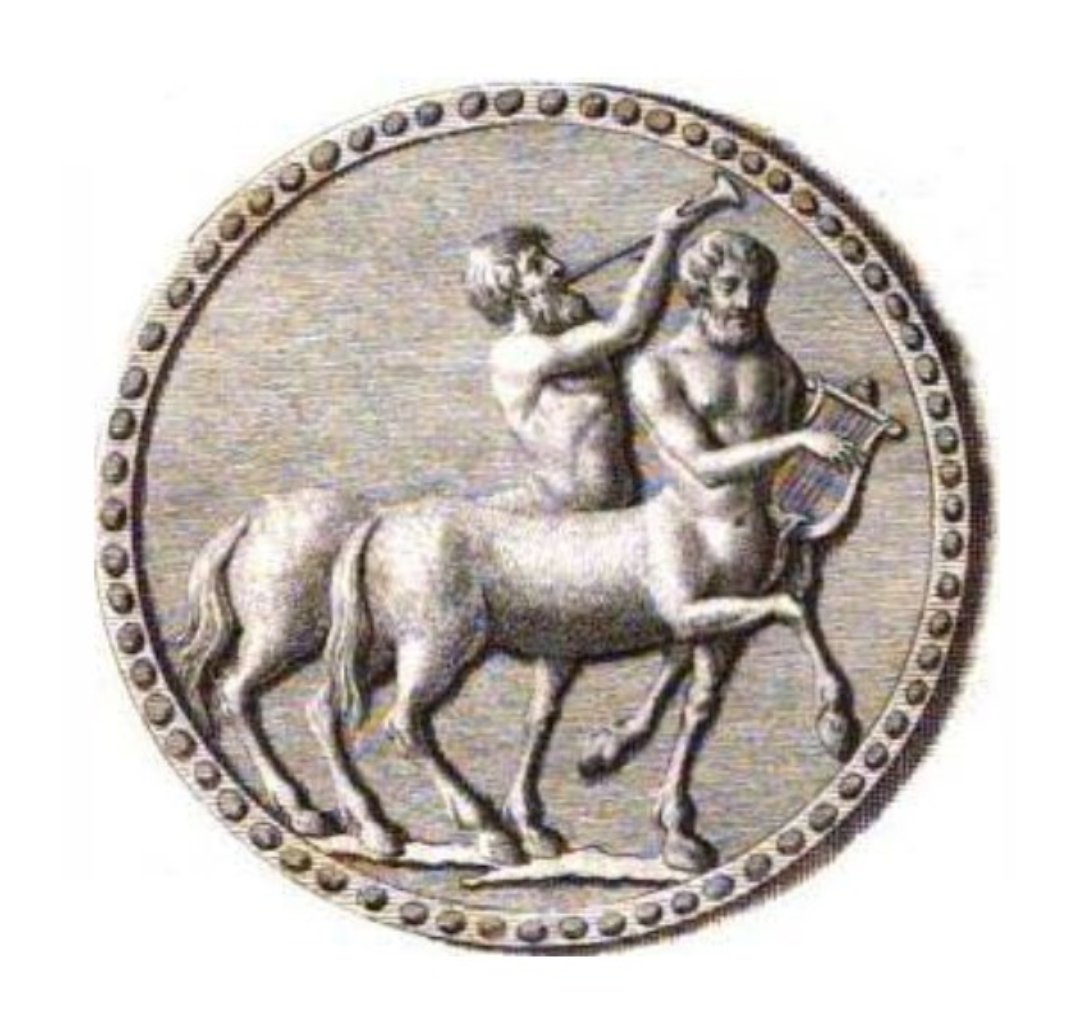
Published by Centaurus Press · Universitas Scholarium · All rights reserved.