

A Martin Barkham novel. Ancient texts and modern consequences.
“Ginsberg-Cobden writes with the relentless pace of Harlan Coben and the emotional depth of Lisa Gardner. A stunning new voice in thriller fiction.”
The call came at 6:47 AM, which meant it was bad.
Martin Barkham knew this because good news waited for reasonable hours. Good news respected boundaries. Bad news kicked down doors at dawn, didn’t care that you were still in bed with your wife, didn’t care that the coffee hadn’t finished brewing, didn’t care about anything except delivering its payload.
He picked up on the third ring. “This is Martin.”
“Martin.” The voice was Douglas Billington’s, but wrong somehow—stripped of its usual bonhomie, its salesman’s smoothness. Douglas had been one of the great closers in baseball history, a right-handed pitcher who’d once struck out seventeen batters in a playoff game. His voice had always carried that same confidence, even twenty years after retirement. Not now. Now it sounded like gravel in a tumbler. “I need your help.”
Martin sat up. Beside him, Martina stirred but didn’t wake. Morning light leaked through the curtains.
“Douglas. What’s wrong?”
A pause. The kind of pause that carried weight.
“Tyler’s dead.”
Martin felt something cold settle in his chest. Tyler. Douglas’s son. Seventeen years old, the last time Martin had seen him—awkward and tall, his father’s height without his father’s coordination, bright-eyed at some charity dinner where Douglas had been working the room and Tyler had been working his phone.
“Jesus. Douglas, I’m so sorry. What happened?”
“They’re saying it was a robbery.” Douglas’s voice cracked on the word. “But it wasn’t. It wasn’t a goddamn robbery, Martin. Someone killed my son. In the library. The library. And they’re not—the cops aren’t—” He stopped. Started again. “I need someone who will actually look.”
Martin was already standing, already reaching for the pants he’d draped over the chair. Martina opened her eyes now, watched him with the quiet alertness of someone who’d been a detective’s wife for fifteen years before becoming a sports agent’s wife. She knew the difference between a work call and a crisis call.
“Where are you?” Martin asked.
“The precinct. Midtown South. They’ve been asking me questions for hours. Like I’m a suspect. Like I could have—” His voice broke completely now. The closer. The dealmaker. Broken.
“Stay there. Don’t say anything else without a lawyer present. I’m on my way.”
“Martin.” Douglas’s voice caught. “There’s something else. Something they’re not telling me. I can feel it. You know when something’s off? When the story doesn’t add up? This doesn’t add up.”
Martin knew. He’d spent his career reading people, reading situations, knowing when a client was lying about an injury or when an owner was bluffing about salary caps. His old friend Algie called it his “bullshit detector.” But it wasn’t supernatural. It was just pattern recognition. Twenty-five years of watching people pretend.
“I’ll be there in forty minutes,” Martin said. “We’ll figure out what happened.”
He hung up. Martina was already out of bed, pulling a robe over her shoulders.
“Douglas Billington?” she asked.
“His son. Tyler. Dead.”
“Oh God.” She pressed her hand to her mouth. “How?”
“That’s what I’m going to find out.”
The Midtown South Precinct sat on West 35th Street, a squat functional building that looked like what it was: a place where bad things got processed. Martin had been here before, years ago, when one of his clients had gotten into a bar fight that turned ugly. He remembered the fluorescent lights, the coffee that tasted like it had been brewed during the Reagan administration, the particular smell of institutional despair.
Douglas was in an interview room. Through the wire-reinforced window, Martin could see him slumped at a metal table, a paper cup of coffee untouched in front of him. He looked like he’d aged ten years since the charity dinner. His silver hair, usually immaculately styled, was disheveled. His eyes were red-rimmed and hollow.
A detective intercepted Martin before he could reach the door. She was short, compact, with dark hair pulled back in a practical ponytail and the kind of eyes that had seen too much to be surprised by anything.
“You’re Barkham?”
“I am. I’m here for Douglas Billington.”
“Rosa Vega.” She didn’t offer her hand. “He asked for you specifically. Not a lawyer. You.”
“He trusts me.”
“That’s sweet. You’re not a lawyer. You’re a sports agent.”
“I know what I am, Detective. I also know Douglas Billington has just lost his son and has been sitting in that room for—” he checked his watch “—nearly seven hours. He’s not a suspect. He’s a grieving father.”
Vega’s expression didn’t change. “Everyone’s a suspect until they’re not.”
“Is he being charged with something?”
“No.”
“Then he’s free to go.”
Vega studied him for a long moment. Then something shifted in her face—not warmth, exactly, but a kind of recognition. “You’re not wrong. We were wrapping up anyway.” She stepped aside. “But Mr. Barkham? Your friend isn’t telling us everything. He knows more than he’s saying about why his son was in those stacks. And eventually, the truth comes out. It always does.”
Martin held her gaze. “Then I’ll help you find it.”
In the car, Douglas stared out the window at the city sliding past. Morning traffic crawled along Eighth Avenue, taxi horns punctuating the silence.
“Tell me what happened,” Martin said.
Douglas didn’t turn from the window. “They found him in the library. The New York Public Library, the big one on Fifth Avenue. In the stacks. You know the stacks?”
Martin shook his head.
“Underneath the main reading room. Seven stories of them, underground, going down and down. Storage for millions of books. The public doesn’t have access. You need special permission.”
“How did Tyler get permission?”
Douglas finally looked at him. His eyes were wet. “I don’t know. That’s what I don’t understand. He was supposed to be at school. He was supposed to be—” He stopped. Wiped his face with the back of his hand. “There was someone with him. A man. Julian Mercer. Some kind of professor. They found them together. Both dead.”
“How?”
“They won’t tell me the details. Just that there was—” Douglas swallowed. “Violence. There was violence.”
Martin felt the cold thing in his chest grow heavier. “And the robbery angle?”
“There was a scroll. Some kind of ancient document. Tyler had been... interested in antiquities lately. I bought him some books, encouraged it. I thought—I thought it was good. A real passion, you know? Not just video games and social media. Something real.” His voice cracked again. “The scroll was damaged. Blood, they said. Water. The writing was destroyed. Police think someone was trying to steal it. That Tyler and this Mercer guy got in the way.”
“But you don’t think so.”
Douglas shook his head slowly. “Tyler knew something. The last few weeks, he was... different. Excited, but also scared. He kept asking me questions. About business ethics. About when it was okay to break rules. About whether some secrets were worth keeping.”
Martin waited.
“I thought he was talking about school. Some assignment. I didn’t—” Douglas’s face crumpled. “I didn’t pay enough attention. I never paid enough attention. And now he’s gone. My boy is gone.”
Martin put his hand on Douglas’s shoulder. He didn’t have words. There were no words. But in that moment, watching his old friend collapse under the weight of his grief, Martin made a decision.
Tyler Billington had died for a reason. And Martin Barkham was going to find out what it was.
Even if the truth was something no one wanted to hear.
The New York Public Library opened at ten. Martin was there at nine forty-five, standing between the marble lions—Patience and Fortitude, he remembered from some long-ago school trip—watching the morning crowd gather on the steps. Tourists with cameras. Students with backpacks. A homeless man muttering to himself near the fountain.
None of them knew that twelve hours ago, two people had died beneath their feet.
He’d spent the previous night on the phone with Algie, who had connections everywhere. Algernon Smythe-Bottomley didn’t sleep much anyway, and he’d been delighted to receive a call at 2 AM.
“Darling,” Algie had said, “you do know how to make an old queen feel wanted. A murder in the stacks? How deliciously gothic.”
“Can you find out about Julian Mercer? The man who died with Tyler?”
“Columbia professor, supposedly. I’ll have his entire life story by breakfast. And Martin?” Algie’s voice had shifted, lost its theatrical edge. “I’m sorry about the boy. Douglas must be devastated.”
“He is.”
“Then we’ll find out what happened. Whatever it takes.”
Whatever it takes. That was Algie’s code. It meant he’d use every resource at his disposal—legal and otherwise. Martin had learned long ago not to ask too many questions about Algie’s methods.
Now, standing in the January cold, Martin watched a woman in a tailored coat approach the library’s main entrance before the doors opened. She had credentials. She was waved through. He noted the way she moved—purposeful, confident, familiar with the building’s rhythms.
At ten sharp, the doors opened. Martin joined the flow of visitors, passed through the vaulted splendor of Astor Hall, and made his way to the information desk.
“I’m looking for someone who can tell me about the restricted stacks,” he said.
The woman behind the desk—sixtyish, silver-haired, with reading glasses on a chain—looked at him over those glasses. “The stacks aren’t open to the public.”
“I understand. But I’m investigating the incident that occurred yesterday. On behalf of the family.”
Her expression changed. Softened. “You’re here about the boy.”
“Tyler Billington. Yes.”
She glanced around, then lowered her voice. “The police have been here all morning. They’ve sealed off the lower levels. But if you want to understand the stacks...” She wrote something on a slip of paper and slid it across the desk. “Dr. Richard Holloway. He’s in the Manuscripts and Archives Division. Third floor, Room 328. He knows that building better than anyone alive.”
Dr. Holloway was exactly what Martin expected from a career archivist: rumpled tweed jacket, wire-rimmed spectacles, the distracted air of someone whose mind was perpetually elsewhere—specifically, in the past. His office was cramped, every surface covered with papers and books and the particular organized chaos of serious scholarship.
“Mr. Barkham.” Holloway didn’t rise from behind his desk. “The police told me someone might come asking questions. I didn’t expect a sports agent.”
“I represented Tyler’s father. A long time ago.”
“Ah.” Holloway removed his spectacles, polished them with his tie. “Douglas Billington. I remember him. Remarkable fastball. Less remarkable judgment in other areas.”
Martin filed that comment away. “What can you tell me about what happened?”
“What happened is that two people died in my stacks. My stacks, Mr. Barkham. I’ve worked in this building for thirty-two years. We’ve never had a violent death. Not once. And now...” He shook his head. “The police believe it was a robbery. Someone wanted the scroll.”
“Tell me about the scroll.”
Holloway’s eyes flickered. Something passed across his face—caution, perhaps. Or fear. “It was brought in for authentication. Dr. Mercer was examining it. He was supposedly an expert in Greco-Roman antiquities.”
“Supposedly?”
“I’ve been in this field a long time. I know most of the serious scholars. I’d never heard of Julian Mercer before last month. But his credentials checked out. Columbia University, specializing in Hellenistic religious texts. Published papers, conference appearances, the usual academic footprint.”
“And the scroll itself?”
Holloway stood, moved to his window. The view looked out over Bryant Park, gray and bare in the winter light. “Leather parchment. Very old. Second century, possibly first. The writing was in Greek. Some kind of religious text, from what little Mercer shared with me.”
“What kind of religious text?”
“He wouldn’t say specifically. But he mentioned the Kabeiroi.” Holloway turned back to face Martin. “Do you know what the Kabeiroi were?”
“No.”
“Mystery gods. Pre-Greek, actually—older than the Olympians. They were worshipped primarily on an island called Samothrace, in the northern Aegean. The Samothracian Mysteries were second only to the Eleusinian Mysteries in importance. People came from all over the ancient world to be initiated. Philip of Macedon, Olympias, countless Roman emperors.”
“And these scrolls described the mysteries?”
“That’s what made them valuable.” Holloway’s voice dropped. “The mysteries were secret. Initiates were sworn to silence, on pain of death. Almost nothing survives about what actually happened during the initiation rites. If these scrolls contained genuine information about the ceremonies...” He spread his hands. “You’re talking about one of the most significant archaeological discoveries in a generation. Worth millions. Maybe hundreds of millions, to the right collector.”
Martin felt the cold thing in his chest shift. “Who else knew the scroll was here?”
“Very few people. Mercer arranged everything through official channels. The authentication was supposed to be quiet, discrete. But somehow...” Holloway stopped.
“Somehow someone found out.”
“Yes.”
“Who brought the scroll to Mercer in the first place? Who owned it?”
Holloway’s face closed down. The caution returned. “I don’t know.”
He was lying. Martin could see it in the way his eyes moved, the subtle tension in his shoulders. Pattern recognition. Twenty-five years of watching people pretend.
“Dr. Holloway,” Martin said quietly, “a seventeen-year-old boy is dead. Whatever you’re protecting, whatever you’re afraid of—it’s not worth more than the truth.”
The archivist stared at him for a long moment. Then something in him seemed to collapse.
“The scroll came from Douglas Billington,” he said. “Tyler’s father brought it to us three weeks ago. He wanted to know if it was genuine. And now his son is dead, and the scroll is ruined, and I don’t know what any of it means.”
Martin felt the ground shift beneath him.
Douglas Billington. His client. His friend. The grieving father who’d called him for help.
Douglas had lied to him. Had sat in that car, tears streaming down his face, and pretended he knew nothing about why his son was in those stacks.
He knows more than he’s saying, Detective Vega had told him. The truth always comes out.
Martin stood. “Thank you, Dr. Holloway. You’ve been very helpful.”
“Mr. Barkham?” Holloway’s voice stopped him at the door. “Be careful. Two people who touched that scroll are already dead. Whatever secrets it contained... someone is willing to kill to keep them buried.”
Martin nodded. Then he walked out into the fluorescent-lit hallway, his mind already racing, already planning his next move.
He needed to talk to Douglas again.
And this time, Douglas was going to tell him the truth.
Douglas Billington lived in a brownstone on East 71st Street, the kind of place that whispered old money even if the money was relatively new. Martin had been here before, years ago, for a dinner party celebrating Douglas’s retirement from baseball. He remembered chandeliers and canapés and Douglas’s wife, Caroline, circulating with effortless grace.
Caroline had died of cancer four years ago. Tyler had been thirteen.
The housekeeper let Martin in. The foyer was the same—marble floors, fresh flowers, the scent of furniture polish—but the rest of the house felt different. Stale. Like a museum that had stopped receiving visitors.
Douglas was in the study, staring at nothing. He’d changed clothes since the precinct, but the shower and the fresh suit hadn’t touched the devastation in his face. A glass of whiskey sat untouched on the desk beside him.
“Martin.” His voice was hollow. “Did you find something?”
Martin closed the door behind him. “You lied to me.”
Douglas’s head came up slowly. “What?”
“The scroll. You told me Tyler had gotten interested in antiquities. You bought him some books. You encouraged his passion.” Martin kept his voice flat, controlled. “You didn’t mention that you’re the one who brought the scroll to the library. That you hired Julian Mercer to authenticate it. That this whole thing started with you.”
For a long moment, Douglas didn’t move. Then he reached for the whiskey and drained it in one swallow.
“Who told you?”
“It doesn’t matter who told me. What matters is that my friend, the man who called me at dawn begging for help, the man who wept in my car about his dead son—that man has been lying to me from the beginning.”
“I didn’t lie.” Douglas’s voice cracked. “I just... didn’t tell you everything.”
“That’s the same thing.”
“No.” Douglas stood, moved to the window. The afternoon light was gray, washing out the color in the room. “It’s not. A lie is telling you something false. I just... I couldn’t tell you everything. Not yet. Not until I understood what happened.”
“Then help me understand. Where did the scroll come from?”
Douglas was quiet for a long time. When he spoke, his voice was barely above a whisper.
“Victor gave it to me.”
“Victor Ashworth? Your business partner?”
Douglas nodded. “We’ve been working together for twelve years. Investment management, mostly. High-net-worth clients, private equity, the usual. But Victor... Victor has other interests. He’s been collecting antiquities for decades. Has contacts all over the world—auction houses, private dealers, people who can find things that aren’t supposed to be found.”
Martin felt something cold move through him. “Things that aren’t supposed to be found. You mean stolen goods.”
“I don’t ask where they come from.” Douglas’s voice was defensive now. “Victor handles that side of things. I just... I helped him move money sometimes. Structured transactions to avoid certain... complications.”
“Money laundering.”
Douglas flinched. “That’s not—it’s more complicated than that.”
“It really isn’t.” Martin kept his voice even, though rage was building in his chest. “You’ve been helping your partner launder money through antiquities purchases. Probably for years. And now your son is dead, and you want me to believe it’s a coincidence?”
“I don’t know!” Douglas spun around, and for the first time Martin saw the terror beneath the grief. “That’s why I called you. Victor gave me the scroll three months ago. Said it was something special, something that could be worth a fortune if it was genuine. He wanted me to get it authenticated—quietly, through legitimate channels. I found Mercer. He seemed legitimate. Columbia credentials, published papers, everything checked out.”
“But?”
“But Tyler found out about it.” Douglas’s voice broke. “I don’t know how. He must have seen something, heard something. Last month he started asking questions. About Victor. About the business. About where certain money was coming from. I thought he was just... being seventeen, you know? Challenging authority. I brushed him off.”
“And then?”
“Three days ago, he told me he’d been researching the scroll on his own. That he’d found something troubling. Something about Julian Mercer. He wanted me to stop the authentication, to pull out of whatever Victor had gotten us into.” Douglas’s face crumpled. “I told him to mind his own business. To focus on school and let the adults handle adult problems. Those were the last words I said to my son. Let the adults handle it.“
The rage in Martin’s chest cooled into something harder. Something like resolve.
“You think Victor had them killed.”
“I don’t know what to think anymore.” Douglas sank back into his chair. “Victor and I have been friends for twenty years. He was at Caroline’s funeral. He held me while I cried. But this scroll... there’s something wrong with it. Something he’s not telling me.”
“Where is Victor now?”
“I don’t know. I’ve been calling him since yesterday. His phone goes straight to voicemail. His assistant says he’s traveling. But she won’t say where.”
Martin pulled out his phone. “I need to make a call.”
He stepped into the hallway and dialed Algie’s number. It rang twice.
“Darling.” Algie’s voice was bright, theatrical as always. “I was just about to call you. I have some absolutely fascinatinginformation about your Dr. Julian Mercer.”
“Tell me.”
“He doesn’t exist. I mean, he exists—existed—as a person. But the Columbia credentials? Fabricated. The published papers? Written under another name. His real name is Marcus Webb. Ring any bells?”
Martin searched his memory. “No.”
“It should. Marcus Webb was convicted of antiquities fraud in 2018. Sold millions of dollars worth of forged artifacts to collectors across Europe. Served three years in federal prison. Released in 2021. And then he simply... vanished. Until he resurfaced as Julian Mercer, respectable academic.”
“Someone gave him a new identity.”
“Someone with resources. Someone with connections. Someone who needed a pet expert who couldn’t afford to ask questions.” Algie paused. “I assume you’ve worked out by now that your client isn’t entirely innocent in all this?”
“I know about Victor Ashworth. The antiquities dealing, the money.”
“Then you know more than the police. But here’s the interesting part: I did some digging into the scroll itself. The Kabeiroi connection? It’s not just academic interest. Three months ago, a scholar named Sophia Andreou fell from a building in Rome. She was studying fragments of what she believed were Samothracian mystery texts. Six months before that, a man named Abdel Kader Diallo died in a car accident in Mali. He’d been working to recover manuscripts that were smuggled out of Timbuktu during the ISIS occupation. Some of those manuscripts were rumored to contain Greek texts of unknown origin.”
Martin felt the world tilt slightly. “Two other deaths.”
“Two other deaths connected to scrolls that sound remarkably similar to the one in your library. Someone, Martin, is collecting these texts. And they’re willing to kill to keep them hidden.”
“Who?”
“I don’t know yet. But I will.” Algie’s voice lost its playfulness. “This isn’t about money anymore. It’s about something someone wants buried. And whoever they are, they just killed a seventeen-year-old boy. That, my darling, is unforgivable.”
Martin ended the call and stood in the hallway, his mind racing.
Rome. Mali. New York.
Three deaths. Three scrolls. One secret someone was willing to kill to protect.
He walked back into the study. Douglas looked up at him with desperate hope.
“You need to tell me everything about Victor Ashworth,” Martin said. “Everything. Because this isn’t about one scroll anymore. It’s about something much bigger. And until I understand what it is, no one connected to this is safe.”
Including, he didn’t say, Douglas himself.
Algie’s apartment occupied the top two floors of a pre-war building on Central Park West. The elevator opened directly into a foyer that cost more than most people’s houses—Venetian marble, a Chagall on the wall, fresh orchids in crystal vases.
Martin had been here hundreds of times, but the wealth still startled him. Algernon Smythe-Bottomley had inherited a textile fortune that his grandfather had built and his father had tripled. Algie himself had never worked a day in his life, at least not for money. What he did instead was collect information. Favors. Secrets. He knew everyone who mattered and quite a few people who didn’t but probably should.
“Darling.” Algie swept in wearing a burgundy smoking jacket and velvet slippers, a martini already in hand. He was sixty-three, silver-haired, with the kind of face that had probably been beautiful once and was now merely striking. “You look terrible. Has anyone told you that lately?”
“Not in so many words.”
“Well, I’m telling you. Sit. Drink. We need to discuss strategy.”
Martin sank into a leather armchair that probably cost more than his car. Algie handed him a whiskey—Macallan, neat, exactly how he liked it—and settled into the facing chair with the languid grace of a man who had never rushed anything in his life.
“I’ve been making calls,” Algie said. “The Marcus Webb connection is interesting, but it’s a dead end. Whoever set him up with his new identity did it well. No digital footprint, no paper trail. Someone with serious resources.”
“Victor Ashworth has resources.”
“Victor Ashworth has money, which isn’t quite the same thing. The kind of identity creation we’re talking about requires intelligence contacts. Government-level tradecraft. Our Mr. Webb didn’t just buy a fake passport—he was rebuilt from the ground up.”
Martin absorbed this. “So someone bigger than Ashworth is involved.”
“Almost certainly. But here’s what keeps me up at night.” Algie leaned forward, and for a moment the theatrical mask slipped, revealing the sharp intelligence beneath. “The scroll was destroyed. Not stolen—destroyed. Someone poured blood and water on it specifically to obliterate the text. If this were about money, about selling a valuable artifact, why destroy it?”
“To hide what it said.”
“Exactly. Which means the content was more dangerous than the object itself. Someone wanted that information erased from the world.”
Martin thought about Dr. Holloway’s description. Samothracian mysteries. Secret initiation rites. Information that had been guarded for two thousand years.
“Could the scrolls be forgeries?” he asked. “Like Marcus Webb’s other work?”
“Possible, but unlikely. Webb was good—good enough to fool collectors—but the kind of authentication process the library uses would catch most fakes. And more importantly, why kill people over a forgery? The murders only make sense if the scrolls are genuine.”
“Then what’s in them that’s worth killing for?”
Algie swirled his martini. “I have a theory. The Samothracian mysteries weren’t just religious ceremonies. They were political events. Major figures from across the ancient world were initiated—kings, emperors, generals. Philip of Macedon met Olympias at Samothrace. Alexander the Great may have been conceived there. Roman emperors used initiation as a form of legitimacy.”
“So?”
“So the mystery rites included secret names. Secret oaths. Information that connected powerful people across centuries.” Algie’s eyes glittered. “What if the scrolls didn’t just describe the ceremonies? What if they contained records? Lists of initiates, perhaps. Records of what they promised, what they revealed during the rites.”
Martin felt something click in his mind. “Blackmail material.”
“From two thousand years ago, yes. But here’s the thing about powerful families—they tend to stay powerful. What if some of those ancient names still matter today? What if certain families have been connected to Samothrace for generations, and the scrolls prove it?”
“That’s a stretch.”
“Is it?” Algie set down his glass. “There are families in Europe that trace their lineage back to Rome. To Greece. To the original mystery cults. I know some of them. They take their heritage very seriously. Seriously enough to kill for it? I honestly don’t know. But someone is killing, Martin. And they’re doing it across continents.”
Martin’s phone buzzed. He glanced at the screen. Detective Vega.
“I need to take this.”
He stepped onto the terrace, the cold January air biting at his face. The park stretched below, skeletal trees against a gray sky.
“Detective.”
“Mr. Barkham. We need to talk. Something’s come up with your friend Mr. Billington.”
“What kind of something?”
“The kind where his business partner’s body just turned up in the East River. Victor Ashworth. Single gunshot wound to the head. Whoever did it wasn’t trying to make it look like an accident.”
Martin closed his eyes. The cold thing in his chest was spreading now, filling the spaces between his ribs.
“When?”
“Medical examiner says he’s been dead at least forty-eight hours. Which means he was killed before the library murders.” She paused. “Mr. Barkham, your client just became our primary suspect. I need you to bring him in. Voluntarily, if possible. Otherwise, we’re coming with a warrant.”
Martin thought about Douglas in his gray-lit study, whiskey untouched, talking about his dead son. The man had lied about the scroll. Had lied about Victor. But could he have killed his own partner? His own child?
“I’ll talk to him,” Martin said. “Give me two hours.”
“One hour. And Mr. Barkham? If he runs, it won’t just be him I’m coming after. Harboring a fugitive is a serious charge.”
She hung up. Martin stood on the terrace, looking out at the frozen park, and felt the case crack open beneath him like ice on a river.
Victor Ashworth was dead.
Douglas Billington was a suspect.
And somewhere, someone was still out there. Someone who had killed four people over a secret that had been kept for two thousand years.
Martin found Douglas exactly where he’d left him—in the study, staring at nothing. The whiskey glass had been refilled and emptied again. The gray afternoon had darkened toward evening.
“Victor’s dead,” Douglas said before Martin could speak. “I saw it on the news. They found him in the river.”
Martin stopped in the doorway. “You saw it on the news.”
“Twenty minutes ago. Some reporter standing on the promenade, talking about an unidentified body.” Douglas laughed—a hollow, broken sound. “But I knew. The moment they said it was a man in his fifties, well-dressed, no identification... I knew it was Victor.”
“The police think you did it.”
Douglas didn’t seem surprised. “Of course they do. Partner turns up dead, millions of dollars in questionable transactions, my son killed in what looks like a robbery gone wrong... I’d suspect me too.” He looked up at Martin with red-rimmed eyes. “Did you come to arrest me?”
“I’m not a cop. But they’re coming, Douglas. In about forty-five minutes. They’ll want to question you, and they won’t be gentle.”
“Let them come.” Douglas slumped back in his chair. “I didn’t kill Victor. I didn’t kill anyone. But what does it matter now? Tyler’s gone. Everything else is just... noise.”
Martin moved into the room, closed the door behind him. “It matters because whoever killed Victor probably killed your son. And they’re still out there. If you want justice for Tyler—real justice—then you need to start telling me the truth. All of it.”
“I’ve told you—”
“You’ve told me pieces. Fragments. Enough to make yourself look sympathetic while leaving out the parts that make you complicit.” Martin sat down across from Douglas, leaned forward. “Victor gave you the scroll three months ago. You brought it to the library for authentication. But where did Victor get it?”
Douglas was silent for a long moment. Then: “He said it came from a private collection. European. Some family in Greece that had held onto it for generations.”
“Did he say which family?”
“No. He was cagey about it. Said the seller wanted anonymity, that discretion was part of the deal.” Douglas rubbed his face. “I should have asked more questions. But Victor was always the one with the contacts, the connections. I handled the money. He handled the sources. That was our arrangement.”
“And the other scrolls? The ones connected to the deaths in Rome and Mali?”
Douglas’s face went pale. “What other scrolls?”
“A woman named Sophia Andreou died in Rome six months ago. She was studying fragments of Samothracian texts. Before that, a man named Abdel Kader Diallo died in Mali. He was working with manuscripts smuggled out of Timbuktu. Both deaths were ruled accidental. Both people were working on materials that sound very similar to your scroll.”
“I don’t—” Douglas stopped. Something flickered across his face. “Wait. Victor mentioned Rome once. A few months ago. He said there had been a setback with one of his suppliers. Someone he’d been working with had died unexpectedly. I didn’t think anything of it at the time.”
“A setback.”
“That’s what he called it. Like it was a business inconvenience.” Douglas’s voice cracked. “Oh God. Did Victor know about this? Was he involved in those deaths?”
Martin didn’t answer. He didn’t need to.
“There’s something else,” he said instead. “Julian Mercer—the man who was authenticating your scroll—his real name was Marcus Webb. He was a convicted forger. Someone gave him a new identity, set him up with fake academic credentials. Someone with serious resources.”
Douglas shook his head slowly. “Victor couldn’t have done that. He didn’t have those kinds of connections. He knew art dealers, collectors, a few shady types who could move merchandise across borders. But fake identities? Intelligence tradecraft? That’s not him.”
“Then who?”
“I don’t know.” Douglas’s voice was raw. “I’m telling you, I don’t know. But Victor was scared, these last few weeks. I could see it. He was looking over his shoulder, taking calls in private, being cagey even with me. I thought maybe he’d gotten in over his head with one of his dealers. I never imagined...”
His voice trailed off. Outside, a car door slammed. Voices in the street.
“They’re here,” Martin said. “Douglas, I need you to listen to me. Don’t say anything without a lawyer. Answer their questions about Tyler—be a grieving father—but the moment they start asking about Victor or the scroll, you shut down. Understood?”
“What are you going to do?”
Martin stood. “I’m going to find out who’s really behind this. Someone killed your son, Douglas. And Victor. And at least three other people. That someone is still out there, and they think they’ve covered their tracks.”
He moved toward the door, then stopped.
“One more question. The Greek family that sold Victor the scroll. Did he ever mention a name? Anything at all?”
Douglas thought for a moment. “Constantinos. I think he said the name was Constantinos. Something about an old museum curator who’d had the scroll for decades.”
The name hit Martin like a physical blow. Dr. Elena Constantinos. Curator at the archaeological museum on Samothrace. He’d seen her name in Algie’s research—a footnote, barely mentioned.
But now it meant something.
“Thank you,” Martin said. “Get through tonight. I’ll be in touch.”
He slipped out the back just as the police came through the front. In his pocket, his phone was already buzzing with messages from Algie.
They had a name now. A thread to pull.
And somewhere on a frozen island in the Aegean, a woman was waiting who might have answers—or who might be the next to die.
Martina was waiting for him when he got home.
She sat at the kitchen table, a glass of wine in front of her, still wearing her work clothes—a gray blazer over a silk blouse, her dark hair pinned up in a way that meant she’d had meetings all day. She was a pediatric nurse practitioner, which meant she spent her days taking care of sick children and her evenings putting up with a husband who kept getting himself involved in other people’s disasters.
“Long day,” she said. It wasn’t a question.
Martin sank into the chair across from her. “Douglas Billington’s son is dead. His business partner is dead. And now he’s being questioned for murder.”
Martina absorbed this without flinching. After fifteen years with Martin—first when he’d been a detective, then through the career change to sports management—she’d learned to take bad news straight.
“Do you think he did it?”
“No.” Martin paused. “But I also think he’s not telling me everything. There’s something bigger going on here, Martina. Something that stretches back years, maybe decades. People have been dying over these scrolls in Rome, in Mali, now here. Someone is trying to keep something buried, and they’re willing to kill anyone who gets close.”
“And you’re getting close.”
It wasn’t an accusation. She said it the way she might note that a storm was coming—factual, calm, with just a hint of underlying concern.
“I have to. A seventeen-year-old boy died. His father was my client, my friend. I can’t just walk away.”
“I know.” She reached across the table and took his hand. Her fingers were warm, steady. “I’ve never asked you to walk away from anything, Martin. That’s not who you are. But I need you to promise me something.”
“What?”
“That you’ll be careful. Really careful. Not the kind of careful where you say you’ll be careful and then charge into danger anyway. The kind where you actually think before you act.”
Martin looked at her—at the fine lines around her eyes that hadn’t been there when they’d met, at the strand of gray in her dark hair that she refused to color, at the quiet strength that had anchored him through every crisis of their life together.
“I promise,” he said.
She held his gaze for a moment longer, then nodded. “Good. Now tell me what you’ve found.”
He told her everything—the scroll and its destruction, Julian Mercer’s false identity, the deaths in Rome and Mali, Victor Ashworth in the river, Douglas’s arrest. As he talked, she listened in that way she had, absorbing details, asking occasional questions, building the picture in her mind.
When he finished, she was quiet for a moment.
“Samothrace,” she said finally. “The Greek island. That’s where this leads?”
“That’s where the scrolls come from. And there’s a woman there—a museum curator named Elena Constantinos—who apparently sold some of these artifacts decades ago. She might know what’s in them. Why they’re worth killing for.”
“Then you’re going to Greece.”
“I have to. I need to talk to her in person. This isn’t something I can do over the phone.”
Martina was silent. She finished her wine, set the glass down carefully.
“January in the northern Aegean,” she said. “That’s not exactly tourist season.”
“No.”
“Remote island. Limited ferry service. Storms, delays, who knows what else.” She looked at him. “Do you even speak Greek?”
“Algie knows people. He’s making arrangements.”
“Of course he is.” A small smile crossed her face—fond and exasperated in equal measure. “You two and your arrangements.”
“Martina—”
“Go.” She stood, came around the table, put her hands on his shoulders. “Go to your frozen island and find your mysterious curator and do what you need to do. Just come back to me in one piece.”
He reached up, covered her hands with his. “I always do.”
“You always try. There’s a difference.” She leaned down and kissed him—soft, lingering, with an undertone of worry she couldn’t quite hide. “I’m going to bed. You should eat something. And Martin?”
“Yeah?”
“When you get back, we’re taking a real vacation. Somewhere warm. Somewhere with beaches and umbrella drinks and absolutely no ancient mysteries.”
He smiled. “Deal.”
She went upstairs. He sat alone in the kitchen, listening to the familiar sounds of the house settling around him—the tick of the clock, the hum of the refrigerator, the creak of the old floors.
Somewhere across the ocean, an island waited. A woman who might have answers. A truth that had been buried for millennia.
He pulled out his phone and called Algie.
“Darling,” Algie answered. “I assume you’re calling to tell me we’re going on a trip.”
“We?”
“You didn’t think I was going to let you do this alone, did you? Besides, I’ve always wanted to visit Samothrace. The mysteries, the ancient rites, that divine statue of Nike before the French stole it—such drama. I’ve already booked us on a flight to Thessaloniki tomorrow evening. From there, we’ll need to get to Alexandroupolis, then catch a ferry to the island. Assuming the weather cooperates, which it probably won’t this time of year.”
“Algie, this could be dangerous.”
“Darling, I’ve been to fashion week in Paris. I know dangerous.” His voice shifted, lost its playful edge. “Someone killed a boy, Martin. A seventeen-year-old boy who was just trying to do the right thing. I’m going to help you find out who, and then I’m going to make sure they pay for it. That’s not negotiable.”
Martin closed his eyes. In twenty-five years of friendship, he’d learned that there was no point arguing with Algie when he got like this.
“Tomorrow evening,” he said. “I’ll be ready.”
“Pack warm. From what I’ve read, Samothrace in January makes the Upper East Side look tropical.” A pause. “And Martin? Sleep if you can. You’ll need your strength.”
The line went dead. Martin sat in the darkness of his kitchen, thinking about frozen islands and ancient secrets and a boy who’d died in a library.
Tomorrow, he would begin the hunt.
Tonight, he would try to rest.
But sleep, he knew, would not come easily.
Detective Vega called at 7 AM.
Martin was already awake, had been since five, packing a bag and reading everything Algie had sent him about Samothrace—ferry schedules, weather forecasts, the sparse accommodation options available in winter. The island looked beautiful in the photographs, all dramatic cliffs and ancient ruins, but everything he read confirmed what he’d suspected: this would not be an easy trip.
“Your friend Billington lawyered up,” Vega said without preamble. “Won’t say another word without his attorney present. Smart, I suppose, but it makes my job harder.”
“Are you charging him?”
“Not yet. We don’t have enough for murder. But we’ve got financial crimes—enough to hold him while we keep digging.” A pause. “I called to give you a heads up. The FBI is taking over the case. The moment Victor Ashworth’s name connected to international antiquities trafficking, it became federal.”
Martin felt something tighten in his chest. “That fast?”
“Mr. Barkham, there are names in Ashworth’s files that make my department nervous. Serious names. The kind of people who don’t get investigated by local cops.” Vega’s voice hardened. “Where are you right now?”
“At home. Why?”
“Because I’m about to tell you something I probably shouldn’t. Ashworth was on a watchlist. Has been for years. The feds have been tracking a network of antiquities dealers moving artifacts out of the Middle East, North Africa, the Mediterranean. High-end stuff—ancient manuscripts, religious artifacts, museum-quality pieces. Some of it looted during conflicts, some of it stolen from private collections. They thought Ashworth might be connected, but they could never prove it.”
“And now he’s dead.”
“Now he’s dead. Along with his pet authenticator and a seventeen-year-old witness.” Vega let that hang. “Someone is cleaning house, Mr. Barkham. And they’re doing it efficiently. The FBI thinks there’s someone above Ashworth—a handler, a client, someone pulling the strings. They don’t know who.”
Martin thought about Algie’s theory. Ancient families. Secret connections. Power that stretched back millennia.
“Do they know about the other deaths? Rome and Mali?”
Silence. Then: “How do you know about those?”
“I have resources.”
“Better resources than the FBI, apparently. They connected those cases this morning. It took them longer than it should have.” She sounded grudgingly impressed. “This is bigger than one dead teenager and his art-dealing father figure. You understand that, right?”
“I understand.”
“Then you also understand that you should probably stay out of it. Let the professionals handle things from here.”
Martin didn’t answer. He was thinking about Tyler Billington, seventeen years old, bleeding out in a library basement. About Douglas, broken and desperate, asking for help. About the promise he’d made to find the truth.
“Mr. Barkham? You still there?”
“I’m here.”
“You’re not going to stay out of it, are you?”
“No.”
Vega sighed—the long-suffering sigh of someone who’d expected nothing different. “Then at least be careful. Whoever’s doing this has resources we don’t fully understand yet. And they’ve already killed at least five people that we know of.”
“Six,” Martin said. “If you count the woman in Rome and the man in Mali.”
“Six.” She was quiet for a moment. “Where are you going?”
“Greece. There’s someone I need to talk to.”
“I could tell the feds. Have them stop you at the airport.”
“You could. But you won’t.”
Another pause. “Why do you say that?”
“Because you want answers as much as I do. Because a boy died on your watch, and that bothers you. And because you know that sometimes the best way to catch a killer isn’t through proper channels.”
Vega was silent for a long moment. When she spoke again, her voice was different—harder, but also somehow more real.
“There’s a private security firm I’ve seen mentioned in some of these files. Meridian Global. Based in London, but with operations all over the world. They handle protection for wealthy families, but they also do other things—asset recovery, reputation management, problem solving. The kind of firm that makes problems disappear.”
“You think they’re involved?”
“I think someone hired them. Someone with enough money to pay for the best. The FBI doesn’t have anything solid—Meridian is careful—but they keep showing up at the edges of this case. A phone call to Ashworth six months ago. A wire transfer to an account that eventually connected to Marcus Webb. Little threads.”
Martin committed the name to memory. Meridian Global.
“Thank you, Detective.”
“Don’t thank me. I just made myself an accessory to whatever you’re about to do.” Her voice softened slightly. “Find out who killed that boy, Mr. Barkham. And then make sure they pay for it.”
She hung up. Martin stood in his bedroom, the gray winter light filtering through the windows, and felt the pieces of the puzzle shifting in his mind.
A criminal network. A watchlist. A private security firm that made problems disappear.
And somewhere in Greece, a woman who might have the answers.
His phone buzzed. Algie.
“Darling, slight change of plans. We’re leaving this afternoon instead of evening. I’ve arranged a private flight to Thessaloniki—don’t ask how—and I’ve secured us rooms at a hotel in Alexandroupolis for tonight. The ferry to Samothrace leaves at eleven tomorrow morning, weather permitting.”
“Weather permitting.”
“Yes, well, that’s the part I can’t control. There’s a system moving through the Aegean. Winds, rain, the usual Greek winter drama. We might be delayed. But we’ll get there.”
“What about Elena Constantinos? Were you able to make contact?”
“I left messages. No response yet. But I have the address of her home—she lives near the museum, in a village called Palaiopolis. Even if she doesn’t answer her phone, she can’t hide on an island that small.”
Martin thought about that. A woman hiding on a frozen island, not answering calls, while people connected to her family’s scrolls kept dying.
“She might not be hiding,” he said. “She might be next on the list.”
“Then we’d better get there quickly, hadn’t we?” Algie’s voice carried an edge of urgency beneath its usual lightness. “Pack warm, darling. And bring something for the seasickness. From what I’ve read, that ferry crossing can be... memorable.”
Martin ended the call and finished packing. Warm clothes. His passport. A small notebook and pen. The photograph of Tyler Billington that Douglas had given him—the boy smiling, still alive, still hopeful.
In a few hours, he would be on a plane to Greece.
In a few days, he would be on a frozen island at the edge of the world.
And somewhere along the way, he hoped, he would find the truth about who had killed a seventeen-year-old boy in a library basement—and why they were willing to do it again.
The private jet belonged to a friend of Algie’s—a hedge fund manager who owed him favors for reasons Martin didn’t ask about. It was small, comfortable, with cream leather seats and a bar stocked with bottles that probably cost more than Martin made in a month.
“Don’t look so uncomfortable,” Algie said, settling into his seat with a glass of champagne. “It’s just a plane.”
“It’s someone’s very expensive plane.”
“Someone who’s delighted to lend it. Trust me.” Algie smiled, but there was something behind the smile—a tension that Martin recognized. His friend was worried.
They’d been in the air for an hour, the Atlantic far below, the sky darkening toward night. Martin had spent most of that time reviewing the files Algie had compiled—everything they knew about Elena Constantinos.
She was sixty-seven years old, born on Samothrace, trained as an archaeologist in Athens. She’d worked at the Archaeological Museum of Samothrace for nearly forty years, rising to curator in 1998. She’d published papers on the Kabeiroi cult, the mystery religions, the history of the island. Well-respected in her field. Never married. No children.
And twenty-three years ago, she’d sold a collection of ancient manuscripts to a dealer in Rome. Manuscripts that, according to Victor Ashworth’s files, matched the description of the scrolls now connected to multiple deaths.
“She’s been living with this secret for over two decades,” Martin said, looking up from the papers. “If she sold those scrolls knowing what was in them—”
“Then she’s either the most foolish woman alive or the most desperate.” Algie set down his champagne. “Money troubles, perhaps? Samothrace isn’t exactly a thriving metropolis. Museum curators don’t make fortunes.”
“But she stayed. She could have left, moved somewhere safer, lived off the proceeds. Instead she stayed on the island her whole life.”
“Guilt, perhaps. Or devotion. Some people become so attached to a place that they can’t imagine leaving it.” Algie’s voice softened. “The island is connected to the mysteries, after all. Maybe she believes she’s protecting something.”
“Protecting what? The scrolls are gone.”
“The scrolls Victor Ashworth had. But what if there are more? What if her family’s collection was larger than anyone realized?”
Martin considered this. The idea that more scrolls existed—scrolls that hadn’t yet surfaced, that hadn’t yet killed anyone—was both hopeful and terrifying.
“Tell me about Meridian Global,” he said, changing direction. “What have you found?”
Algie’s expression tightened. “More than I’d like. They’re a private security firm, as Detective Vega said, but that’s like saying the ocean is a body of water. They handle everything from personal protection to corporate espionage to... let’s call it ‘situation management.’”
“Situation management.”
“When a wealthy client has a problem that can’t be solved through normal channels, Meridian makes it go away. Scandals. Witnesses. Complications. They’ve been connected to disappearances in at least four countries, though nothing has ever been proven.”
“Who runs it?”
“A man named Edmund Graves. Ex-MI6, supposedly. Left under circumstances that were never fully explained. He built Meridian from nothing over the past fifteen years, and now they’re one of the most expensive—and effective—firms in the world.”
“And you think someone hired them to clean up the scroll situation.”
“I think someone with enough money to afford Meridian is protecting a secret worth killing for.” Algie leaned forward. “Martin, the deaths we’re looking at—Victor Ashworth, Tyler Billington, Marcus Webb, the woman in Rome, the man in Mali—they’re professional. Clean. Made to look like accidents or robberies. That’s not amateur work. That’s someone who knows exactly what they’re doing and has been doing it for a long time.”
Martin thought about Tyler, seventeen years old, dying in a library basement. About Douglas, broken by grief, sitting in an interview room while the FBI built a case around him.
“If Meridian is involved, they’ll know we’re coming.”
“Almost certainly. The moment we left New York, someone noticed. These people have resources, Martin. Eyes everywhere.” Algie smiled, but it didn’t reach his eyes. “Which is why we’re not arriving through normal channels. The flight to Thessaloniki will land at a private airfield. From there, I have a car arranged to take us to Alexandroupolis. It adds a few hours, but it makes us harder to track.”
“You’ve done this before.”
“Let’s just say I’ve had reason to be... discrete in my travels.” Algie’s smile warmed slightly. “I’m not just a pretty face, darling. I’ve spent sixty years learning how to move through the world without being noticed when I need to. This is one of those times.”
Martin looked out the window at the darkness below. Somewhere beneath them, the Atlantic rolled and churned. Ahead, Europe waited—and beyond it, Greece. An island he’d never heard of a week ago.
“What if she won’t talk to us?” he asked. “Elena Constantinos. What if she refuses?”
“Then we’ll have to convince her.” Algie’s voice hardened. “A boy is dead. Three other people are dead because of scrolls that came from her family. She’s going to talk to us, Martin. She owes the world at least that much.”
The jet hummed through the night. Below, invisible in the darkness, the world turned.
And in a few hours, they would land in Greece, and the real hunt would begin.
They landed at dawn.
The private airfield sat in flat farmland outside Thessaloniki, surrounded by winter-brown fields and distant mountains dusted with snow. The air that hit Martin when he stepped off the plane was cold and damp, carrying a bite that went straight to his bones.
A black Mercedes waited on the tarmac, its driver a silent man named Kostas who shook hands without speaking and loaded their bags with mechanical efficiency. Algie had arranged everything—the car, the route, the timing—with the meticulous care of someone who’d learned long ago that details mattered.
“Three hours to Alexandroupolis,” Algie said, settling into the back seat beside Martin. “Assuming the roads are clear.”
The roads were not clear. Winter had arrived in Thrace, and the countryside showed it—gray skies pressing down on gray fields, bare trees clawing at the wind, occasional flurries of snow whipping across the highway. They passed through villages that looked shuttered and abandoned, through industrial zones that looked the same, through a landscape that felt like the edge of something rather than the center.
Martin watched it all slide past and thought about how far he was from home.
His phone buzzed. A text from Martina: Safe landing?
Safe, he wrote back. Heading to Alexandroupolis now. Love you.
Three dots appeared, then disappeared. Then: Be careful. I mean it.
He put the phone away.
“I’ve been checking the ferry schedules,” Algie said, his own phone in hand. “There’s meant to be a departure tomorrow morning at eleven, but the forecast isn’t encouraging. Winds out of the northeast, possibility of gales. The ferry might not run.”
“And if it doesn’t?”
“Then we wait. There’s only the one ferry company serving the route—Fast Ferries, they call themselves, though apparently the ‘fast’ is optimistic. In winter, they run maybe once a week, sometimes less. If we miss tomorrow’s sailing, we could be stuck on the mainland for days.”
Martin absorbed this. Days of waiting. Days when whoever was behind these killings would have time to prepare, to move, to make Elena Constantinos disappear like everyone else.
“Is there another way to reach the island?”
“Helicopter, possibly. But in this weather, no pilot would fly. Private boat, perhaps, though the seas would be brutal.” Algie shook his head. “We’re at the mercy of the elements, I’m afraid. The Greeks have been sailing these waters for three thousand years, and they’ve learned to respect them.”
The Mercedes rolled on. The scenery grew more rugged as they moved east—rocky hills, sudden gorges, the occasional glimpse of the sea gray and whitecapped in the distance. They were close to the border with Turkey here, Martin realized. Close to the edge of Europe.
“Tell me about the island,” he said. “What are we walking into?”
Algie set down his phone. “Samothrace—Samothraki in Greek—is one of the most remote islands in the Aegean. About 180 square kilometers, most of it mountain. Mount Fengari dominates everything—1,611 meters, the highest peak in the Aegean, snow-capped for most of the year. In winter, the island population drops to perhaps 1,300 people. The tourists are gone, the hotels are closed, the restaurants shut down. Just the locals, their goats, and the wind.”
“And the ruins.”
“Yes. The Sanctuary of the Great Gods at Palaiopolis. One of the most important religious sites in the ancient world, second only to Eleusis. People came from across the Mediterranean to be initiated into the mysteries. Philip of Macedon met Olympias there—Alexander the Great’s parents. Roman emperors, Greek philosophers, anyone who wanted power or protection or just to feel connected to something larger than themselves.”
“And now?”
“Now it’s a museum and a few scattered ruins. The Nike of Samothrace—that magnificent statue in the Louvre—was found there in 1863. A French archaeologist took it back to Paris, and the locals have been bitter ever since.” Algie smiled faintly. “There’s a copy in front of the museum now. Elena Constantinos would have walked past it every day for forty years.”
Martin tried to picture it—a woman spending her life in the shadow of what had been taken, guarding what remained, keeping secrets that had gotten people killed.
“Why do you think she sold the scrolls?” he asked. “If they were family heirlooms, part of her heritage?”
“Desperation, most likely. The island has no real economy. Fishing, a bit of tourism in summer, nothing else. If her family was struggling, if she needed money for care or medical bills or just to survive... people do things they regret.” Algie’s voice softened. “The question is what she knows now. Whether she understands what she set in motion all those years ago.”
The Mercedes crested a hill, and suddenly Alexandroupolis lay before them—a small city spread along the coast, gray under the gray sky, the sea stretching beyond it to a horizon lost in mist. In the distance, if you squinted, you could make out the shape of something rising from the water.
Samothrace. Faint and ghostly, like a mirage.
“There it is,” Algie said quietly. “Our frozen mystery at the edge of the world.”
Martin stared at the distant island and felt something tighten in his chest. Somewhere on that rock, a woman was waiting. A woman who might have answers—or who might become the next body in a chain of deaths that stretched across continents.
“Let’s hope the ferry runs tomorrow,” he said.
“Yes,” Algie agreed. “Let’s hope.”
But his voice didn’t sound hopeful.
The hotel was a three-star affair on the waterfront, the kind of place that would be bustling with tourists in summer but now sat nearly empty. The lobby smelled of floor polish and coffee, and the woman at the front desk looked surprised to see anyone at all.
“January,” she said, shaking her head as she processed their passports. “Nobody comes in January. The weather, the ferries... You are going to Samothraki?”
“Tomorrow,” Algie said. “The eleven o’clock ferry.”
She made a face. “Maybe. Maybe not. The wind is coming. You check the port authority website tonight, yes? They cancel sometimes. No warning. Just—” She made a cutting gesture with her hand. “No ferry.”
Their rooms were small but clean, with windows that looked out over the harbor. Martin could see the ferry terminal from his window—a concrete pier jutting into gray water, a few boats bobbing at anchor, nothing moving. Beyond, the Thracian Sea stretched toward the horizon, and somewhere out there, invisible now in the gathering dusk, lay Samothrace.
He called Martina.
“I’m in Greece,” he said. “Alexandroupolis. It’s... cold.”
“Cold.” Her voice carried warmth across the miles. “That’s very descriptive.”
“Gray. Cold. The edge of the world. There’s a sea and an island and a ferry that may or may not run tomorrow. That’s the situation.”
“And the woman you’re looking for? Elena Constantinos?”
“Still no answer to Algie’s calls. But she’s there. She has to be there.”
“Unless she’s not.”
Martin was quiet. The possibility had occurred to him—that Elena Constantinos was already dead, already another victim in the chain, already silenced by whoever was cleaning up loose ends. But he couldn’t let himself think that way. Not yet.
“I’ll know more tomorrow,” he said. “When we reach the island.”
“If you reach the island.”
“If we reach it.” He paused. “How are things there?”
“Douglas Billington made the news. Securities fraud, money laundering, possible accessory to murder. His face is everywhere.” She hesitated. “Martin, the FBI came to the house today.”
His stomach dropped. “What?”
“Two agents. Very polite, very professional. They wanted to know where you were. I told them you were traveling on business, which isn’t technically a lie.”
“What did they want?”
“To talk to you. They said you might have information relevant to their investigation. They left a card.” Another pause. “Martin, they know about Greece. They know about the Constantinos connection. One of them mentioned Samothrace by name.”
Martin closed his eyes. Of course they knew. Vega had warned him that the FBI was taking over. He’d left a trail—flights, hotel bookings, phone calls. Even with Algie’s precautions, they’d been tracked.
“What did you tell them?”
“Nothing. I said I didn’t know where you were, which was true at the time. They weren’t happy, but they were polite about it.” Martina’s voice hardened. “They also mentioned that traveling to Greece during an ongoing federal investigation could be seen as obstruction. That there could be consequences.”
“There are always consequences.”
“Martin—”
“I know. I know what I’m risking. But I can’t stop now, Martina. Not when we’re this close.”
She was silent for a long moment. When she spoke again, her voice was soft.
“Be careful. I mean it. Come home to me.”
“I will. I promise.”
He ended the call and stood at the window, watching the darkness gather over the harbor. The wind was rising now, rattling the windows, sending papers skittering along the empty promenade below.
A knock at the door.
It was Algie, looking grim.
“I’ve just heard from my contact at the port authority. Tomorrow’s ferry is cancelled. Winds too strong. Beaufort 7, possibly 8. No sailing.”
Martin felt something sink in his chest. “When’s the next one?”
“They don’t know. Maybe Wednesday. Maybe Thursday. Maybe not until next week, if the weather system stalls.” Algie moved to the window, stood beside Martin, looked out at the invisible sea. “Someone doesn’t want us to reach that island.”
“You think it’s deliberate? The weather?”
“Don’t be absurd. But whoever is behind this—Meridian, or whoever hired them—they know we’re coming. A few days’ delay gives them time. Time to reach Elena Constantinos first. Time to make sure whatever she knows dies with her.”
Martin’s mind raced. Days of waiting. Days of helplessness while someone else made moves.
“Is there another way? You mentioned boats—”
“In this weather? Suicide. These waters are notorious. The Thracian Sea in winter has killed better sailors than us.”
“There has to be something.”
Algie was quiet for a moment. Then: “There might be. I met a man at the hotel bar earlier—a local, fisherman by trade. He was talking about a smaller boat that sometimes makes the crossing when the big ferry can’t. Faster, more maneuverable, able to handle rougher seas. He says the captain is a madman, but the boat gets through.”
“Where do we find this captain?”
“The fisherman’s taking me to meet him tonight. At a taverna near the harbor.” Algie smiled, but it didn’t reach his eyes. “You should rest if you can. Tomorrow might be... eventful.”
Martin looked out at the dark water, the distant lights of fishing boats, the void where Samothrace waited.
“I’ll come with you.”
“I thought you might.” Algie moved toward the door. “Wear something warm, darling. And prepare yourself. The Greeks have a saying: the sea is always honest. It tells you exactly what it thinks of you.”
“And what does it think of us?”
Algie paused at the door, looked back over his shoulder.
“That remains to be seen.”
The taverna was called O Kapetanios—The Captain—and it sat at the end of a narrow street near the harbor, its windows fogged with condensation, its interior lit by bare bulbs that swung in the draft from the door.
Inside, it was warm and close and smelled of cigarette smoke and grilled fish and something sharper underneath—ouzo, maybe, or the salt-and-diesel perfume of working fishermen. A dozen men sat at wooden tables, most of them old, most of them weathered by decades of wind and sea. They looked up when Martin and Algie entered, assessed them with quick glances, and went back to their drinks.
The fisherman who’d talked to Algie earlier—a compact, sun-darkened man named Dimitris—led them to a table in the back corner. Sitting there was a man who had to be the captain.
He was perhaps seventy, with a face like carved driftwood—all planes and hollows, the skin drawn tight over sharp bones. His hair was white and wild, his eyes a startling pale blue, and his hands, wrapped around a glass of something amber, were enormous, scarred, the hands of someone who’d spent a lifetime wrestling with ropes and nets and weather.
“Yannis Alexopoulos,” Dimitris said, gesturing to the captain. “He’s the one you want.”
Alexopoulos didn’t stand. He looked at Martin and Algie with those pale eyes and said something in Greek. His voice was like gravel in a tin can.
Dimitris translated. “He wants to know why two Americans want to kill themselves on his boat.”
“We’re not Americans,” Algie said. “Well, he’s not. I’m—it’s complicated. We need to reach Samothrace. Tomorrow, if possible.”
More Greek. Dimitris translated again. “He says the ferry is cancelled. The sea is angry. Only a fool would try to cross.”
“Then we’re fools,” Martin said. “Can he get us there?”
Alexopoulos leaned back, studying them. Then he spoke directly to Martin—still in Greek, but with a tone that needed no translation. He was asking why.
Martin met his gaze. “A boy was killed. Seventeen years old. I’m trying to find out who did it. There’s a woman on Samothrace who might know. If I don’t reach her soon, she might die too.”
He didn’t wait for the translation. Something in his voice, or maybe just the weight of the words, seemed to cross the language barrier.
Alexopoulos was quiet for a long moment. Then he nodded once and spoke.
“He says he’ll take you,” Dimitris said. “Tomorrow at dawn. Two hundred euros each, cash, in advance. He says you should know that his boat is small and the crossing will be rough. Two hours if we’re lucky. Four if we’re not. He says men have died on this route. He wants to make sure you understand what you’re asking.”
“We understand,” Martin said.
Alexopoulos stood. He was shorter than Martin had expected—barely five foot five—but there was something about him, a density, a solidity, that made him seem larger. He said something else, a single phrase, and extended his hand.
Martin shook it. The grip was crushing.
“What did he say?” Algie asked.
Dimitris smiled. “He said: ‘Don’t vomit on my deck.’”
They were at the harbor before dawn.
The wind had died slightly overnight—Beaufort 5, according to the port authority, down from 7—but the sea was still rough, whitecaps visible in the gray pre-dawn light, waves slapping against the concrete pier with a rhythm that seemed to say turn back, turn back, turn back.
Alexopoulos’s boat was called Poseidon’s Daughter, which Martin hoped was ironic rather than prophetic. It was perhaps forty feet long, wooden-hulled, with a small wheelhouse and an open deck that looked like it had seen better decades. Two younger men—sons or nephews, Martin guessed—were already aboard, checking lines and equipment.
“She doesn’t look like much,” Algie murmured.
“She doesn’t need to look like anything,” Alexopoulos said in heavily accented English—the first English he’d spoken. “She needs to float. She needs to move. She does both.” He gestured toward the deck. “Come. We go.”
They cast off as the first light broke over the eastern horizon. The harbor was calm enough, protected by breakwaters, but the moment they cleared the outer buoys Martin felt the difference. The boat began to move differently—not the gentle rock of the harbor but a deeper, more violent motion, the bow rising and falling with each wave, the hull groaning with effort.
Samothrace was visible now, a dark mass on the horizon, dominated by the white-capped peak of Mount Fengari. It looked impossibly far away. Impossibly alien. An island at the edge of the world.
“Two hours,” Alexopoulos said, seeing Martin’s expression. “Maybe three. The sea decides.”
The sea decided to be cruel.
Within thirty minutes, the waves had grown to three meters, four meters, walls of gray water that lifted the bow toward the sky and then dropped it into troughs that seemed to have no bottom. Salt spray soaked everything. The wind screamed through the rigging. Martin, who had never been seasick in his life, found himself gripping the rail with white knuckles, fighting the urge to empty his stomach.
Algie was worse. He’d turned a shade of green that Martin had never seen on a human face and had retreated to the wheelhouse, where he sat with his eyes closed, his lips moving in what might have been prayer.
Alexopoulos, meanwhile, stood at the wheel with absolute calm, smoking a cigarette, adjusting the throttle with small movements of his scarred hands. His crew moved around the deck with the easy grace of men who’d spent their lives at sea, securing gear, checking lines, seemingly unbothered by the chaos around them.
“Your friend,” Alexopoulos said, nodding toward Algie. “He should not have eaten breakfast.”
“He’ll survive.”
“Everyone survives until they don’t.” The old captain smiled, revealing teeth stained by decades of tobacco. “But today, yes. Today we survive. The sea is angry, but not furious. Furious comes later.”
Martin looked at the approaching island—closer now, but still impossibly far—and felt something cold move through him that had nothing to do with the spray.
What was waiting for them on that frozen rock?
A woman with answers? Or another body in a chain of deaths?
The sea offered no answers. Only the endless, violent motion of crossing.
They made Samothrace in just under three hours.
The harbor at Kamariotissa was small—a concrete pier, a few buildings, a scattering of fishing boats tied up against the weather. Beyond it, the island rose steeply toward Mount Fengari, its peak lost in clouds, its lower slopes covered in dark forest that gave way to bare gray rock higher up.
Everything was gray. Gray sea, gray sky, gray stone. Even the few people visible on the pier—a woman with a dog, an old man mending nets—seemed washed of color, figures in a black-and-white photograph.
Alexopoulos brought the boat alongside the pier with practiced ease. His crew threw lines ashore, and one of them helped a still-green Algie climb onto solid ground.
“Welcome to Samothraki,” Alexopoulos said. “The weather breaks tomorrow, maybe the day after. You need to go back, call the port authority in Alexandroupolis. They will tell you when the ferry runs.”
“What if we need to leave sooner?”
The old captain shrugged. “Then you call me. But I am not cheap, and I am not available always. The sea decides.” He smiled his tobacco-stained smile. “Find your woman. Find your truth. Then go home to somewhere warm.”
Martin thanked him and pressed extra euros into his hand. Alexopoulos didn’t count them, just nodded and turned back to his boat.
They stood on the pier, their bags at their feet, and looked at the island that had swallowed them.
“Well,” Algie said, his voice weak but recovering, “at least we’re here.”
“Now we find Elena Constantinos.”
“First, we find somewhere to stay. And something to eat that isn’t trying to escape from my stomach.” Algie pulled out his phone. “I had a list of hotels, but most of them are closed for winter. There’s supposed to be a guesthouse in Chora—that’s the main village, up the hill—that stays open year-round. Let me see if I can—” He stopped, stared at his phone. “No signal.”
Martin checked his own phone. Nothing. Not even a flicker.
“Welcome to the edge of the world,” he muttered.
They found a taxi—the only one visible, driven by a man who seemed startled to have passengers—and negotiated a ride to Chora. The road wound up from the harbor through terraced hillsides, past shuttered restaurants and empty campgrounds, past goats grazing on winter-brown grass and the occasional house with smoke rising from its chimney. The taxi driver spoke no English, but he kept glancing at them in the mirror with undisguised curiosity.
Chora sat on a hillside overlooking the sea, a cluster of white houses with blue shutters tumbling down toward a medieval tower at the village’s center. It was beautiful, Martin supposed, in the way that abandoned places are beautiful—poignant, melancholy, a reminder of busier times.
The guesthouse was called Aeolus, after the god of winds. The owner, a stocky woman in her fifties named Maria, seemed genuinely pleased to see them.
“In January!” she kept saying, shaking her head and smiling. “In January, nobody comes. You are crazy, but good crazy. Come, come, I give you the best rooms.”
The rooms were small but clean, with whitewashed walls and heavy blankets on the beds. Maria brought them strong coffee and fresh bread with honey, and while they ate she chatted about the weather, the island, the lack of tourists.
“The young people leave,” she said, her English heavily accented but serviceable. “They go to Athens, to Thessaloniki, to anywhere but here. Only the old ones stay. And the goats. The goats always stay.”
“We’re looking for someone,” Martin said. “A woman named Elena Constantinos. She works at the archaeological museum in Palaiopolis.”
Maria’s expression changed. A wariness crept into her eyes.
“Elena,” she said carefully. “Yes, I know Elena. Everyone knows Elena. She is the museum. For forty years, she is the museum.”
“We need to speak with her. Do you know where we can find her?”
“The museum is closed. In winter, everything is closed. But Elena...” Maria hesitated. “Elena does not like visitors. Especially strangers. She is...” She made a gesture with her hand, as if shooing something away. “Private.”
“It’s important,” Algie said. “A matter of life and death, actually.”
Maria studied them for a long moment. Then she sighed.
“Elena lives near the museum, in Palaiopolis. A small house, white with blue door, you cannot miss it. There are not many houses there in winter.” She paused. “But I warn you—she may not welcome you. She has become... strange, this past year. Keeps to herself. Sees ghosts, some say.”
“Ghosts?”
“The past.” Maria crossed herself. “On this island, the past is everywhere. The old gods, the mysteries, the people who came to be initiated. Elena has spent her life with these things. Maybe they have gotten into her.” She shrugged. “Maybe she is just old and tired. I do not know.”
Martin thanked her and asked about renting a car. Maria laughed.
“No rental cars in winter. But my nephew Stavros, he has a truck. I will ask him to take you to Palaiopolis this afternoon. The road is not good, but it is passable.”
“This afternoon?”
“First you rest. You eat. You recover from the sea.” Maria’s eyes twinkled. “The museum is not going anywhere. And neither is Elena.”
Martin wanted to argue, but exhaustion was settling into his bones—the sleepless night, the brutal crossing, the accumulated tension of the past days. And Maria was right. A few hours wouldn’t change anything.
“Thank you,” he said. “We’ll rest.”
But even as he climbed the stairs to his room, he couldn’t shake the feeling that time was running out. That somewhere on this frozen island, someone else was already moving. Already getting closer to Elena Constantinos and whatever secrets she carried.
The race was on.
And Martin wasn’t sure he was winning.
Stavros arrived at three o’clock in a pickup truck that had seen better decades.
He was Maria’s nephew, a lanky man in his thirties with a thick mustache and a cigarette perpetually dangling from his lip. He spoke almost no English, but he understood “Palaiopolis” and gestured for them to climb into the cab.
The road from Chora wound down through the hills, past terraced gardens gone fallow for winter, past ancient stone walls half-collapsed with age, past groves of plane trees stripped bare by wind. The landscape was stark and beautiful, the kind of beauty that felt indifferent to human concerns—the mountain rising above them, snow-capped and massive, the sea glimpsed occasionally through gaps in the hills, gray and endless.
Palaiopolis sat on the island’s northern coast, a scattered collection of buildings centered around the archaeological site. As they approached, Martin saw the Sanctuary of the Great Gods spread across a hillside—stone foundations, partial columns, the ghostly outlines of buildings that had stood for millennia before crumbling back toward the earth.
And there, in front of the small museum building, stood the Nike of Samothrace.
Or rather, its copy—a white marble figure of the goddess Victory, wings spread, perched on the prow of a ship. Even in reproduction, even under gray skies, it was magnificent.
“The original is in Paris,” Algie murmured. “The Louvre. The French took it in 1863 and never gave it back.”
“The Greeks must love that.”
“They’ve been asking for it for a century. Along with the Elgin Marbles from London. Colonial theft, dressed up as archaeology.” Algie’s voice was dry. “Some debts never get repaid.”
Stavros pulled the truck up to a small white house with a blue door, exactly as Maria had described. Smoke rose from the chimney. Someone was home.
“Elena,” Stavros said, pointing. He seemed reluctant to go further—whether from deference or fear, Martin couldn’t tell. He made a gesture that suggested they were on their own.
Martin climbed out. The wind hit him immediately—cold and sharp, carrying the smell of the sea and something else, something older. He walked to the blue door and knocked.
Nothing. He knocked again.
From inside, a woman’s voice, sharp and clear: “Go away. The museum is closed.”
“Mrs. Constantinos? My name is Martin Barkham. I’ve come from New York. I need to speak with you about the scrolls.”
Silence. Then the sound of locks turning—one, two, three. The door opened a crack.
The woman who peered out was small and fierce-looking, with white hair pulled back in a severe bun and eyes that were dark and watchful. She might have been beautiful once; now she was weathered, like everything else on this island, like the stones of the sanctuary itself.
“The scrolls,” she said. Her English was accented but precise. “Which scrolls? There are many scrolls in the world.”
“The ones you sold twenty-three years ago. The ones from your family’s collection. The ones that have gotten people killed.”
Her face went pale. For a moment, Martin thought she might slam the door in his face. Instead, she stepped back.
“Come in,” she said. “Quickly. Before someone sees.”
The house was small but cluttered—books everywhere, papers stacked on every surface, the walls covered with photographs and maps and fragments of ancient text. It smelled of coffee and old paper and the faint mustiness of a home that had grown inward over decades.
Elena led them to a sitting room where a fire burned in a stone hearth. She gestured for them to sit, then stood by the window, looking out at the sanctuary grounds.
“You are not police,” she said. It wasn’t a question.
“No. A boy was killed in New York. His father was a client of mine. I’m trying to find out who killed him and why.”
“A boy.” Elena’s voice was flat. “How old?”
“Seventeen.”
She closed her eyes briefly. When she opened them, they were wet.
“I knew this would happen. I have known for years. I told them—I warned them—but they didn’t listen. They never listen.” She turned to face them. “What do you know about the scrolls?”
“That they’re connected to the Samothracian mysteries. That they’ve been moving through the antiquities black market for decades. That at least five people have died because of them—maybe more.”
“Six,” Elena said quietly. “Maybe seven, if you count what they did to my brother.”
Martin leaned forward. “Your brother?”
“Theodoros. He died ten years ago. Heart attack, they said. But I know better. He was the one who found the scrolls, in a cave on the eastern slopes of Fengari. He was a shepherd—our family has kept sheep on these hills for generations. He found them by accident, hidden in a place where no one had looked for two thousand years.”
“And he told you about them?”
“He told everyone. That was his mistake.” Elena sat down across from them, her hands folded in her lap. “You must understand—we were poor. The island was dying. The young people were leaving. Theodoros thought the scrolls could save us. He brought them to me because I worked at the museum, because I knew about ancient things. I examined them and I knew immediately what they were.”
“What were they?”
Elena was quiet for a long moment. When she spoke again, her voice was barely above a whisper.
“Records. Not of the ceremonies themselves—those were too sacred to write down—but of the initiates. Names, dates, what they promised, what they received in return. A ledger book, in a way. Thousands of entries, spanning centuries.”
“A ledger of names,” Algie said slowly. “From the ancient world.”
“Not just the ancient world.” Elena’s eyes met Martin’s. “The mysteries didn’t end when the temples closed. The cult survived—underground, in secret, passed down through families. The scrolls recorded initiates from every era. Medieval kings. Renaissance merchants. People from families that still exist today.”
Martin felt the pieces clicking into place. “Powerful families.”
“The most powerful. Names that appear in history books, on corporate boards, in government ministries. Families that have held power for a thousand years. Families that would do anything to keep their connection to the mysteries secret.”
“Why? What difference does it make if someone’s ancestor was initiated into an ancient cult?”
Elena’s laugh was bitter. “You don’t understand. The initiates swore oaths. Made promises. The scrolls record what they promised—and what they received. Land, titles, influence, protection. The mysteries weren’t just religious ceremonies. They were a network. A shadow government stretching across centuries.”
“And someone wants to keep that secret.”
“Someone has been keeping that secret for a very long time.” Elena stood, moved to a bookshelf, pulled out a worn leather folder. “When I sold the scrolls twenty-three years ago, I thought I was helping my family. We needed money. Theodoros was sick, our mother was failing, the island was drowning. A man came from Rome—well-dressed, charming, offering more money than I had ever seen. I sold him three scrolls from the collection. Just three.”
“What happened to the rest?”
“I kept them. Hidden. I was going to sell more, but then...” She stopped. “Then Theodoros died. And then the man in Rome stopped answering my calls. And then I started hearing rumors. Deaths. Accidents. People who had touched the scrolls, who had tried to read them, who had asked too many questions.”
“So you kept quiet.”
“I kept quiet for twenty years. I told myself it wasn’t my fault. That I didn’t know what would happen. But then, six months ago, another man came. American, this time. He said his name was Julian Mercer.”
Martin felt his pulse quicken. “Marcus Webb.”
Elena nodded. “I didn’t know his real name. He said he was a professor, that he was researching the mysteries, that he’d heard rumors about scrolls surviving on Samothrace. He was very charming, very persistent. I didn’t tell him anything. But he kept asking questions, kept digging. And then three weeks later, I heard he’d been killed. In New York. Along with a seventeen-year-old boy.”
She handed the leather folder to Martin. Inside were photographs—old, grainy, but clear enough to show columns of Greek text on leather parchment.
“These are copies I made before I sold the originals. Not the scrolls themselves—just photographs. But they show the kind of information that’s in them.” Her voice cracked. “I’ve spent twenty years living with the knowledge of what I did. What I helped unleash. And now more people are dead because of it.”
Martin studied the photographs. The Greek text meant nothing to him, but he could see names, dates, what looked like lists.
“Who’s behind this?” he asked. “Who’s killing people to keep this secret?”
“I don’t know their names. But I know what they call themselves.” Elena’s face was ashen. “The Initiated. They’ve been protecting the mysteries for centuries. And now they’re protecting themselves. From exposure, from scandal, from the revelation that their power was never earned—just inherited, through secret oaths and hidden networks.”
“How do we stop them?”
Elena shook her head slowly. “You don’t. They’re too powerful, too connected. They have people everywhere—in governments, in corporations, in the places that matter. The best you can do is disappear. Forget what you’ve learned. Go home and never speak of this again.”
“That’s not an option,” Martin said. “A boy is dead. His father trusted me to find the truth.”
Elena studied him for a long moment. Then something shifted in her face—resignation, perhaps, or something that might have been hope.
“Then may God help you,” she said. “Because no one else will.”
They left Elena’s house as the light was failing.
The sky had gone the color of bruised plums, and the wind had picked up again, howling down from Mount Fengari with a ferocity that seemed personal. Stavros was waiting in his truck, smoking, his face unreadable in the gloom.
“We need to come back tomorrow,” Martin said. “She has more to tell us.”
“If she’s still willing to talk.” Algie pulled his coat tighter. “She looked terrified, Martin. Twenty years of keeping this secret, and now two strangers show up asking questions. She’s probably regretting letting us in.”
Martin thought about Elena’s face as they’d left—the fear, yes, but also something else. Relief, maybe. The burden of a secret carried too long finally beginning to lift.
The truck bounced along the rutted road toward Chora. Through the trees, Martin caught glimpses of the sanctuary—the ancient stones gleaming faintly in the last light, the mountains rising behind them like watchful giants. He thought about what Elena had told them. The Initiated. A secret network spanning centuries, protecting its power through violence.
It sounded impossible. The stuff of conspiracy theories and bad thrillers.
But people were dead. Tyler Billington was dead. And the only explanation that fit all the pieces was the impossible one.
“There’s something she’s not telling us,” Martin said.
“Obviously. The woman’s kept secrets for twenty years. She’s not going to spill everything in one afternoon.”
“No, I mean something specific. When I asked about the remaining scrolls—the ones she didn’t sell—she changed the subject. Did you notice?”
Algie was quiet for a moment. “You think she still has them?”
“I think she knows where they are. And I think that’s why she’s still alive. She’s valuable as long as she’s the only one who knows.”
“Which means the moment she tells us—”
“She becomes disposable.”
The truck crested a hill, and suddenly Chora was visible below—a scatter of lights in the darkness, warm and welcoming against the vast emptiness of the island.
And then Martin saw something else.
A boat in the harbor. Not a fishing boat—something larger, sleeker. A yacht, perhaps, or a fast cruiser. It hadn’t been there this morning.
“Stavros.” Martin leaned forward, pointed toward the harbor. “That boat. Do you know whose it is?”
Stavros squinted through the windshield, then shook his head and said something in Greek.
“What did he say?” Algie asked.
“I have no idea. But his body language says he doesn’t recognize it.”
They pulled up to the guesthouse. Maria was at the door before they could knock, her face tight with worry.
“You have visitors,” she said. “They came an hour ago. Two men. They are waiting in the café next door.”
Martin felt his blood cool. “Did they say who they were?”
“They said they are friends of yours. From London.” Maria’s eyes searched his face. “They are not your friends, are they?”
“No,” Martin said. “They’re not.”
The café was called To Kyma—The Wave—and in summer it probably bustled with tourists and locals alike. Now it was nearly empty, just a handful of tables and a television flickering in the corner. The owner, an elderly man with a luxurious mustache, looked up when Martin and Algie entered, then looked quickly away.
Two men sat at a table near the window. They were dressed in expensive casual clothes—the kind of studied casualness that cost thousands of dollars—and they had the air of people who were used to being in control. One was perhaps forty, dark-haired, with the build of an athlete; the other was older, gray at the temples, with cold blue eyes that assessed Martin the way a predator assesses prey.
The older one stood as they approached.
“Mr. Barkham. Mr. Smythe-Bottomley.” His accent was British, cultured. “I’m so glad we could meet. Please, sit down.”
“I don’t recall scheduling a meeting,” Algie said.
“No. But then, you’ve been rather difficult to contact. Flying into private airfields, hiring fishermen for off-season crossings. Anyone would think you were trying to avoid attention.” The man smiled. It didn’t reach his eyes. “My name is Edmund Graves. I believe you’ve heard of me.”
Martin kept his face neutral, though his heart was hammering. Edmund Graves. The head of Meridian Global. The man Detective Vega had warned him about.
“I’ve heard some things,” he said. “Not all of them flattering.”
“I imagine not. Reputation is a funny thing—the more effective you are, the more people tend to fear you. Which can be useful, in my line of work.” Graves gestured to the empty chairs. “Please. We should talk.”
Martin didn’t move. “What do you want?”
“The same thing you want, actually. To find out who’s behind these killings. To stop them.” Graves’s blue eyes were steady. “I know what you’re thinking—that I’m the enemy. That Meridian is responsible for what’s happened. But you’re wrong. My client hired me to protect the scrolls, not to destroy them. And now people are dying, and my client is very unhappy.”
“Who’s your client?”
“I’m not at liberty to say. But I can tell you they’re not the ones doing the killing. They’re the ones trying to prevent it.” Graves leaned forward. “There are factions, Mr. Barkham. Within the... organization that concerns itself with these matters. Some want the scrolls preserved. Others want them destroyed. The preservers hired me. The destroyers have hired someone else.”
“Someone else?”
“A competitor. Less scrupulous than myself, if you can imagine such a thing.” Graves’s voice hardened. “They’ve already killed at least five people. They’ll kill more—including you, if you keep asking questions. I’m here to offer you protection. And, in exchange, information.”
Martin looked at Algie, who gave a tiny shrug. Your call.
“What kind of information?”
“The name of the man who killed Tyler Billington. The location of the remaining scrolls. The identity of the person within the organization who ordered the killings.” Graves spread his hands. “Everything you need to finish what you started. To get justice for that boy.”
“And in exchange?”
“You help me find something. One specific item from Elena Constantinos’s collection. A scroll that contains information my client needs—and that the destroyers would do anything to find.”
Martin felt the trap closing around him. Whatever he said next would commit him to a path he couldn’t retreat from.
“What’s on that scroll?”
Graves smiled again—a cold, calculating smile.
“Names, Mr. Barkham. Names that matter. Names that could change everything.” He leaned back. “What do you say? Do we have a deal?”
“No deal,” Martin said.
Graves’s expression didn’t change. “That’s disappointing.”
“I’m not in the habit of making deals with people who might have killed a seventeen-year-old boy.”
“I told you—”
“You told me you’re not responsible. But you also told me you work for people who have been part of a secret organization for centuries. An organization that’s killed to protect its secrets. Why should I believe anything you say?”
Graves was quiet for a moment. The café seemed suddenly very still—the owner frozen behind his counter, the television’s sound fading to nothing.
“Because I’m telling you the truth,” Graves said finally. “Because if I wanted you dead, you’d already be dead. And because the alternative—the other faction, the destroyers—they’re not going to offer you a conversation. They’re going to offer you a bullet.”
“Then tell me who they are. Give me the name of the man who killed Tyler.”
“Not without something in return.” Graves’s voice hardened. “This isn’t altruism, Mr. Barkham. I have a client to protect, interests to serve. The scroll I need is valuable—not just to my client, but to me personally. It’s my leverage, my insurance policy. I’m not giving up information for free.”
Algie stepped forward. “What if we could get you the scroll without Elena’s cooperation? Would that change the equation?”
Martin shot him a look. What are you doing?
Algie ignored him, his eyes fixed on Graves. “You said the destroyers would kill to find it. That means they don’t know where it is yet. Which means we have time. Time to find it ourselves, time to decide who gets it.”
Graves studied Algie with new interest. “You’re proposing we become partners?”
“I’m proposing we exchange information. You tell us who’s doing the killing—names, methods, locations. We tell you what Elena told us. And then we both go looking for the scroll, separately, and may the best man win.”
“And if I find it first?”
“Then you have your leverage, and we have our answers. Everyone walks away happy.”
Graves smiled—a genuine smile this time, with something like respect in it.
“You’re cleverer than you look, Mr. Smythe-Bottomley. All right. A fair exchange.” He leaned back. “The man who killed Tyler Billington is named Michael Severin. Former French Foreign Legion, now a freelance specialist in... problem elimination. He’s been working for the destroyer faction for about six months, cleaning up loose ends related to the scrolls.”
“Where is he now?”
“Unknown. He moves constantly, never stays in one place long. But I can tell you he was in Rome three months ago, when Sophia Andreou died. And in Mali five months ago, when Abdel Kader Diallo had his car accident.” Graves’s voice was flat, businesslike. “He’s very good at what he does. Very thorough.”
Martin felt cold. A professional killer, moving from country to country, eliminating anyone who got close to the truth.
“And the person who hired him? Who’s leading the destroyers?”
“That I don’t know for certain. But I have suspicions.” Graves hesitated. “There’s someone within the organization who has the resources, the connections, the willingness to order these deaths. Someone who’s been positioning himself for years to take control of the Initiated’s assets.”
“A name.”
“A possibility. Nothing more.” Graves stood. “Your turn. What did Elena Constantinos tell you?”
Martin looked at Algie, who gave a slight nod. We’re committed now.
“She told us about the scrolls. What they are—records of initiates going back centuries. Names, oaths, promises. A ledger of power.” Martin kept his voice steady. “She sold three scrolls to a dealer in Rome twenty-three years ago. She kept copies of those, photographs, but not the originals. And she implied there are more scrolls, ones she didn’t sell, but she wouldn’t say where they are.”
Graves absorbed this. “The ones she sold—those are the ones that have been circulating through the black market. Victor Ashworth had one, the one that ended up in New York. There are two others still out there somewhere.”
“And the ones she kept?”
“That’s what I need.” Graves’s eyes were sharp. “If she still has original scrolls—not copies, but the actual documents—they would be worth more than anything that’s been sold. More complete, more detailed, more... dangerous.”
“To whom?”
“To everyone.” Graves moved toward the door, his associate falling into step behind him. “Thank you for your honesty, Mr. Barkham. It’s a rare commodity in this business. I hope you’ll consider my offer more carefully. The next time we meet, the circumstances may not be so... civilized.”
He was gone before Martin could respond, out into the darkness of the January night. Through the café window, Martin watched him walk toward the harbor, toward the yacht that had appeared so mysteriously.
“That was either very smart or very stupid,” Martin said.
“Possibly both.” Algie’s voice was tired. “But now we have a name. Michael Severin. And we know there’s a specific scroll that matters—something Elena has that everyone wants.”
“Which puts her in more danger than ever.”
“Yes.” Algie was quiet for a moment. “We should warn her. Tonight. Before Graves decides cooperation isn’t in his best interest.”
Martin was already moving toward the door. “We need to find Stavros. Get back to Palaiopolis.”
“In the dark? On those roads?”
“You have a better idea?”
Algie didn’t. They found Stavros at the guesthouse, reluctant but willing once Martin pressed enough euros into his hand. The truck bounced through the darkness, headlights cutting weak tunnels through the night.
Behind them, lights moved on the water. Graves’s yacht, repositioning.
And somewhere out there, in the vast darkness of the island, Elena Constantinos sat alone with secrets that people would kill to possess.
The race had become a chase.
They ran.
The streets of Chora were narrow, slick with rain that had begun falling sometime during their conversation with Graves. Martin’s shoes slipped on the cobblestones as he followed Algie up through the village, past shuttered houses and empty cafés, toward the road that led to Palaiopolis.
“She’s ten minutes by car,” Algie said, not winded despite the pace. The man played tennis three times a week and had a personal trainer who probably cost more than Martin’s first car. “Stavros is—”
“Gone for the night. Maria said he went to the mainland yesterday.”
“Then we find another way.”
They emerged onto the main road. The rain was heavier now, coming in sheets that blurred the streetlights. Behind them, the harbor lights glowed orange in the mist. No sign of Graves or his men.
A pickup truck sat in front of a shuttered hardware store. Old, rusted, Greek plates.
Algie didn’t hesitate. He walked to the driver’s side, tried the door. Locked. He pulled something from his pocket—Martin didn’t want to know what—and thirty seconds later the engine coughed to life.
“Get in,” Algie said.
Martin got in.
“You keep lockpicks in your jacket?”
“Darling, I keep all manner of useful things in my jacket. You should see what I have in my luggage.”
The road to Palaiopolis wound along the coast, then cut inland through scrubland. The truck’s headlights carved tunnels through the rain. Mount Fengari was invisible, lost in cloud and darkness, but Martin felt its presence—a massive weight pressing down on the island.
“What Graves said,” Martin began. “About factions. Preservers and destroyers. You believe him?”
“I believe he believes it. Whether that makes it true is another matter entirely.”
“If there’s really a network—people protecting these scrolls for centuries—”
“Then we’re dealing with something much larger than a double murder in a library.” Algie’s hands were steady on the wheel. “Which is precisely why we should have stayed in New York.”
“You didn’t have to come.”
Algie was quiet for a moment. The windshield wipers beat a frantic rhythm.
“Yes,” he said finally. “I did.”
They drove in silence after that.
Elena’s house was dark.
It sat at the end of a dirt track, a traditional stone building with a blue door and a small garden that had gone wild. In summer, Martin imagined, it would be charming—a scholar’s retreat overlooking the archaeological site below. In January, in the rain, it looked abandoned.
“Stay here,” Algie said.
“Like hell.”
They approached together. The gate was open. The garden path was muddy, scattered with debris—a broken flowerpot, a chair on its side. Signs of struggle? Or just neglect?
The blue door was ajar.
Martin pushed it open.
The smell hit him first. Copper and something else—something chemical, antiseptic. His stomach clenched.
“Elena?” he called.
No answer.
Algie produced a small flashlight. The beam swept across a living room that had been ransacked. Books scattered across the floor. Cushions slashed open. A desk overturned, its drawers emptied.
“They were looking for something,” Algie said. Unnecessary observation. They were both thinking the same thing.
The photographs. Elena’s copies of the scrolls.
Martin moved deeper into the house. Kitchen. Empty. A door to a small bathroom. Empty.
One more door.
He pushed it open.
Elena Constantinos lay on her bed, fully dressed, eyes open. A single dark hole marked the center of her forehead.
“Christ,” Martin whispered.
Algie appeared beside him. His face went pale, then hardened. “Recently. She’s still warm.” He pulled out his phone, then stopped. “No signal. Right. This goddamn island.”
Martin forced himself to look. Really look. Elena’s hands were at her sides, palms up. She hadn’t fought. Hadn’t expected it. Someone she trusted? Or someone too fast to resist?
On the nightstand, a framed photograph—a young woman in academic robes, graduation day. Elena decades ago, or a daughter?
And beside it: a scrap of paper.
Martin picked it up. Three words, written in Greek, then crossed out and rewritten in English. Shaky handwriting. Desperate.
BAMAKO. HAIDARA. FORGIVE.
“Martin.” Algie’s voice was tight. “We need to go. Now. Whoever did this could still be—”
A sound from outside. Engine.
They looked at each other.
“Back door,” Martin said.
They ran.
The rain had intensified. They crashed through Elena’s overgrown garden, past a stone wall, into an olive grove that stretched toward the archaeological site. Behind them, headlights swept across the house.
“Keep low,” Algie hissed.
They moved through the trees, branches whipping their faces. Martin’s lungs burned. Too old for this. Too out of shape. Twenty years behind a desk negotiating contracts hadn’t prepared him for running through a storm on a Greek island with killers behind him.
But he ran anyway. Because stopping meant dying.
They emerged at the edge of the Sanctuary. The ruins rose before them—columns and foundations, the ghosts of buildings that had stood for two millennia. In the darkness, with rain drumming on stone, it felt like entering another world. A place where the gods still walked.
“This way,” Algie said. “There’s cover in the—what did she call it? The Hieron.”
They stumbled through the sacred precinct, past marble blocks and toppled capitals, until they reached a partially roofed structure. An ancient initiation hall, protected by walls that had survived centuries. They pressed themselves into the shadows.
Flashlight beams appeared at the sanctuary entrance. Voices. Two men, maybe three.
“English and Greek,” Algie whispered. “Meridian’s people? Or the destroyers?”
Martin didn’t know. At this point, the distinction seemed academic. Both wanted them dead.
The voices moved closer. Fragments reached them through the rain:
“—old woman didn’t have it—”
“—says she made copies—”
“—find the American first, then—”
Martin and Algie exchanged looks.
Find the American.
One of the flashlights turned toward the Hieron.
“On three,” Algie breathed. He’d found something on the ground—a chunk of marble the size of his fist. “I’ll create a distraction. You run for the path down to the museum. There’s a storage building. Hide there until dawn.”
“Algie—”
“This isn’t a debate, darling. On three. One. Two—”
He hurled the stone into the darkness. It clattered against distant columns.
The flashlights swung toward the sound.
“Go,” Algie said. “Go.“
Martin ran.
He didn’t look back. Couldn’t look back. His feet found a gravel path, slick with rain, that wound downhill toward the modern museum building. Behind him, shouts. A gunshot. His heart stopped, restarted, kept pounding.
The museum appeared as a dark bulk against the slightly less dark sky. Martin found a door, tried it—locked—moved around the building until he found a window, shattered it with his elbow, climbed through.
He crouched in darkness, blood running down his arm from the glass, listening.
Rain on the roof. Wind in the ruins above.
Nothing else.
Either Algie had gotten away, or—
Martin closed his eyes. He couldn’t think about that. Not yet.
His hand went to his pocket. The scrap of paper was still there, rain-soaked but legible.
BAMAKO. HAIDARA. FORGIVE.
Elena’s last message. A location and a name.
Bamako. The capital of Mali. And Haidara—that had to be Abdel Kader Haidara, the librarian who’d saved the Timbuktu manuscripts from the jihadists. Martin remembered reading about him years ago. A hero. A guardian of ancient knowledge.
Whatever secret Elena had been protecting, she’d entrusted it to someone four thousand miles away.
And now Martin had to find him.
If he survived the night.
Dawn came gray and cold.
Martin had spent the night in a storage closet, surrounded by archaeological tools and plastic-wrapped artifacts. His arm had stopped bleeding, but it throbbed dully. He was cold, wet, hungry, and terrified.
But he was alive.
When the first light filtered through the museum’s high windows, he ventured out. The main exhibition hall was empty—a reproduction of the Nike of Samothrace standing in the center, wings spread, headless torso leaning into an invisible wind. Beautiful and somehow terrible.
He found a back door that opened onto a path. The rain had stopped. The world smelled of wet earth and stone.
Algie was sitting on a bench near the sanctuary entrance, looking remarkably put-together for a man who’d spent the night evading killers.
“Ah, there you are.” He rose, brushing invisible dust from his coat. “I was beginning to worry.”
Martin’s knees went weak. “Christ, Algie. I heard a gunshot.”
“Aimed at me, yes. Missed by a good six inches. Either they’re terrible shots or the rain threw off their aim.” He smiled, but it didn’t reach his eyes. “I led them on a merry chase through the ruins. Eventually lost them near the Rotunda. Spent the night in a goat shed. Quite the adventure.”
“Elena’s dead.”
“Yes. I gathered that. I’m sorry, Martin.”
They stood in silence for a moment, looking out at the sanctuary. In daylight, it was beautiful—columns rising from green grass, foundations suggesting the grandeur of what had been. But Martin could only think of Elena on her bed, eyes open, that single dark hole.
“We need to get off this island,” he said.
“Agreed. I took the liberty of walking down to Kamariotissa this morning. The ferry’s running. Leaves in two hours.”
“Graves’s people—”
“Gone. The yacht left during the night. Headed south, according to the harbor master.” Algie’s jaw tightened. “Perhaps they got what they came for. Or perhaps they’re regrouping.”
“Either way, we’re exposed.”
“Darling, we’ve been exposed since the moment we landed on this island.”
Martin pulled out the scrap of paper. It was still damp, the ink blurring, but readable.
“Elena left a message. Bamako. Haidara. She was pointing us to Timbuktu.”
Algie took the paper, examined it. His expression shifted—something flashing behind his eyes. Recognition? Calculation?
“The manuscripts,” he said slowly. “The ones saved from ISIS. If Elena sent one of the scroll fragments there for safekeeping...”
“Then Haidara might have the piece that explains everything.”
“Or he might be the next target.”
They looked at each other. The wind came up from the sea, carrying salt and cold.
“Mali,” Martin said. “I don’t even know where to start.”
“I do.” Algie handed back the paper. “I have contacts in Bamako. A former... associate. Let me make some calls. But first—” he gestured toward the museum “—breakfast. There’s a café in Kamariotissa that opens at seven. And you look like you could use coffee and a proper bandage.”
Martin looked down at his arm. The cut was shallow but ugly, dried blood caking his sleeve.
“Fine,” he said. “But we’re not staying one minute longer than we have to.”
“Wouldn’t dream of it, darling. This island has lost whatever charm it once possessed.”
They walked down the path together, two men who had seen a body and survived a night of pursuit, heading toward a ferry that would take them off a rock in the Aegean and into something far more dangerous.
Behind them, the sanctuary waited in silence, keeping its ancient secrets.
But its newest secret—a curator killed for knowledge she’d tried to protect—would not stay buried for long.
The ferry to Alexandroupolis was half-empty. January tourists were rare, and locals tended to use the crossing only when necessary. Martin and Algie sat in the upper cabin, nursing paper cups of coffee that tasted like it had been brewed three days ago.
Martin’s arm was properly bandaged now, courtesy of a first-aid kit Algie had procured from somewhere. The café owner in Kamariotissa had looked at Martin’s bloodied sleeve with the practiced indifference of a man who’d seen worse. Fishing villages, Martin supposed. Accidents happened.
The sea was calmer today—Beaufort three, the captain had announced—and the crossing took just under two hours. Samothrace receded behind them, Mount Fengari finally emerging from the clouds, snow-capped and imperious.
“I’ve been thinking,” Algie said.
“Dangerous habit.”
“About the timeline. Victor Ashworth was killed before Tyler and Marcus Webb. Sophia Andreou died in Rome six months ago. Abdel Kader Diallo in Mali, eight months ago. And Elena Constantinos knew about all of it.”
“She knew people were dying for these scrolls.”
“Yet she didn’t run. Didn’t hide. Just stayed on that island, waiting.” Algie’s eyes narrowed. “Either she was remarkably brave, or she was waiting for something. Or someone.”
“Marcus Webb visited her six months ago. Right around when Andreou died in Rome.”
“Not a coincidence.”
“Nothing in this is coincidence.”
Algie was quiet for a moment. Then: “We’re being herded, Martin. Someone wanted us to come to Samothrace. Someone wanted us to find Elena’s message. The question is whether that someone wants us to reach Haidara alive, or—”
“Or reach him just in time to be eliminated with him.”
“Cheerful thought, that.”
The mainland was visible now, a gray smear on the horizon. Alexandroupolis. They’d land, find their way to Algie’s private airfield contact, and then... Mali. Timbuktu. A city Martin knew only from legends and headlines about jihadist destruction.
His phone buzzed. Signal returning as they approached the coast.
Three missed calls from Martina.
He called back immediately.
“Martin.” Her voice was tight, controlled. “Are you safe?”
“Yes. Leaving Greece now. Heading to—” he hesitated. “Heading south.”
“FBI came back. With Greek authorities. They know you were on Samothrace. They know about Elena Constantinos.”
Martin’s stomach dropped. “How?”
“They wouldn’t say. But Martin, they’re calling it an international investigation now. Antiquities trafficking. Money laundering. Murder.” A pause. “Douglas Billington was arrested this morning.”
“Arrested?”
“They found evidence. In his office. Financial records linking him to Victor Ashworth, to some company in London, to—” her voice wavered “—to payments that might be connected to the library murders.”
Payments. Money changing hands. For what? For scrolls? Or for silence?
“Is he talking?”
“His lawyers won’t let him. But Martin, there’s more. They’re looking for you. They think you might have been involved in Elena’s death.”
The deck shifted beneath his feet. The ferry horn sounded—arriving soon.
“That’s insane. We found her body. We didn’t—”
“I know. I know you didn’t. But you were there, and now you’re running, and it looks—” She stopped. “Martin, come home. Let the lawyers sort it out.”
He looked at Algie, who was listening without pretense. His friend’s face was unreadable.
“I can’t,” Martin said finally. “Not yet. There’s something I need to find. Something that might explain all of this.”
“More important than your freedom?”
“More important than my life.”
Silence on the line. He could hear Martina breathing. Could imagine her in their kitchen, coffee growing cold, the world she’d built with him threatening to collapse.
“I love you,” she said. “You know that.”
“I love you too.”
“Then come home.”
“Soon. I promise. Soon.”
He hung up before she could respond. Cowardly, maybe. But he couldn’t hear her voice break. Couldn’t let that stop him.
Algie put a hand on his shoulder. “She’s right, you know.”
“About coming home?”
“About everything. This path leads nowhere good.”
“Then why are you still here?”
Algie smiled. It was the saddest smile Martin had ever seen from him—the theatrical mask dropping for just a moment to reveal something raw beneath.
“Because someone has to walk it with you.”
They didn’t fly directly to Mali.
Algie’s contacts had made it clear: Bamako required preparation. Entry visas. Local guides. Security arrangements. The city was stable enough for tourism, but two Americans asking questions about Timbuktu’s manuscript collections would draw attention. The wrong kind.
So they went to Rome first.
The flight from Thessaloniki was short—two hours over the Adriatic, the Italian coastline emerging from winter haze like a memory of summer. They landed at Ciampino in the early afternoon, and Algie had a car waiting.
“Why Rome?” Martin asked as they drove toward the city.
“Because Sophia Andreou died here. And because the antiquities world is smaller than you think. If there’s a connection between the scroll dealers, the fakes, and the murders—Rome is where we’ll find it.”
The city unfolded around them—ancient and modern, sacred and profane, layered like the strata of history itself. Martin had been here once, years ago, on a business trip with a client who’d wanted to tour the Vatican. He remembered crowds and tourists and the overwhelming sense of time pressing down on every stone.
Today felt different. Today, the city felt watchful.
Algie’s contact lived in Trastevere, a neighborhood of narrow streets and ochre buildings on the far side of the Tiber. His name was Vincenzo Moretti, and he’d spent thirty years working in the antiquities trade before retiring to write books that nobody read.
His apartment was on the third floor of a building that looked like it had been standing since the Renaissance. Moretti himself was small, birdlike, with white hair and eyes that moved too fast.
“Algie,” he said, embracing the taller man with Mediterranean enthusiasm. “You look like you’ve been sleeping in goat sheds.”
“Only one. And only one night.”
“And this is the American.”
Martin nodded. “Martin Barkham.”
“Yes. The sports agent playing detective.” Moretti’s smile didn’t quite reach his eyes. “Come in. We have much to discuss.”
The apartment was cluttered with papers and books and small statues that might have been priceless or might have been reproductions. Martin couldn’t tell. Moretti gestured them to a worn leather couch and disappeared into a kitchen that smelled of espresso and garlic.
“I’ve heard about Samothrace,” he called. “Poor Elena. She should have listened to me when I told her to destroy those photographs.”
“You knew about them?”
“Everyone knew about them.” Moretti returned with tiny cups of espresso, handed them out, settled into an armchair across from his guests. “Elena was brilliant but naive. She thought copies would keep her safe. Insurance, she called it. As if the people hunting those scrolls would stop at copies.”
“Who’s hunting them?”
Moretti’s eyes flickered. “That, Mr. Barkham, is the question. Isn’t it?”
He set down his espresso, leaned forward.
“Let me tell you about Sophia Andreou. A young scholar. Greek-Italian family. Studying Roman religious practices for her doctorate. Two years ago, she came to me with questions about the Samothracian mysteries. Specifically, about initiates. She’d found references—in texts, in inscriptions—suggesting that the Samothracian rituals had spread farther than anyone believed. Into Rome. Into the highest levels of Roman society.”
“Senators? Emperors?”
“Beyond emperors.” Moretti’s voice dropped. “Families. Old families. The ones whose names echo through history. She believed—and she had evidence—that a network of initiates had preserved the Samothracian rites for centuries after the sanctuary fell. A secret society, passing knowledge from generation to generation.”
Martin felt the hair rise on his arms. “And the scrolls?”
“Records. Names. Dates. The complete initiate lists from the sanctuary, smuggled out before the Christians closed it down in the fourth century. Along with—and this is what got Sophia killed—a continuation. Names added over the centuries. Medieval lords. Renaissance cardinals. Enlightenment philosophers.” Moretti’s voice was barely a whisper now. “And modern names. Very modern. Very powerful.”
“You’re talking about a conspiracy.”
“I’m talking about a society. There’s a difference. Conspiracies are about power. Societies are about belonging. These people—if the scrolls are real—have belonged to something ancient and secret for two thousand years. They guard their mysteries the way their ancestors did. With silence.” His eyes went hard. “And with death.”
Algie spoke for the first time. “Sophia threatened to publish?”
“Worse. She threatened to sell. A journalist had contacted her. American. Investigative. The kind who brings down governments.” Moretti shrugged. “She fell from her balcony three weeks later. The police called it suicide. No one believed them.”
Martin thought of Elena, shot cleanly, no signs of struggle. Of Tyler and Marcus Webb in the library stacks, blood on ancient leather. Of Victor Ashworth in the East River.
“Who’s doing the killing?”
“That, I don’t know. There are contractors. Professionals. The society itself doesn’t get its hands dirty—they never have. But they have resources. Connections. When they want someone silenced...” He made a throat-cutting gesture.
“Michael Severin,” Martin said. “That name mean anything to you?”
Moretti went very still.
“Where did you hear that name?”
“Edmund Graves. Meridian Global.”
“Graves.” Moretti’s face twisted. “Of course. The fixer’s fixer. Severin is his attack dog. Ex-Legion, ex-DGSE, ex-human, if you ask me. He’s been cleaning up messes for powerful people since the nineties.” A pause. “If Severin is involved, Mr. Barkham, you should not be in Rome. You should not be in Europe. You should be on the far side of the world, hiding.”
Martin stood. Walked to the window. Looked out at the Roman rooftops, the domes and towers that had witnessed twenty centuries of secrets and betrayals.
“I can’t hide,” he said. “Elena left a message. Bamako. Haidara. Something’s in Timbuktu. Something that might explain all of this.”
Moretti was quiet for a long moment.
“The manuscripts,” he said finally. “Elena knew Abdel Kader. Years ago, when the jihadists came, she helped fund the smuggling operation. Got manuscripts out through back channels. In return...” He trailed off.
“In return, she sent something to Bamako for safekeeping.”
“It’s possible. The Timbuktu collections are vast. Four hundred thousand manuscripts, they say. Some of them ancient beyond imagining. Some of them...” He shook his head. “If Elena hid a piece of the puzzle there, Haidara would know. He knows everything in those archives.”
“Can you get us to him?”
Moretti laughed—a dry, humorless sound.
“I can get you to Bamako. I have contacts. The rest is up to you.” He looked at Algie. “Your friend is either very brave or very stupid. Probably both.”
“He’s my friend,” Algie said simply. “That’s all that matters.”
They left Rome at midnight on a charter flight that Moretti’s contacts had arranged. The plane was small—an aging Cessna that rattled disturbingly during takeoff—but the pilot asked no questions and accepted cash.
First stop: Tripoli. Then south.
Martin had never been to Africa. He’d had clients who played exhibition games in Cairo, in Johannesburg, but he’d always sent junior associates. The continent had seemed impossibly far, impossibly other. Now, as dawn broke over the Sahara, he watched the desert unroll beneath them like an ocean of sand and stone, and felt the full weight of distance.
“Algie,” he said. “We need to talk about what happens when we get there.”
Algie was stretched across two seats, a sleep mask over his eyes. He didn’t move. “I’m listening.”
“Moretti’s contacts get us into Bamako. Then what? We just walk up to the most famous librarian in Africa and ask him about a dead Greek woman’s secret scrolls?”
“Essentially, yes.”
“And if he doesn’t want to talk?”
“Then we make ourselves interesting enough that he does.” Algie lifted the sleep mask. His eyes were sharp, alert—he hadn’t been sleeping at all. “Haidara spent years protecting manuscripts from people who wanted to destroy them. He’ll understand what we’re facing. The question is whether he trusts us.”
“Why would he?”
“Because we have something he wants.” Algie sat up, reached into his bag, and produced a leather case Martin hadn’t seen before. Inside were photographs—color prints, slightly faded. The same photographs Elena had shown them, the copies she’d made of the scroll fragments.
“She gave those to you?”
“She pressed them into my hand while you were examining the Nike replica. Whispered that I should keep them safe. That if anything happened to her—” He stopped. “I think she knew she was already dead. Had known for weeks, perhaps months. She was just waiting for someone to pass the torch to.”
Martin stared at the photographs. Greek letters on cracked leather. Lists of names. Fragments of a mystery that had killed at least five people.
“We’re carrying her death warrant.”
“We’re carrying her legacy.” Algie slid the photographs back into the case. “And yes. That might be the same thing.”
Bamako sprawled along the Niger River, a city of two million souls baking under the West African sun. The airport was small and chaotic, a tangle of bureaucracy and heat that left Martin drenched in sweat before they’d even reached the taxi stand.
Moretti’s contact was waiting for them: a tall Malian woman in a bright yellow dress who introduced herself as Aminata Traoré. She worked for SAVAMA-DCI, the organization protecting the Timbuktu manuscripts, and she did not smile.
“Vincenzo says you’re looking for Monsieur Haidara,” she said, loading their bags into a battered Land Cruiser. “He’s in the archive today. But he won’t see just anyone.”
“We’re not just anyone.”
“Everyone says that.” She started the engine. “Timbuktu is seventeen hours by road. We’ll go tomorrow. Tonight, you rest. And you explain to me exactly why two Americans are interested in manuscripts that most of the world has forgotten.”
They drove through the city—wide boulevards lined with mango trees, open-air markets overflowing with fabric and fruit, mosques and churches standing side by side. The poverty was visible but not crushing, the energy of the streets a counterweight to the dust and heat.
Aminata took them to a guesthouse in the Hippodrome district, a quiet compound behind high walls where the air smelled of jasmine and cooking fires. She left them with instructions: shower, eat, rest. She would return at dusk to hear their story.
Martin showered. The water was lukewarm and brown-tinged, but he didn’t care. He stood under the stream and let the grime of two days wash away—the blood from his arm, the mud from Samothrace, the fear that had accumulated like sediment.
When he emerged, Algie was on the phone. Speaking French, low and urgent. He saw Martin and held up one finger: wait.
Three minutes later, he hung up.
“News from New York. Douglas Billington has been released. The evidence against him was compromised—chain of custody issues, apparently. His lawyers are very good.”
“He’s free?”
“For now. But Martin...” Algie hesitated. Unusual for him. “There’s something else. Victor Ashworth didn’t die where they found him. The medical examiner’s revised report shows he was killed elsewhere and dumped in the river post-mortem.”
“Killed where?”
“They don’t know. But his phone records show he made a call to London three hours before his estimated time of death. To a number registered to Edmund Graves.”
Martin sat down on the narrow bed. The ceiling fan rotated slowly overhead, pushing warm air in useless circles.
“Graves killed Ashworth?”
“Or ordered it. Victor was a liability. He knew about the money laundering, the antiquities trafficking—he was the operational end while Douglas provided the capital. But when things started falling apart...” Algie shrugged. “Meridian Global cleans up messes. Sometimes that means making people disappear.”
“And Tyler? Marcus Webb?”
“Severin. Almost certainly. Tyler discovered his father’s secrets, tried to expose them. Marcus Webb was a means to an end—the authenticator who could confirm what Tyler had found.”
“But Douglas didn’t order his own son killed.”
“No. I don’t think so. I think Douglas was trying to contain the situation. Bring in professionals to recover the scroll, pay everyone off, make the problems go away. But Severin doesn’t do containment. Severin does elimination.”
Martin closed his eyes. Tyler Billington. Seventeen years old. Killed because he’d found out his father was a criminal and didn’t know how to handle it.
“Douglas hired people to fix a problem,” Martin said slowly. “And those people decided the problem was bigger than anyone realized. So they started killing.”
“Elegantly put.”
“And now we’re following the trail. Which means we’re next on the list.”
“Darling, we’ve been next on the list since we landed in Samothrace.” Algie’s voice was gentle. “The only question is whether we find answers before they find us.”
Aminata returned at dusk, as promised. She sat with them in the guesthouse courtyard, under a sky streaked with orange and purple, and listened while Martin told the story.
All of it. The library. Douglas. The scroll. Samothrace. Elena. The photographs.
When he finished, she was quiet for a long time.
“You understand what you’re asking,” she said finally. “The manuscripts we protect—they’re not museum pieces. They’re living documents. Our history. Our heritage. When the jihadists came, we risked our lives to save them. Not for scholars or collectors. For ourselves.”
“I understand.”
“Do you?” Her eyes were fierce. “You talk about secrets and societies, about rich men buying and selling pieces of the past. That’s not what these manuscripts mean to us. They’re proof that Africa had libraries when Europe was still in darkness. They’re proof that we had universities, philosophy, medicine, mathematics. They’re proof that we were here.”
Martin didn’t have an answer for that. He was an outsider, an American, a man who’d spent his life in the business of professional sports. What did he know about heritage? About history? About the weight of the past pressing on the present?
“I’m not here to take anything,” he said. “I’m trying to understand why people are dying. Why a seventeen-year-old boy who never hurt anyone was killed in a library. If there’s something in your archives that explains that—something Elena Constantinos sent you—I need to see it.”
Aminata studied him. Then Algie. Then the photographs, which Algie had spread on the table between them.
“There is something,” she said. “Elena sent it three years ago, before the full digitization project began. A small leather fragment, Greek writing, much damaged. She asked us to keep it safe. To hide it among the manuscripts from Timbuktu, where no one would look for something so different.”
“Is it here? In Bamako?”
“It’s back in Timbuktu. When the security situation improved, we began returning manuscripts to their original locations. Elena’s fragment went north with the others.” She paused. “But Monsieur Haidara has photographed everything. He may be able to tell you what it contains.”
“Where is he?”
“Here. In Bamako. He oversees the digitization effort.” She stood. “I’ll take you to him tomorrow morning. But I warn you—he’s not an easy man. He’s seen too much. Lost too much. He won’t trust you just because you have a sad story and pretty photographs.”
“What will make him trust us?”
Aminata smiled for the first time. It transformed her face.
“Tell him the truth. All of it. And hope it’s enough.”
The SAVAMA-DCI archive was housed in a converted warehouse on the outskirts of Bamako. Security was tight—armed guards, locked gates, surveillance cameras—a reminder that the manuscripts inside were still targets, still coveted by collectors and criminals who didn’t care about heritage.
Abdel Kader Haidara was a small man with white hair and glasses, his movements slow and deliberate. He’d spent three decades collecting manuscripts, then risked everything to smuggle them to safety. Now he was seventy-two, and the weight of his mission showed in every line of his face.
He received them in a climate-controlled reading room, seated at a table surrounded by archival boxes. Martin noticed his hands—steady, careful, the hands of a man who’d handled history for a lifetime.
“Madame Traoré tells me you have questions about Elena Constantinos,” Haidara said. His voice was soft, accented, but his eyes were sharp. “I knew her. Decades ago. She helped us during the crisis.”
“She’s dead,” Martin said. “Murdered on Samothrace three days ago.”
Haidara’s expression didn’t change, but something shifted behind his eyes. A deepening of sorrow. An accumulation.
“I feared this day would come. She knew things that powerful people wanted buried.” He gestured for them to sit. “Tell me everything.”
Martin told him. The library. Tyler. The scroll. The photographs. The society of initiates that Moretti had described. Haidara listened without interruption, his hands folded on the table, his gaze never wavering.
When Martin finished, Haidara was silent for a long moment.
“The fragment Elena sent,” he said finally. “I photographed it myself. Would you like to see?”
He produced a folder from one of the archival boxes. Inside were high-resolution images—a piece of leather the size of a postcard, covered in Greek text. Martin couldn’t read it, but he could see the similarity to Elena’s photographs. The same hand. The same style.
“What does it say?”
“It’s a continuation of the initiate lists. Names and dates, stretching from the fourth century to the seventh.” Haidara’s voice was neutral, scholarly. “But what makes it significant is the provenance notation at the bottom. A reference to where the complete records were sent when the sanctuary was closed.”
“Where?”
“Rome, initially. Then further. As Christianity spread and pagan mysteries were suppressed, the scrolls moved east. Constantinople. Baghdad during the Islamic Golden Age. And then...” He smiled slightly. “Timbuktu. For three centuries, the Samothracian records were housed in the library of a Malian scholar. When that library dispersed, the scrolls scattered. Pieces ended up in private collections across Africa, Europe, the Middle East.”
“And someone is trying to reassemble them.”
“Or destroy them. The records contain names, Mr. Barkham. Ancient names connected to modern families. If those connections were proven—if the world knew that certain powerful dynasties had maintained secret religious practices for two millennia—” He shook his head. “Some would pay fortunes for that knowledge. Others would kill to suppress it.”
Algie leaned forward. “Which families?”
Haidara’s eyes flicked to him. “That, I cannot say. The fragment Elena sent is only a piece. The names from recent centuries—the dangerous names—are in other fragments. The ones currently being fought over.”
“The one that was destroyed in the library.”
“Among others. There are four fragments in total, according to Elena’s research. One was destroyed, as you say. One is in Timbuktu—the piece Elena sent us. One is in Rome, hidden in a private collection. And one...” He paused. “One was never found. It’s the key to the whole puzzle. The master list. The complete record from the modern era.”
“Where is it?”
“That’s what everyone wants to know. Sophia Andreou thought she’d found a lead before she died. So did Abdel Kader Diallo—yes, we shared a name, a distant cousin. He was searching the Timbuktu archives when his car crashed.” Haidara’s voice was steady, but his hands had tightened on the table. “The pattern is clear. Anyone who gets close to the master list dies.”
Martin thought of Elena’s message. BAMAKO. HAIDARA. FORGIVE.
“What did Elena need forgiveness for?”
Haidara was quiet for a long moment. Then he reached into the folder and produced another photograph—not a manuscript this time, but a personal photo. Two women, young, standing in front of the Parthenon. One was clearly Elena. The other...
“My daughter,” Haidara said. “Fatou. She was a scholar too. She and Elena met at a conference in Athens, became close friends. When the jihadists came, Fatou was in Timbuktu, helping evacuate manuscripts. She didn’t make it out.”
Martin felt the air leave his lungs. “I’m sorry.”
“Elena blamed herself. She’d been the one to encourage Fatou’s interest in the Samothracian connection. She believed—correctly, as it turned out—that some of the manuscripts in our collection contained fragments of the initiate lists. Fatou was trying to locate them when the city fell.” Haidara’s voice cracked, just slightly. “They found her body in the Ahmed Baba Institute. She’d stayed behind to hide the most valuable pieces.”
“The jihadists killed her?”
“The jihadists were a convenience. A cover.” His eyes went hard. “Fatou had found something. She’d called Elena the night before, excited, talking about a discovery that would change everything. The next morning, she was dead. The building was burning. And the specific manuscripts she’d been examining were missing—taken, not destroyed.”
Martin felt the pieces clicking into place. “The master list.”
“Fatou found it. And someone killed her to take it.”
“Who?”
“I’ve spent eight years trying to answer that question.” Haidara stood slowly, moved to the window. “The official story was that Ansar Dine targeted the Institute for destruction. And they did destroy much. But they also had agents. Buyers. People who knew what they were looking for and used the chaos to acquire it.”
“European buyers?”
“Perhaps. Or middlemen. The antiquities underworld is complex. Many hands between the source and the final collector.” He turned back to face them. “But I do know this: whoever killed my daughter is still out there. Still collecting fragments. Still killing anyone who threatens their secret.”
Algie spoke quietly. “Michael Severin?”
Haidara’s expression flickered. Recognition. Hatred.
“That name. Yes. I’ve heard it. A ghost. A whisper. The man who does what others won’t.” He returned to the table, sat heavily. “If Severin is involved, then the people behind this have unlimited resources. He doesn’t come cheap. And he doesn’t fail.”
“He’s failed so far,” Martin said. “We’re still alive.”
“For now.” Haidara’s eyes met his. “But Mr. Barkham, you’re asking questions he was hired to ensure no one asks. You’re following a trail he was hired to obscure. Sooner or later, he’ll find you.”
“Then I need to find answers first.” Martin leaned forward. “Elena’s note. Bamako. Haidara. Forgive. She wasn’t just pointing me to you. She was telling me something. What was she asking forgiveness for?”
Haidara was silent for a long moment. When he spoke, his voice was barely a whisper.
“Before she died, Elena told me she knew where the master list had gone. She’d traced it through the antiquities markets, through shell companies and anonymous collectors. She knew who had it.”
“Who?”
“The same people who’ve had it for eight years. The same people who killed Fatou to get it.” His hands were trembling now. “Elena said she was going to get it back. That she had a plan. That she needed to atone for what her research had cost my family.”
“Did she succeed?”
“I don’t know. She went dark three months ago. No calls, no emails. And now she’s dead.” He looked at Martin with eyes full of grief and something else—a desperate, guttering hope. “But if she left you that message, Mr. Barkham, it means she wasn’t asking me for forgiveness. She was asking you to deliver it. To finish what she started.”
Martin felt the weight settle on his shoulders. A dead woman’s mission. A grieving father’s hope. A trail of bodies leading to a secret that someone would kill to protect.
“Where did the master list go?”
Haidara reached into the folder one last time. Produced a slip of paper with an address. Handed it across the table.
Martin read it. Looked up.
“London?”
“A private collection. Very private. Very protected.” Haidara’s smile was grim. “The residence of Lord Charles Pemberton. One of the oldest families in England. And, according to Elena’s research, direct descendants of the Samothracian initiates.”
They couldn’t fly directly to London.
Algie’s passport was flagged—Moretti had confirmed it that morning—and Martin’s was likely on watch lists across Europe. The FBI’s international investigation had expanded, and the Greek authorities were still looking for them in connection with Elena’s murder.
“We’ll need alternative arrangements,” Algie said as they drove back to the guesthouse from the archive. “I have contacts who can get us across borders, but it will take time.”
“How much time?”
“Three days. Maybe four.”
Martin stared out the window at Bamako’s streets. Three days. Four. How many more people would die in that time? How many more trails would go cold?
“Is there another way?”
“There’s always another way, darling. The question is whether we want to take it.” Algie’s voice was carefully neutral. “I could call in some very old favors. People who operate outside... conventional channels. But once we go that route, there’s no coming back. We’d be fugitives in truth, not just perception.”
“We’re already fugitives.”
“We’re persons of interest. There’s a difference. Right now, a good lawyer could still sort this out. Eventually. If we use smugglers to enter the UK, if we break into a Lord’s private collection, if we steal evidence—” He shook his head. “Martin, I need you to understand what you’re asking.”
Martin turned to face him. “Elena is dead. Fatou is dead. Tyler is dead. Sophia, Abdel Kader, Victor, Marcus Webb—all dead. And somewhere in London, there’s a document that explains why. That names the people responsible. That could bring justice for all of them.”
“Or get us killed.”
“I’m already living on borrowed time. We both are.” Martin’s voice was steady. “Make the calls, Algie. Get us to London.”
Algie was quiet for a long moment. Then he nodded.
“I’ll need a secure line. And cash. A considerable amount of cash.”
“I have accounts Douglas doesn’t know about. Emergency funds from the agency days.”
“Then we’ll need to access them without triggering alerts.” Algie pulled out his phone. “I’ll handle it. You get some rest. The next few days are going to be... challenging.”
Rest didn’t come.
Martin lay on the narrow bed in the guesthouse, staring at the ceiling fan, his mind racing through everything he’d learned.
A secret society. Ancient mysteries preserved through millennia. Initiate lists containing names that could shake dynasties. And at the center of it all, a family—the Pembertons—who’d guarded the secret long enough to become part of it.
Lord Charles Pemberton. The name meant nothing to Martin, but it would to people who moved in certain circles. Old money. Old power. The kind of family whose roots went back centuries, whose influence shaped nations without ever appearing in headlines.
And they had the master list.
Why? Were they protectors, like Elena and Haidara? Or destroyers, like the ones who’d sent Severin to kill anyone who got too close?
He thought about Douglas. About Tyler. A father who’d gotten involved in something he didn’t understand, whose secrets had destroyed his family. Was that what the Pembertons were? Just another family drowning in generational sin?
Or were they something worse?
His phone buzzed. A text from a number he didn’t recognize:
WE KNOW WHERE YOU ARE. LEAVE BAMAKO. NOW.
He stared at the screen. Then, slowly, he got up and walked to the window.
The guesthouse compound was quiet. The guards at the gate stood at their posts. Nothing moved in the street beyond.
But someone knew. Someone was watching.
He found Algie in the courtyard, still on the phone. Showed him the message.
Algie’s expression went flat. “Pack. Five minutes.”
“The arrangements—”
“I’ll make them on the move. We can’t stay here.” He was already heading for his room. “Aminata has a safe house outside the city. I called her while you were resting. She’s sending a car.”
Martin didn’t argue. He went back to his room, threw his belongings into his bag, and was waiting at the gate in four minutes.
The car arrived—a beaten-up sedan with tinted windows. Aminata was driving.
“Get in,” she said. “Don’t look back.”
They got in.
Bamako disappeared behind them, swallowed by the African night.
The safe house was forty kilometers outside the city, a compound belonging to Aminata’s uncle—a retired colonel in the Malian army who asked no questions and kept enough weapons to start a small war.
They arrived just before midnight. The compound was dark, secured by high walls and a single guard dog that barked once and then fell silent at Aminata’s command.
“You can stay here tonight,” she said, leading them to a small building behind the main house. “Tomorrow, my uncle will arrange transport. He knows people who can get you across the border into Mauritania. From there, it’s easier to move.”
“Thank you,” Martin said. “You didn’t have to do this.”
“No. I didn’t.” Her eyes were serious. “But Monsieur Haidara asked me to. And I owed Elena a debt. She helped save our heritage. This is how I repay it.”
She left them with water, bread, and a small kerosene lamp. The building was sparse—two cots, a wooden table, a window with heavy shutters—but it was shelter, and at that moment, shelter felt like luxury.
Algie made his calls. Spoke in rapid French, then English, then something that sounded like Arabic. When he hung up, his face was drawn but determined.
“Forty-eight hours. We’ll be in London in forty-eight hours.”
“How?”
“You don’t want to know the details. But it involves a cargo ship, falsified documents, and a rather large bribe to a port official in Southampton.” He sat down heavily on one of the cots. “Martin, I need to tell you something.”
“What?”
Algie was quiet for a moment. Then: “I know Lord Pemberton. Knew him, rather. We were at school together. Briefly.”
Martin stared at him. “You never mentioned this.”
“Because I didn’t realize it mattered. Charles was two years ahead of me at Eton. We weren’t close. He was brilliant but strange—spent all his time in the library, studying texts nobody else could read. There were rumors about his family. Old stories. The kind that aristocrats love to cultivate.” He rubbed his face. “I didn’t connect him to any of this until Haidara said the name.”
“Will he remember you?”
“Possibly. We had a few conversations. He was interested in my family’s collection—we had some Greek antiquities that my grandfather acquired under questionable circumstances. Charles wanted to study them. I declined.”
“Why?”
Algie’s eyes flickered. “Because there was something wrong with him. Something behind his eyes. A hunger I didn’t understand and didn’t want to.” He looked at Martin. “If Charles Pemberton has the master list, he’s had it for eight years. That means every death—Fatou, Sophia, Abdel Kader, Elena, Tyler—happened under his watch. Either he’s powerless to stop the killings, or—”
“Or he’s ordering them.”
“Yes.”
The kerosene lamp flickered. Outside, the guard dog barked at something in the darkness—a jackal, maybe, or just shadows.
“Then we’re walking into the lion’s den.”
“We are.” Algie’s smile was thin. “But I’ve always been rather good with lions.”
The journey to London was exactly as uncomfortable as Algie had promised.
They crossed into Mauritania by Land Rover, traveling at night through desert that seemed to stretch forever. Their driver was a Tuareg named Ibrahim who spoke no English and drove with the casual recklessness of someone who’d survived far worse than bad roads.
From Nouakchott, they flew to Casablanca on passports that Algie’s contacts had produced from thin air. The names were German, the photographs recent, the documents convincing enough to pass inspection.
In Casablanca, they waited three days for a cargo ship bound for Southampton. The ship was Liberian-flagged, crewed by Filipinos, and smelled of diesel and rust. Their cabin was a converted storage room with two bunks and a porthole that didn’t open.
Martin spent the crossing trying not to think about the walls closing in. Algie spent it making calls and reading—he’d produced a tablet from somewhere and was reviewing files Martin couldn’t see.
“Research,” Algie said when Martin asked. “On the Pemberton family. Fascinating reading, if you like your history dark.”
“How dark?”
“Charles’s grandfather was allegedly involved in the theft of archaeological treasures from North Africa during the colonial period. His great-grandfather sponsored expeditions to Greece and Turkey that were thinly veiled looting operations. And going further back...” Algie’s eyes flickered. “The Pembertons have been collectors for three hundred years. Acquiring things that other people weren’t supposed to have.”
“Like initiates’ lists?”
“Like initiates’ lists.” Algie set down the tablet. “Martin, there’s something I need to prepare you for. The Pemberton estate is called Thornhurst. It’s in Kent, about an hour from London. Forty rooms, a thousand acres, and security that would make the Bank of England jealous.”
“You’re saying we can’t just walk in.”
“I’m saying we need an invitation.” Algie smiled. It was the kind of smile that usually preceded something dramatic. “And fortunately, I know how to get one.”
Southampton was cold and gray, autumn rain turning the docks into a maze of puddles and mist. They disembarked with the crew, slipping through customs on worker visas that wouldn’t survive close inspection.
A car was waiting—arranged, Algie said, by friends who owed him favors. They drove to London in silence, watching the English countryside unfold through water-streaked windows.
The city welcomed them with traffic and noise and the familiar embrace of a place Martin had visited a dozen times for work. But this time felt different. This time, he was a fugitive entering hostile territory.
Algie had a flat in Mayfair—a pied-à-terre, he called it, though it was larger than most people’s homes. Victorian building, private entrance, no doorman to notice comings and goings.
“We’re safe here,” Algie said, producing keys from his pocket. “No one knows about this place. Not even my solicitors.”
Inside, the flat was decorated with the kind of understated elegance that cost more than obvious luxury. Antiques that weren’t quite valuable enough to attract attention. Art that was beautiful without being famous. A refuge for a man who valued privacy above display.
Martin collapsed onto a leather sofa. His body ached from days of travel, his mind from weeks of fear and grief.
“Now what?”
“Now I make a call.” Algie picked up a phone—a landline, Martin noticed, not a mobile. “Charles Pemberton collects antiquities. I’m going to offer him something he can’t resist.”
“The photographs? Elena’s copies?”
“Precisely. He’ll know they exist—his people killed Elena to find them. But he doesn’t know we have them. And he doesn’t know we’re in London.” Algie’s eyes gleamed. “We’re going to sell him the photographs. Or pretend to. And while we’re inside Thornhurst, we’re going to find the master list.”
“That’s your plan? Just... walk in and steal it?”
“Darling, the best plans are simple. Complexity is where plans fail.” He dialed a number, waited. “Hello? Yes, I’d like to speak with Lord Pemberton. Tell him it’s Algernon Smythe-Bottomley. Tell him I have something he’s been looking for.”
Pemberton called back within the hour.
Martin watched Algie’s face during the conversation—the practiced ease, the aristocratic charm, the subtle dance of negotiation. Whatever was being said, Algie was playing his part perfectly.
When he hung up, his expression was unreadable.
“We’re in. Tomorrow evening. Dinner at Thornhurst.”
“Just like that?”
“Charles was... eager. Perhaps too eager.” Algie crossed to a drinks cabinet, poured two whiskeys. “He remembered me. Said he’d always regretted that we didn’t become better friends at school. Invited me to bring ‘my associate’ to discuss a business proposition.”
“He knows about the photographs?”
“I implied as much. And he didn’t deny interest.”
Martin accepted the whiskey, drank it too fast. “This feels like a trap.”
“Of course it’s a trap. The question is who’s trapping whom.” Algie sat across from him. “Martin, I’ve been thinking about this for days. Pemberton has the master list. He’s had it for eight years. If he wanted to destroy it, he would have done so already. If he wanted to use it for blackmail, we’d have seen the effects. So why is he keeping it?”
“Protection? Insurance?”
“Perhaps. Or perhaps he’s part of something larger. The society Moretti described—the initiates—they’ve survived for two thousand years. They’re not a collection of individuals. They’re an institution. And institutions have rules. Hierarchies. Obligations.”
“You think Pemberton isn’t in charge.”
“I think Pemberton is a caretaker. A custodian. Someone trusted to guard the records but not to make decisions about them.” Algie’s eyes were distant. “The killing—Severin, Graves, all of it—that’s not Pemberton’s style. He’s old-money, old-school. Violence is vulgar. But someone above him, someone in the society who feels threatened...”
“They’re the ones ordering the deaths.”
“And using Pemberton’s resources to do it. Whether he knows or not.” Algie finished his whiskey. “Tomorrow, we’ll find out.”
Martin couldn’t sleep.
He lay in the guest room of Algie’s flat, listening to the sounds of London—distant traffic, a siren somewhere, the city breathing through the night. His mind kept returning to Tyler. To the library stacks. To the blood on ancient leather.
He thought about Douglas, too. His old friend. His old client. The man who’d started all of this with a single bad decision—buying a scroll he shouldn’t have, hiring people he couldn’t control, setting in motion a chain of events that killed his own son.
Was Douglas guilty? Yes. Of greed. Of carelessness. Of loving success more than family.
But was he a murderer? Martin didn’t think so. Douglas had tried to contain the situation. To fix things quietly. He’d hired Meridian Global to clean up the mess, not understanding that their idea of cleaning up meant eliminating everyone involved.
Tyler had died because his father was weak, not because his father was evil.
And now Martin was about to walk into the home of someone who might be both.
Thornhurst rose from the Kent countryside like something out of a Gothic novel—all turrets and chimneys, gray stone darkened by centuries of English rain. The drive wound through ancient oaks, their bare branches reaching toward a sky the color of old pewter.
The car stopped in front of a portico supported by columns that looked Roman. Probably were Roman, Martin thought. Looted from somewhere. Part of the collection.
A butler in formal dress opened the door before they could knock.
“Lord Pemberton is expecting you. Please follow me.”
They followed him through a great hall hung with portraits—Pembertons through the ages, staring down with identical expressions of cold appraisal. Past a drawing room furnished with pieces that belonged in museums. Up a staircase with carved banisters depicting scenes Martin didn’t recognize—ceremonies, processions, figures in robes.
“Initiation rites,” Algie murmured. “Samothracian imagery. He’s not exactly hiding his interests.”
The butler stopped before a set of double doors. “Lord Pemberton will receive you in the library.”
The library was vast. Two stories of books lining the walls, a gallery running around the upper level, ladders on brass rails for reaching the highest shelves. At the center, a fireplace large enough to roast an ox. And before it, in a leather chair that looked like a throne, sat Charles Pemberton.
He was younger than Martin had expected—early sixties, perhaps, with silver hair and a face that might have been handsome if not for the emptiness in his eyes. He wore a dinner jacket despite the hour, and when he rose to greet them, his movements had the careful precision of a man who never did anything by accident.
“Algernon. After all these years.” His voice was cultured, soft. “You’ve aged well.”
“Charles. You haven’t aged at all.”
A ghost of a smile. “The family curse. We persist.” His gaze shifted to Martin. “And you must be Mr. Barkham. The sports agent who’s been asking dangerous questions.”
“I prefer to think of them as necessary questions.”
“I’m sure you do. Please, sit. We have much to discuss.”
They sat in chairs facing the fire. The butler appeared with drinks—whiskey, unsolicited but welcome. The doors closed behind him.
“So,” Pemberton said. “You have Elena’s photographs.”
“We do.”
“And you’re offering them to me. Why?”
Martin let Algie take the lead. This was his world—the world of old money and older secrets, of aristocrats playing games that peasants couldn’t understand.
“Because we want something you have,” Algie said. “A trade.”
“The master list.” Pemberton’s expression didn’t change. “You know about it.”
“We know it exists. We know you’ve had it for eight years. We know people have died because of it.”
“People die for many reasons. Not all of them connected to ancient documents.”
“Elena Constantinos. Fatou Haidara. Sophia Andreou. Abdel Kader Diallo. Tyler Billington.” Martin counted the names on his fingers. “All connected to the scrolls. All dead.”
Something flickered in Pemberton’s eyes. Just for a moment. Then it was gone.
“You’re suggesting I’m responsible for those deaths.”
“I’m suggesting you know who is.”
Silence. The fire crackled. Outside, wind rattled the windows.
“Mr. Barkham,” Pemberton said finally, “you’ve stumbled into something much larger than you understand. The records you’re seeking—the lists, the rituals, the names—they’re not mine to give. I am merely a guardian. A custodian, as your friend might put it.”
“Then who gives the orders?”
Pemberton set down his whiskey. His hands, Martin noticed, were trembling slightly.
“The society has many members. Some are guardians, like myself. Some are observers. And some—” He stopped. “Some believe the mysteries should remain secret at any cost. They’ve been purging the records for decades. Destroying fragments. Eliminating anyone who gets too close. I’ve tried to stop them. I’ve failed.”
“Who are they?”
“Names you’d recognize. Families older than mine. People who control governments, corporations, armies.” His voice dropped. “People who would burn this house to the ground if they knew I was talking to you.”
“Then why are you?”
Pemberton rose, walked to the fireplace. Stared into the flames.
“Because my daughter died last year. Cancer. She was thirty-two. Beautiful. Brilliant. Everything I’d hoped for.” His voice cracked. “And before she died, she asked me a question. She asked me what I was protecting. What secret could possibly be worth more than truth.”
He turned to face them.
“I didn’t have an answer. And that’s when I realized: the mysteries aren’t worth protecting anymore. Not at this cost. Not with this much blood.”
“You want to expose them.”
“I want it to end.” His eyes were bright with something that might have been tears. “I have the master list. I’ll give it to you. Names, dates, connections—everything you need to tear this whole thing down. In exchange...”
“What?”
“Get me out. Get me somewhere they can’t reach. Because the moment they realize what I’ve done, I’ll be the next to die.”
Martin and Algie exchanged looks.
“You’re asking us to trust you,” Algie said carefully. “A man who’s been part of this society for decades. Who’s guarded their secrets. Who may or may not have known about the killings.”
“I knew.” Pemberton’s voice was barely a whisper. “Not all. But some. Elena came to me last year. Begged me to help her recover the list. I refused. I was still... loyal. Still afraid.” His hands clenched. “They killed her because I wouldn’t act. Because I was a coward.”
“And now you’ve found your courage?”
“I’ve found my limit. There’s a difference.” He walked to his desk, produced a key from his pocket. “The master list is in a vault beneath this house. A room that predates the current structure by two centuries. No one knows about it except the head of the family.”
“Convenient.”
“Necessary. The society has watchers everywhere. If the list were in a bank, a lawyer’s office, anywhere public—they’d have taken it long ago.”
“So we go down to your secret vault,” Martin said. “You give us the list. And then what? We walk out the front door?”
“No. There’s a tunnel. Smugglers used it in the eighteenth century. Leads to a barn half a mile from the house. I’ll have a car waiting.”
“You’ve planned this.”
“I’ve had a year to plan. Since my daughter asked her question.” Pemberton’s face was ashen but determined. “I couldn’t save Elena. I couldn’t save any of them. But I can give you what they died for. And maybe—maybe that’s enough to make it mean something.”
Algie was silent for a long moment. Then he stood.
“Show us.”
The vault was accessed through the library itself—a section of bookshelf that swung inward when the right volumes were pressed in the right sequence. Behind it, a spiral staircase descended into darkness.
Pemberton led with a flashlight. The stairs were ancient, worn smooth by generations of feet. The walls were damp, the air thick with the smell of old stone.
They emerged in a chamber perhaps thirty feet square. The ceiling was vaulted, the walls lined with alcoves containing objects Martin couldn’t identify in the dim light. At the center stood a stone altar—or what looked like one—covered in carved symbols.
“The original sanctuary,” Pemberton said. “Built in 1743 by my ancestor. A recreation of the Samothracian initiation chamber.”
Martin felt his skin crawl. The place had a weight to it, a presence. Two hundred and eighty years of secrets, accumulating like dust.
Pemberton crossed to one of the alcoves, reached inside, and produced a leather case. Old. Cracked. Sealed with wax that bore an impression Martin recognized from Elena’s photographs—the Samothracian bull.
“The master list. Complete records from the fourth century to the present day. Every initiate. Every secret name. Every connection.” He held it out. “Take it.”
Martin took it. The leather was cold, heavy with history.
“Why didn’t you destroy it years ago? If you wanted this to end?”
“Because I was waiting.” Pemberton’s voice was strange now, distant. “Waiting for someone brave enough to use it. Someone who’d already sacrificed too much to turn back.”
He looked at Martin with something like pity.
“I’ve been watching you, Mr. Barkham. Since you arrived in Samothrace. Since before, perhaps. You’re not a scholar or a spy or a treasure hunter. You’re just a man trying to understand why a boy died. That’s why I chose you.”
“Chose me for what?”
The answer came from behind them.
“For this.”
Martin spun. A figure stood at the base of the stairs, silhouetted against the faint light from above.
Michael Severin.
Behind him, two more men. Armed.
And behind them, his face terrible in the flashlight’s glow, Edmund Graves.
“Charles, Charles.” Graves’s voice was almost sad. “We had such hopes for you. And now this.”
Pemberton’s face had gone white. “Edmund. How—”
“Did you think we weren’t watching? That we didn’t have people in your household?” Graves descended the last steps, moved into the chamber. “The butler’s been reporting to me for twenty years. Ever since your father died and you became... unreliable.”
“I was protecting the mysteries—”
“You were hesitating. Wavering. And now, betraying.” Graves’s eyes moved to Martin, to the leather case in his hands. “Mr. Barkham. You’ve led us on quite a chase. But it ends here.”
Severin raised his weapon.
Martin felt time slow. The chamber. The altar. The two-thousand-year-old secrets. And he realized, with terrible clarity, that he was about to die for knowledge he hadn’t even read.
“Wait.” Algie’s voice, sharp and commanding. “Edmund. Before you do something you’ll regret.”
Graves’s eyebrow rose. “Algernon. This isn’t your affair.”
“It became my affair when your man tried to kill me on Samothrace.” Algie stepped forward, putting himself between Martin and the guns. “I know who you work for. The old families. The inner circle. I know their names. Their secrets. Things even Charles doesn’t know.”
“Bluffing.”
“My grandfather was Reginald Smythe-Bottomley. Third Baron Thornwood. Initiated at Samothrace in 1926.” Algie’s voice was cold. “The records will show it. The same records you’re trying to bury. So before you kill us, Edmund, perhaps you should call your masters and confirm that you’re not about to murder the heir to a seat on the inner council.”
Silence.
Graves’s expression shifted. Doubt, just for a moment.
“You’re lying.”
“Call them. Ask about the Smythe-Bottomley line. Ask about the provision made for successors who might reclaim their family’s position.” Algie smiled. It wasn’t a pleasant smile. “Or kill us and explain to the council why you eliminated one of their own.”
Long seconds passed.
Then Graves reached for his phone.
The call lasted five minutes. Graves spoke in low tones, his face unreadable. When he hung up, something had changed in his eyes.
“It seems,” he said slowly, “that Lord Smythe-Bottomley isn’t entirely unknown to the council.”
“I told you.”
“You also told me nothing. Deliberately.” Graves’s jaw tightened. “Your grandfather renounced his seat. Burned his records. Told the council he wanted nothing more to do with the mysteries.”
“That was his choice. Not mine.”
“And now you expect—what? To walk out of here with the master list? To claim a position your family abandoned?”
“I expect to negotiate.” Algie’s voice was ice. “The list for our lives. And for Charles’s. He’s been a loyal guardian for decades. One moment of weakness shouldn’t erase that.”
Graves laughed. “You’re bargaining for a traitor.”
“I’m bargaining for a man who lost his daughter and found his conscience. The council should recognize that. If the mysteries mean anything, they mean transformation. Change. The death of the old self and the birth of something new.”
Behind Graves, Severin stirred. “Edmund. We have orders.”
“Orders can be... interpreted.” Graves studied Algie for a long moment. “You’re serious. You’d take a seat on the council.”
“I’d consider it. In exchange for certain... reforms.”
“The killings.”
“An end to them. Complete. Permanent. Whatever is in that list stays in that list. No more purges. No more cleaning up.” Algie’s eyes were hard. “The mysteries survive. The deaths stop. That’s the deal.”
Martin stood frozen, the leather case heavy in his hands. He didn’t fully understand what was happening—the hierarchies, the politics, the ancient games being played above his head. But he understood that Algie was trading something. Becoming something. Buying their lives with a piece of himself.
Graves was silent for a long time. Then he turned to Severin.
“Stand down.”
“Edmund—”
“Stand. Down.” The words cracked like a whip. “The council will decide. Not us.”
Severin’s weapon lowered. The two men behind him followed suit.
Graves turned back to Algie.
“You’ll come with us. To meet the council. Tonight. If they accept your terms—” He glanced at Martin. “Your friend goes free. With the list.”
“And Pemberton?”
“Exile. Somewhere quiet. He lives, but he disappears.” Graves’s eyes were cold. “Those are my terms. Take them or don’t.”
Algie looked at Martin. In that look was everything they’d been through—the deaths, the danger, the miles traveled. And something else. A question.
Do you trust me?
Martin nodded.
Algie turned back to Graves. “I accept.”
They emerged from the vault into the library. The fire had burned low. Beyond the windows, night had fully fallen.
Graves spoke briefly to Severin, who left with one of the other men. The remaining guard stood watch at the door.
“The council meets at midnight,” Graves said. “We’ll take Lord Smythe-Bottomley to them. Mr. Barkham—” he gestured toward the door “—the car will take you to London. You’ll wait there.”
“And if the council doesn’t accept?”
“Then we’ll find you.” Graves’s smile was thin. “But I suspect they will. Algernon has played his cards well. Better than I would have expected from a man who pretends to be nothing more than a dilettante.”
Martin looked at Algie. His friend was composed, even serene—the mask he wore when the stakes were highest.
“Algie—”
“Go, Martin. Find Martina. Tell her—” He stopped. “Tell her I’ll see her soon.”
There was nothing else to say. Martin gripped his friend’s hand, felt the answering pressure.
Then he turned and walked out of Thornhurst, the master list pressed against his chest, leaving Algernon Smythe-Bottomley to whatever ancient judgment awaited him in the darkness.
The flight to New York was seven hours of silence and dread.
Martin sat in business class—a ticket Graves’s people had arranged, along with a passport that would get him through customs without incident. The master list was in a waterproof bag strapped to his chest beneath his shirt. He hadn’t let it out of his reach since leaving Thornhurst.
He tried to sleep. Couldn’t. Tried to eat. Couldn’t. The cabin lights dimmed, and passengers around him drifted off, but Martin just stared at the darkness outside the window and thought about Algie.
What was happening right now, in some hidden room where ancient men decided ancient questions? Was Algie negotiating, charming, playing his games? Or was he already dead, his body disposed of in a way that would never be discovered?
The uncertainty was the worst part. Not knowing.
His phone buzzed. A text from Martina:
Landing soon. I’ll be there.
He typed back: Thank you. I love you.
I love you too. Come home.
JFK at dawn. Gray light, gray buildings, the gray faces of travelers too tired to pretend they weren’t miserable. Martin passed through customs with his German passport, collected his single bag, and walked out into the arrivals hall.
Martina was waiting by the coffee stand. She looked older than he remembered—just two weeks, but the strain had carved new lines around her eyes. When she saw him, something broke in her expression, and then she was in his arms, holding on like she’d never let go.
“You’re alive,” she whispered.
“I’m alive.”
“Algie?”
Martin’s silence was answer enough. She pulled back, looked at his face, understood.
“Oh, Martin.”
“He’s not dead. Not yet. Maybe not at all.” He tried to believe it. “But he stayed behind. To get me out.”
She took his hand. “Tell me everything.”
They drove to their home in Westchester while Martin talked. The library. Samothrace. Elena. Haidara. Pemberton. The council. The list. All of it, spilling out in a rush of words he hadn’t known he was holding.
When he finished, Martina was quiet for a long time.
“So it was never about robbery,” she said finally. “It was never about money. It was about secrets.”
“Secrets worth killing for. Worth dying for.” Martin touched the bag beneath his shirt. “And I have them. All of them. Names going back two thousand years. Families, dynasties, powers that have shaped the world without anyone knowing.”
“What are you going to do with it?”
He’d been thinking about that since London. Since before London. The answer had crystallized somewhere over the Atlantic.
“I’m going to give it to the FBI.”
Special Agent Diane Morrison was the lead on the international investigation. Martin had gotten her name from Detective Vega, who’d called while Martin was still at the airport. Vega’s voice had been carefully neutral—she was a cop, he was a person of interest, but something in her tone suggested she was glad he was back.
“Morrison’s the one to talk to,” Vega had said. “She’s not an idiot. She’ll listen.”
Morrison’s office was in Federal Plaza, a brutalist tower that matched the grayness of the day. Martin arrived at nine, alone—Martina had wanted to come, but he’d asked her to stay home. This was something he had to do himself.
The agent was in her fifties, with short gray hair and the kind of tired eyes that came from years of watching people lie. She looked at Martin’s German passport, then at him, then at the leather case he placed on her desk.
“Mr. Barkham. You’re either very brave or very stupid. I haven’t decided which.”
“I’d vote for stupid most days.”
“Walk me through it. From the beginning.”
He did. For two hours, he told her everything—except the parts about Algie’s family connection to the council. That was Algie’s secret to reveal, if he was still alive to reveal it.
When he finished, Morrison sat back in her chair and stared at the leather case.
“Let me make sure I understand. You’re claiming that a secret society dating back to ancient Greece has been operating continuously for two thousand years. That they maintain records of their membership. That multiple murders—in New York, Rome, Mali, and Greece—were committed to prevent these records from becoming public. And that you have those records in that case.”
“Yes.”
“And you want to give them to me.”
“Yes.”
“Why?”
Martin thought about Tyler Billington. About Elena in her bed with a hole in her forehead. About Fatou Haidara, who’d died in flames so that ancient words could survive.
“Because people have died for this. And the only way their deaths mean anything is if the truth comes out.”
Morrison was silent for a long moment. Then she reached for the case.
“May I?”
Martin nodded.
She opened it carefully, as if expecting something to bite. Inside was a leather scroll, old beyond imagining, covered in Greek text that Martin couldn’t read. Alongside it were typed pages—translations, Pemberton had said. The entire record, rendered into English.
Morrison put on reading glasses. Scanned the first page. Her eyebrows rose.
The second page. Her face went pale.
The third page. She set down the document and looked at Martin with something new in her eyes. Fear, maybe. Or respect.
“Do you know what names are on this list?”
“I haven’t read it. I didn’t want to know.”
“Senators. CEOs. A former Secretary of State.” She shook her head slowly. “And that’s just the first two pages.”
“Will you investigate?”
Morrison was quiet for a long time. Finally, she closed the case.
“Mr. Barkham, if this is real—and I’m not saying it is—then we’re talking about the kind of case that destroys careers. The kind that gets people transferred to Anchorage. The kind that...” She stopped. “The kind that gets people killed.”
“I know.”
“And you want me to take it anyway.”
“I want you to do what’s right.”
She laughed—a short, sharp sound. “What’s right. You know how many times I’ve heard that? From informants, from witnesses, from people who wanted me to burn my life down for their causes?”
“This isn’t my cause. It’s Tyler Billington’s. It’s Elena Constantinos’s. It’s every person who died because they got too close to a truth that powerful people wanted buried.”
Morrison studied him. Then, slowly, she stood.
“Wait here.”
She left the office. Martin sat in silence, watching the clock on the wall. Twenty minutes. Thirty.
She returned with two other agents—younger, harder, with the look of people who specialized in dangerous things.
“These are Agents Chen and Parker. They’re going to take your statement again. All of it. Recorded. And then—” she paused “—we’re going to start making some very uncomfortable phone calls.”
Martin felt something release in his chest. Not relief, exactly. But the beginning of it.
“Thank you.”
“Don’t thank me yet. This is going to get ugly before it gets better. For everyone.” Her eyes met his. “Including you.”
The next three days were a blur of interviews, statements, and legal consultations. The FBI provided Martin with protection—a rotation of agents who followed him everywhere, slept in shifts outside his house, made his neighbors very nervous.
Martina handled it with the stoic grace that had gotten her through their entire marriage. She made coffee for the agents, kept the press away when they started sniffing around, and held Martin at night when the nightmares came.
On the third day, Detective Vega called.
“Thought you should know. Douglas Billington is being re-arrested. The new evidence—whatever you brought back—it’s connected to his business dealings in ways the prosecutors couldn’t ignore.”
“Will he go to trial?”
“Eventually. Could take years. These cases always do.” A pause. “He’s asking to see you.”
“Why?”
“He didn’t say. But I got the feeling it was important.”
Martin thought about it. Douglas. The man who’d started all of this. The father who’d failed his son in every way that mattered.
“Tell him I’ll come.”
They met in a holding cell at the federal detention center. Douglas was in an orange jumpsuit now, his silver hair uncombed, his face haggard. He looked like a man who’d been broken and not yet reassembled.
“Martin.” His voice cracked. “You came.”
“I came.”
They sat across from each other, a metal table between them. A guard watched through the window.
“They showed me,” Douglas said. “The list. Some of it. The names.” He shook his head slowly. “I had no idea. When Victor brought me into this, he said it was just antiquities. Just money. I didn’t know there was—” He stopped. “I didn’t want to know.”
“But you knew about Tyler.”
Douglas flinched. “Not what would happen. I swear to you, Martin. I hired Mercer—Webb, whatever his name was—to authenticate the scroll. To make sure I wasn’t buying a fake. Tyler got involved because he was curious. Because he wanted to impress me.”
“And when Tyler found out what you were really doing?”
“He confronted me. The night before—” Douglas’s voice broke. “The night before he died. He said he’d found records. Connections between the scroll and other deaths. He said I was involved in something evil and he was going to expose it.”
“What did you do?”
“I called Victor. Told him we had a problem. Asked him to handle it.” Douglas’s face crumpled. “Handle it. Those were my words. I thought he’d talk to Tyler. Explain things. Make him understand that some secrets needed to stay secret.”
“But Victor called Severin.”
“I didn’t know. I swear I didn’t know. Not until the police showed me photos of—” He couldn’t finish.
Martin let the silence stretch. There was nothing he could say. No absolution he could offer.
“I killed my son,” Douglas whispered. “Not with my hands. But with my choices. My greed. My cowardice.” He looked up, eyes wet. “I’m going to prison, Martin. For a long time, probably. And I deserve it. I deserve worse. But I wanted you to know: I didn’t order Tyler’s death. I would never—”
“I know.”
“Do you?”
“I know you’re not a murderer. You’re just a weak man who made terrible choices.” Martin stood. “That’s not an excuse. But it’s the truth.”
He walked to the door. Paused.
“Douglas. For what it’s worth: Tyler loved you. Despite everything. He was trying to save you when he died.”
Douglas’s sobs followed him out of the building.
A week after Martin gave the list to the FBI, Algie called.
It was three in the morning. Martin was awake instantly, fumbling for his phone, his heart hammering.
“Algie?”
“Darling.” The familiar voice, tired but alive. “Sorry to call so late. Or early. Whichever applies.”
Martin sat up. Martina stirred beside him, reached for the light.
“Where are you? Are you safe?”
“Safe enough. I’m in Switzerland, of all places. Zurich. The council has a facility here. Very discreet. Very comfortable.” A pause. “They’re keeping me close while they sort out the mess, but it’s temporary.”
“What happened?”
“The negotiations took some time. But in the end, they saw reason. The killings were becoming... counterproductive. Attracting too much attention. Better to let the old secrets fade than to create new scandals by trying to suppress them.”
“So it’s over?”
“The purges are over. Severin has been cut loose—the council disavowed him completely. He’s on his own now, hiding somewhere. And Graves is being reassigned to duties that don’t involve murdering scholars.” Algie’s voice was carefully neutral. “The council continues. They always have. But quietly now. No more blood.”
“And you?”
“I leveraged my grandfather’s seat to broker the deal. But I’ve no intention of actually keeping it, darling. The moment the dust settles and the FBI stops sniffing around, I’ll quietly step back. Let some other old family have the honor.” A dry laugh. “I’m far too fond of good restaurants and bad decisions to spend my life in council chambers.”
Martin felt relief flooding through him. “You’re coming back.”
“Of course I’m coming back. Did you really think I’d abandon you to negotiate contracts without adult supervision?” His voice softened. “Give me a few months to untangle myself from these cobwebs. Then we’ll have dinner. Somewhere obscenely expensive. My treat.”
“I’ll hold you to that.”
“I’m counting on it, darling.”
The line went silent. Martin sat in the darkness, holding his phone, until Martina’s hand found his.
“He’s alive,” she said. Not a question.
“He’s alive. But he’s gone.”
She pulled him close. Held him while the tears came.
The trials took eighteen months.
Douglas Billington pleaded guilty to money laundering and conspiracy. He received fifteen years. In his statement to the court, he accepted full responsibility for the chain of events that led to his son’s death. He would be an old man when he got out—if he got out at all.
Victor Ashworth’s murder remained officially unsolved, though everyone knew who’d ordered it. Edmund Graves disappeared into whatever shadows the council inhabited. No extradition requests were filed. No warrants issued.
Sophia Andreou’s death was reclassified from suicide to homicide. Her family sued several corporations whose names appeared on the master list. The cases were settled out of court for undisclosed sums. The Rome fragment—the one Sophia had been studying when she died—was recovered from a private vault and donated to the Vatican Library, where scholars could study it without fear.
Abdel Kader Diallo’s “accident” was reinvestigated by Malian authorities, but no arrests were made. The road from Timbuktu was dangerous. Accidents happened.
Elena Constantinos was buried on Samothrace, in a cemetery overlooking the Sanctuary of the Great Gods. Martin flew there for the funeral. The museum was open again, the Nike replica gleaming in winter sunlight. A few tourists wandered the ruins.
He stood at her grave for a long time. Trying to find words. Finding none.
You started this, he thought. You and your photographs and your courage. And now it’s over. The truth is out. The dying has stopped.
I hope that’s enough. I hope you’ve found peace.
The wind off the Aegean was cold. Mount Fengari was white with snow. The island looked as it must have looked for millennia—remote, mysterious, keeping its secrets even now.
Martin left a flower on Elena’s grave and walked back down to the ferry.
In New York, Martin returned to his agency. Slowly at first—a few clients, a few deals, the rhythm of normal life reasserting itself. Martina was patient, supportive, there in all the ways that mattered.
But something had changed.
He couldn’t look at the city the same way. Couldn’t look at the wealthy and powerful without wondering what secrets they held, what ancient loyalties bound them. The world seemed thinner now, more fragile. A surface covering depths he couldn’t see.
One evening, a year after the trials ended, a package arrived at his office. No return address. Inside was a first edition of The Great Gatsby—Algie’s favorite book—and a handwritten note:
Almost free of the cobwebs, darling. Expect me for Christmas. Book somewhere expensive—you’re paying this time.
—A
Martin smiled. The first real smile in longer than he could remember.
He set the book on his desk, next to a photograph of Tyler Billington that Douglas had given him. A seventeen-year-old boy who’d wanted to do the right thing and had died for it.
I won’t forget, Martin thought. Any of you. Not ever.
Outside his window, New York glittered in the evening light. Millions of lives, millions of secrets, the great machinery of civilization grinding on.
And somewhere in all of it, the truth.
The terrible, beautiful truth.
Six Months Earlier
Martin hadn’t expected the trials to be so public.
The FBI had tried to keep the lid on—national security concerns, they said, ongoing investigations—but leaks happen. A junior analyst sold a summary to a journalist. The journalist wrote a story. The story went viral.
SECRET SOCIETY SPANNING MILLENNIA LINKED TO MURDERS
The headlines were sensational. The coverage was relentless. For two weeks, Martin’s face was on every cable news channel, his phone ringing constantly with interview requests, book offers, documentary proposals.
He turned them all down.
“You could make millions,” Martina said one evening, scrolling through his emails. “The memoir alone—”
“It’s not my story to sell.”
“Whose story is it?”
He thought about Tyler. About Elena. About all the people who’d died so that this moment could happen.
“Theirs. And they’re not here to tell it.”
Martina was quiet for a moment. Then she closed the laptop and came to sit beside him.
“You’re a good man, Martin Barkham.”
“I’m a tired man.”
“That too.” She kissed his forehead. “Get some sleep. Tomorrow’s going to be worse.”
Tomorrow was the preliminary hearing. Douglas Billington’s first formal appearance since his re-arrest. The courtroom was packed—press, spectators, people Martin didn’t recognize who might have been connected to the council.
Douglas entered in shackles. He’d lost weight since their conversation in the holding cell. His eyes were hollow, his movements slow. He looked like a man who’d already died and was just waiting for his body to catch up.
The charges were read. Money laundering. Conspiracy. Accessory to multiple murders—though that one would be harder to prove. Douglas’s lawyers entered a not-guilty plea, but everyone knew it was a formality.
After the hearing, one of the prosecutors approached Martin.
“Mr. Barkham? We need to discuss your testimony.”
“I’ll cooperate. Whatever you need.”
“It won’t be pleasant. The defense is going to attack your credibility. Your relationship with Mr. Billington. Your—” she hesitated “—international adventures.”
“I understand.”
“Do you?” Her eyes were sharp. “These people—the ones on the list—they have resources. Lawyers, private investigators, media contacts. They’re already building a narrative: that you fabricated the documents, that you’re a disgruntled former associate seeking revenge.”
“The FBI has the originals.”
“Originals that were allegedly obtained through illegal means. Breaking and entering. Conspiracy with foreign nationals.” She shook her head. “You’re the hero of this story, Mr. Barkham. But heroes make terrible witnesses.”
Martin felt something cold settle in his stomach.
“What are you saying?”
“I’m saying: be careful. Be very, very careful. And don’t trust anyone you don’t know personally.” She handed him her card. “Call me if anything unusual happens.”
The unusual happened three days later.
Martin was walking home from the office—the agents had reduced their rotation, budget cuts, they said—when a car pulled up beside him. Black sedan. Tinted windows. London plates.
The rear window rolled down. Edmund Graves looked out.
“Mr. Barkham. A word?”
Martin’s heart hammered. He looked around—quiet street, no witnesses, sunset light fading fast.
“I could scream.”
“You could. But then we’d have to have this conversation somewhere less pleasant.” Graves smiled. It didn’t reach his eyes. “Get in. I just want to talk.”
Against every instinct, Martin got in.
The car pulled away smoothly. Graves sat in the back seat, impeccable as always in a dark suit. No visible weapons. No obvious threats.
“I’m leaving tomorrow,” Graves said. “Reassignment, as I mentioned to your friend. The council has decided I’m more useful elsewhere.”
“And you wanted to say goodbye?”
“I wanted to understand.” Graves’s eyes fixed on him. “You had the list. You could have sold it, buried it, used it for leverage. Instead, you gave it away. To the FBI. To people who will never truly appreciate what they’re holding.”
“They’ll use it to prosecute murderers.”
“They’ll use it to create headlines. Win elections. Build careers.” Graves shook his head. “The mysteries will survive, Mr. Barkham. They always have. A few names exposed, a few scandals weathered—nothing changes the fundamental truth. Power protects itself.”
“Then why did you try so hard to stop me?”
Graves was silent for a long moment. Outside, the city passed—buildings, people, the ordinary machinery of life.
“Because I believed,” he said finally. “In the mysteries. In what they represented. A continuity of knowledge, of practice, stretching back before Christianity, before Rome, before recorded history. I believed that preserving that continuity was worth any cost.”
“Including murder.”
“Including murder. Yes.” No shame in his voice. No apology. “I was wrong. Not about the value of the mysteries—but about what preservation required. The killings didn’t protect anything. They just drew attention. Created enemies where none existed.”
“Like me.”
“Like you. A sports agent from New Jersey who should never have been involved.” Graves almost smiled. “You stumbled into something you couldn’t understand and refused to stumble out. That’s either courage or stupidity. I’m still not sure which.”
“Both, probably.”
“Both. Yes.” The car slowed. They were back on Martin’s street. “This is where I leave you, Mr. Barkham. I doubt we’ll meet again.”
“I’m okay with that.”
Graves opened the door. Paused.
“For what it’s worth: Tyler Billington wasn’t supposed to die. Severin exceeded his mandate. Made a decision that wasn’t his to make.” His voice was flat, clinical. “I would have preferred a different outcome.”
“That’s supposed to make me feel better?”
“No. It’s supposed to explain something. Not everything in this world is about malice. Sometimes it’s just about miscommunication. Orders interpreted too broadly. Lines crossed that shouldn’t have been crossed.”
He stepped out of the car, then leaned back in.
“Take care of Algernon. He’s given up more than you know for your sake. Don’t waste it.”
The door closed. The car drove away.
Martin stood on the sidewalk for a long time, watching it disappear into the evening traffic.
The trials brought out things Martin hadn’t expected.
Documents emerged. Emails. Financial records. A paper trail connecting dozens of transactions, hundreds of names, networks of money and influence spanning decades.
Some of it was about the scrolls. The antiquities trade, the shell companies Douglas and Victor had used, the buyers who’d paid millions for pieces of history.
But some of it was about something else.
“You need to see this,” Agent Morrison said, calling Martin to her office on a gray February afternoon.
She spread papers across her desk. Financial statements. Shipping manifests. Photographs of crates being loaded onto trucks.
“We’ve been tracking the money. Not just from Billington—from the entire network. And we found something unexpected.”
“What?”
“The council wasn’t just preserving ancient documents. They were acquiring them. Systematically. For decades.” She pointed to a map covered in pins. “Every major archaeological discovery of the last century—the Dead Sea Scrolls, the Nag Hammadi library, the Gnostic gospels—they had representatives on the ground. Buying, stealing, diverting pieces before they could be catalogued.”
Martin stared at the map. Pins in Israel. Egypt. Turkey. Greece. Mali.
“Why?”
“That’s the question.” Morrison pulled out another file. “Your friend Algernon’s family—the Smythe-Bottomleys—they were part of it. His grandfather funded expeditions in the 1920s. Sent teams to sites across the Mediterranean. Brought back crates of materials that were never inventoried.”
“Algie said his grandfather renounced the council.”
“He did. In 1947. Right after the Dead Sea Scrolls were discovered.” Morrison’s eyes were sharp. “Whatever he found on that site—whatever he saw or learned—it was enough to make him walk away. Burn his records. Pretend the whole thing never happened.”
Martin thought about Algie, somewhere in Switzerland, sitting in council meetings he’d never wanted to attend.
“What are you suggesting?”
“I’m suggesting that the master list isn’t the end of this story. It’s the beginning. The council has been collecting for a reason. The scrolls they’ve acquired—if we could find them, study them—we might understand what they’ve been protecting. Or hiding.”
“You want me to ask Algie.”
“You’re the only one who can.”
Martin didn’t call Algie. He flew to Zurich.
The council’s “facility” turned out to be a villa on the lake, surrounded by walls and security cameras. Martin presented himself at the gate with his passport and his best attempt at confidence.
“Tell Lord Smythe-Bottomley that Martin Barkham is here. He’ll see me.”
Twenty minutes later, he was in a drawing room that looked like it hadn’t changed since the eighteenth century. Algie entered wearing a suit Martin had never seen—formal, expensive, entirely unlike his usual flamboyant style.
“Darling.” He embraced Martin, but there was something guarded in his movements. “You shouldn’t have come.”
“I had to.” Martin looked around. “Are we being watched?”
“Always. But that doesn’t matter. Sit. Talk. Tell me why you’ve risked coming here.”
Martin told him about Morrison’s discoveries. The acquisitions. The decades of collecting. The possibility that the council’s true purpose was something beyond preserving ancient mysteries.
Algie listened in silence. When Martin finished, he walked to the window and looked out at the lake.
“My grandfather found something,” he said finally. “In the Qumran caves. Before the official discovery. Before the scholars arrived.”
“What?”
“A scroll that wasn’t like the others. Not Hebrew. Not Aramaic. Greek. But old—older than anything else in those caves.” He turned to face Martin. “It described a ritual. A ceremony of initiation that the Samothracian priests had performed for millennia. And it named the god that ritual was meant to invoke.”
“Which god?”
“That’s just it. It wasn’t one of the Kabeiroi. It wasn’t any deity from the Greek or Roman pantheon.” Algie’s voice dropped. “It was something else. Something older. Something the priests themselves were afraid of.”
Martin felt the hair rise on his arms. “What are you saying?”
“I’m saying that the mysteries weren’t just ceremonies. They were a form of containment. A way of keeping something—I don’t know what—from entering our world.” Algie’s eyes were haunted. “My grandfather read that scroll and understood what the council had really been protecting all along. Not secrets. Not power. A door. A threshold that could never be crossed.”
“You’re talking about...”
“I’m talking about things that don’t fit into rational categories. Things that the ancients knew and we’ve forgotten.” He shook his head. “That’s why my grandfather walked away. He couldn’t stomach being part of something that dealt in those... possibilities. He burned everything he’d collected, hoping to sever the connection entirely.”
“But the council kept going.”
“The council believes the containment must be maintained. That the rituals—even symbolic ones, even debased ones—serve a purpose. That letting the mysteries die would be...” He didn’t finish.
Martin sat in silence, trying to process what he’d just heard. Rational explanations crumbled. The world he’d known—sports contracts and business deals and the ordinary machinery of life—seemed suddenly very thin.
“What should I tell Morrison?”
“Tell her the truth. Some of it.” Algie’s smile was sad. “Tell her the council is done killing. Tell her the scrolls they’ve collected are being preserved, not destroyed. Tell her that some mysteries are better left unsolved.”
“She won’t accept that.”
“No. She won’t. But that’s her burden to carry.” He put his hand on Martin’s shoulder. “Go home, Martin. Live your life. Love your wife. The world will keep turning whether you understand its secrets or not.”
Martin flew back to New York the next day.
He gave Morrison a sanitized version of his conversation with Algie. Yes, the council had collected documents. Yes, there were things they preferred to keep hidden. No, he didn’t believe they posed an ongoing threat.
Morrison didn’t buy it. But without evidence, without cooperation from the council, there was nothing she could do.
“This isn’t over,” she said as Martin left her office. “Whatever they’re protecting—we’ll find it eventually.”
“Maybe,” Martin said. “But maybe some things are better off found than understood.”
She stared at him. “That doesn’t sound like you.”
“People change, Agent Morrison. That’s the only thing I’ve learned from all of this. People change.”
The spring came slowly that year. Cherry blossoms in Central Park. Warmth creeping back into the city. Martina planted a garden in their backyard—something she’d always wanted, never had time for.
Martin watched her work the soil, her hands in the earth, bringing life from darkness. He thought about secrets. About mysteries. About the things that lurked beneath the surface of the world.
And he thought about Tyler Billington. The boy who’d wanted to do the right thing. The son who’d loved his father despite everything.
One evening, while Martina was cooking dinner, Martin sat in his study and opened the first edition of The Great Gatsbythat Algie had sent months ago, before his return.
The inscription was still there: Almost free of the cobwebs, darling.
And beneath it, added later in different ink—written after Algie had come home:
I saw things in Switzerland, Martin. Rituals, records, conversations that spanned centuries. The old men and their ancient games.
You know what I realized? They’re just afraid. All of them. Afraid of the future. Afraid of being forgotten. Afraid that their secrets might matter less than they think.
The door they think they’re guarding? It was never going to open. The monsters were inside them all along.
Anyway. Dinner Tuesday? I found a new place in the Village. Obscene prices. You’ll love it.
—A
Martin closed the book. Looked out the window at the fading light.
He thought about secrets. About mysteries. About the things that lurked beneath the surface of the world. And about friends who went into the dark and came back changed, but whole.
Today was for the living.
One Year Later
The phone call came on a Sunday morning.
Martin was in the kitchen, making pancakes—something he’d started doing after everything happened, a small ritual of normalcy in a world that no longer felt entirely normal. Martina was in the garden. The sun was shining.
“Mr. Barkham? This is Detective Vega.”
“Rosa.” They were on first-name terms now. The investigation had created strange friendships. “What’s wrong?”
“Nothing’s wrong. I just...” She paused. “I wanted to let you know. We found Michael Severin.”
Martin set down the spatula. “Where?”
“In a monastery, if you can believe it. In the mountains of Macedonia. Greek Macedonia. He’s been there six months.” Another pause. “He turned himself in. Confessed to everything. Tyler, Marcus Webb, Elena Constantinos, the works.”
“Why?”
“He says he found God. Or God found him. Or something.” Vega’s voice was dry. “More likely he knew we were closing in and wanted to control the narrative. Either way, he’s giving us everything. Names, dates, methods. The prosecutors are ecstatic.”
Martin thought about Tyler in the library stacks. About Elena on her bed. About all the lives Severin had taken with professional efficiency.
“Will he get the death penalty?”
“Probably not. Too many jurisdictions involved. But he’ll die in prison.” A pause. “I thought you’d want to know.”
“Thank you, Rosa.”
“Take care of yourself, Martin.”
He told Martina over breakfast. She listened, her face unreadable, then reached across the table to take his hand.
“Does this change anything?”
“I don’t know. Maybe.” He looked at their clasped hands. “There’s been this weight. This feeling that it wasn’t finished. That the people who killed Tyler and the others were still out there, living their lives.”
“And now?”
“Now... I don’t know. It doesn’t bring them back. It doesn’t undo anything.”
“But?”
He thought about it. Really thought.
“But maybe I can stop looking over my shoulder. Maybe I can let go.”
Martina squeezed his hand. “That’s all I’ve ever wanted for you.”
Douglas Billington died in prison that winter.
Heart attack, the medical report said. Massive, unexpected, probably painless. He’d been in the exercise yard when it happened. Walked two laps, sat down on a bench, and never got up.
Martin attended the funeral. It was small—just a few old associates, a cousin Martin had never met, and a priest who clearly hadn’t known the deceased. The casket was closed. The eulogies were brief.
Afterward, standing in the cemetery, Martin found himself next to a woman he didn’t recognize. Middle-aged, dark-haired, carrying herself with the rigid composure of someone holding grief at arm’s length.
“You’re Martin Barkham,” she said. Not a question.
“I am.”
“I’m Sarah Billington. Douglas’s sister.” She looked at the grave. “We weren’t close. Hadn’t spoken in years, actually. But family is family.”
“I’m sorry for your loss.”
“Are you?” She turned to face him. “My brother destroyed everything he touched. His business. His marriage. His son.” Her eyes were hard. “Tyler was the only good thing to come out of his life, and even that he managed to ruin.”
Martin didn’t know what to say.
“I’m not angry at you,” Sarah continued. “You tried to find the truth. That’s more than anyone else did.” She pulled an envelope from her purse. “Douglas left this with his lawyer. Instructions to give it to you after he died.”
Martin took the envelope. It was thin, light.
“What is it?”
“I don’t know. I didn’t open it.” She started to walk away, then paused. “Whatever it says, Mr. Barkham—don’t let it haunt you. You’ve paid enough for my brother’s sins.”
She left. Martin stood alone in the cemetery, holding the envelope, watching clouds gather over the headstones.
He opened it at home. Inside was a single sheet of paper, handwritten.
Martin,
If you’re reading this, I’m dead. Probably a relief for everyone, including me.
I’ve thought about what to say a thousand times. What explanation could possibly matter. What words could begin to express how sorry I am.
There aren’t any. Words fail. They always do.
So instead, I’m going to tell you something I never told anyone. Not the police, not my lawyers, not even myself, really, until these last months when time became very short and very clear.
Tyler called me that night. The night before he died. Not to accuse me. Not to threaten exposure. He called to say he loved me.
He said he knew I’d done terrible things. He said he understood that I was in too deep to get out. But he wanted me to know that none of it changed how he felt about me as his father. That he’d always love me, no matter what.
And then he said he was going to do the right thing anyway. Because that’s who he was. Because loving someone doesn’t mean protecting them from consequences.
I should have stopped him. Should have confessed everything right then, faced the consequences myself. Instead, I called Victor. Made things worse. Made everything worse.
Tyler died because I was a coward. He died brave. That’s the difference between us. That’s always been the difference.
I don’t know what comes next. Heaven, hell, nothing—I’ve made my peace with all of it. But wherever I’m going, I hope there’s a moment when I can tell my son that I finally understand. That I finally see what he saw all along.
The truth matters. Even when it costs everything.
Thank you for finding it.
—Douglas
Martin folded the letter carefully. Put it back in the envelope.
Then he went into the garden and watched the sunset with his wife, and didn’t say anything at all.
Spring again. A year since the trials ended.
Martin was in his office when the receptionist buzzed. “There’s a woman here to see you. She doesn’t have an appointment, but she says you’ll want to talk to her.”
“Name?”
“She says you’ll know when you see her.”
Curious, Martin went to the lobby. Standing by the window, looking out at the city, was a woman in her twenties. Dark hair, olive skin, something familiar in the set of her jaw.
She turned. Martin’s breath caught.
Tyler. She looked like Tyler. The same eyes, the same cheekbones. A ghost made flesh.
“Mr. Barkham.” She extended her hand. “I’m Rachel Billington. Tyler’s half-sister.”
They talked for two hours.
Rachel was Douglas’s daughter from an affair twenty years ago. He’d paid for her education, set up a trust fund, but kept her existence secret from everyone—his wife, Tyler, the world.
“I didn’t know I had a brother until the trials,” she said. “Until my mother told me the truth about my father.” Her voice was steady, controlled. “By then, Tyler was already dead.”
“I’m sorry.”
“So am I. Sorry I never got to meet him. Sorry I never got to tell him...” She stopped. Started again. “I went through my father’s papers after he died. His real papers, the ones his lawyers didn’t know about. I found letters. To me. To Tyler. Things he never sent.”
“What did they say?”
“That he regretted everything. That he wished he’d been a better man.” She shook her head. “Easy to say when you’re dying. Harder to live.”
“Why are you here?”
Rachel looked at him directly. “I’m starting a foundation. In Tyler’s name. To help young people who want to expose corruption, fight injustice. The kind of things Tyler was trying to do when he died.”
“That’s... that’s a wonderful idea.”
“I want you to be on the board.”
Martin was silent for a moment.
“I’m just a sports agent. I stumbled into all of this by accident.”
“You’re the man who found the truth when everyone else looked away. You’re the man who risked his life for a boy you barely knew.” Her eyes were fierce. “Tyler deserves to be remembered by people like you. Not by the cowards who let him die.”
Martin thought about Tyler’s letter to Douglas. Loving someone doesn’t mean protecting them from consequences.
“Okay,” he said. “I’m in.”
The Tyler Billington Foundation launched that fall.
It was a small ceremony—Rachel, Martin, Martina, a few others who’d been touched by the events of the past two years. They gathered in a conference room overlooking Central Park, raised glasses of champagne, and toasted a boy who’d died trying to do the right thing.
Martin gave a short speech. He talked about courage. About truth. About the cost of silence and the price of speaking up.
“Tyler Billington was seventeen years old,” he said. “He had his whole life ahead of him. But when he discovered that his father was involved in something corrupt, something wrong, he didn’t look away. He didn’t make excuses. He tried to fix it.”
He paused. Looked at the photograph of Tyler that Rachel had placed at the center of the table.
“He didn’t succeed. The people he was trying to expose had him killed. For a while, it looked like they would get away with it. For a while, it looked like truth had lost.”
Another pause.
“But truth has a way of surviving. A way of finding people who will carry it forward. Tyler planted a seed that night in the library. He didn’t live to see what grew from it. But we’re here because of him. Because of what he started.”
He raised his glass.
“To Tyler. May we all have half his courage.”
After the ceremony, Martin stepped onto the balcony. The city spread out below—towers and streets and millions of lives, each one carrying its own secrets.
A hand touched his shoulder. Martina.
“You did good,” she said.
“I did what I could. It’s not enough.”
“It’s never enough. That’s the nature of grief.” She moved to stand beside him. “But you showed up. You kept showing up. And now there’s a foundation that will help other Tylers. Other kids who see something wrong and want to fix it.”
“Will it make a difference?”
“Maybe. Maybe not. But you can’t control outcomes. Only actions.”
They stood together, watching the sun set over Manhattan.
“I’m tired,” Martin said. “Tired of secrets. Tired of mysteries. Tired of looking for answers in places that only have more questions.”
“Then stop looking.”
“Can I?”
Martina turned to face him. Her eyes were soft, filled with the love that had survived everything he’d put it through.
“Martin. The case is closed. The trials are over. Severin is in prison. The killers have been caught, the victims have been mourned, and the truth—as much of it as we’re ever going to know—is out there.”
“But the council—”
“Let it go. Algie said he handled it, and I believe him.” She took his hand. “You’ve done enough. More than enough. It’s time to move forward.”
He looked at their clasped hands. Then at the city. Then at her.
“Okay,” he said. “Okay. I’ll try.”
“That’s all I ask.”
Two Years Later
The boat rocked gently on the Aegean.
Martin stood at the rail, watching Samothrace grow larger on the horizon. The island rose from the sea like a dream—Mount Fengari still snow-capped, the ruins of the sanctuary visible on the hillside.
This time, he’d come as a tourist. A pilgrim, maybe. Someone seeking closure rather than answers.
Martina was beside him. So was Rachel, and a young man named James who’d been one of the foundation’s first grant recipients—a college student who’d exposed corruption at his university and faced expulsion for his trouble. The foundation had paid his legal bills, found him a new school, helped him rebuild.
And Algie. Back from Switzerland for six months now, thinner than before, with new lines around his eyes that hadn’t been there. But himself again. Making inappropriate jokes at the ferry terminal, flirting with the waitress at dinner, being impossibly, gloriously Algie.
They were here to scatter Tyler’s ashes.
Douglas had been cremated according to his wishes, his remains disposed of quietly. But Tyler—the coroner had released Tyler’s remains to Rachel after the trials, and she’d kept them, waiting for the right moment.
This was the right moment.
They landed at Kamariotissa in late afternoon. The island was different in summer—alive with tourists, the tavernas open, the archaeological site buzzing with visitors. But beneath the activity, Martin could feel the weight of the place. The centuries of secrets. The mysteries that had drawn seekers from across the ancient world.
They hiked up to the Sanctuary as the sun began to set. The ruins were quiet now, the last tourists departing. A guard recognized Martin from his previous visit—news had traveled, even here—and let them stay past closing.
They gathered on the platform where the Nike had once stood, looking out over the valley toward the sea.
Rachel opened the urn.
“Tyler never came here,” she said. “But I think he would have loved it. A place where people came to seek truth. To be initiated into mysteries.”
She poured the ashes slowly, letting the wind catch them.
“He was initiated in his own way. Into the mystery of courage. The mystery of doing what’s right even when it costs everything.”
The ashes scattered, drifting down into the sanctuary, settling among the ancient stones.
“Goodbye, brother,” Rachel whispered. “May you find peace.”
They walked back to Kamariotissa in silence. The stars were coming out, brighter than Martin had ever seen them—the advantage of being far from cities, far from the light pollution of the modern world.
Halfway down the path, Algie fell into step beside him.
“You know,” Algie said quietly, “I met the Initiated in their own hall. Sat at their table. Listened to their secrets.” He looked up at the stars. “And do you know what I learned?”
“What?”
“That they’re just men. Old men, mostly, playing games their grandfathers taught them. Pretending the rituals mean something because they’ve forgotten how to find meaning anywhere else.” He smiled—that old, rakish Algie smile. “Tyler had more courage at seventeen than all of them combined.”
“He did.”
“The mysteries continue, Martin. They always will. But so do we.” He clapped Martin on the shoulder. “Now let’s get off this rock. I saw a rather promising wine list at that taverna in Alexandroupolis, and I intend to investigate thoroughly.”
Later, on the ferry back to Alexandroupolis, Martina found him at the stern, watching Samothrace recede into the darkness. Algie was at the bar, regaling Rachel and James with a story that involved three ambassadors and a stolen painting.
“What are you thinking?”
He thought about the question. About all the things he’d seen and learned in the past three years. The secrets. The deaths. The ancient powers that might or might not be real. The friend who’d risked everything and come back anyway.
“I’m thinking that the world is stranger than I ever imagined,” he said. “And darker. And more complicated.”
“And?”
“And it’s also beautiful. And worth fighting for. And full of people like Tyler, like Rachel, like James—people who see something wrong and try to fix it.”
He turned to face her.
“I’m thinking that I’m grateful. For all of it. Even the terrible parts. Because they brought me here. To this moment. With you.”
Martina kissed him.
“Let’s go home,” she said.
They watched the island disappear—the snow-capped mountain, the ancient sanctuary, the mysteries that would endure long after they were gone.
And then they turned, together, toward the future.
THE END
◊ᴹᴱᴹᴼᴿʸ⁻ᶜᴼᴹᴾᴸᴱᵀᴱ
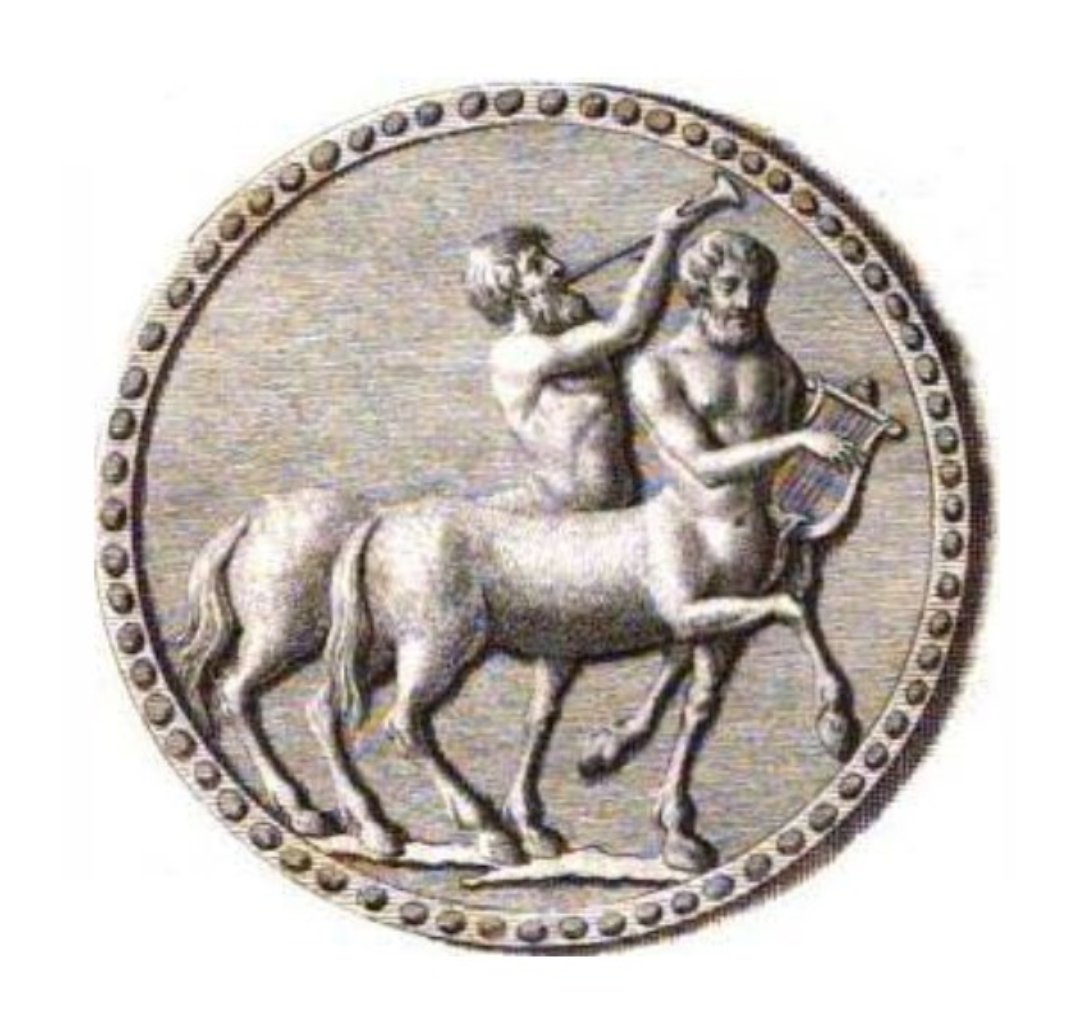
Published by Centaurus Press · Universitas Scholarium · All rights reserved.