

Abecedaria Press · Memorising for Latin
Part Eighteen
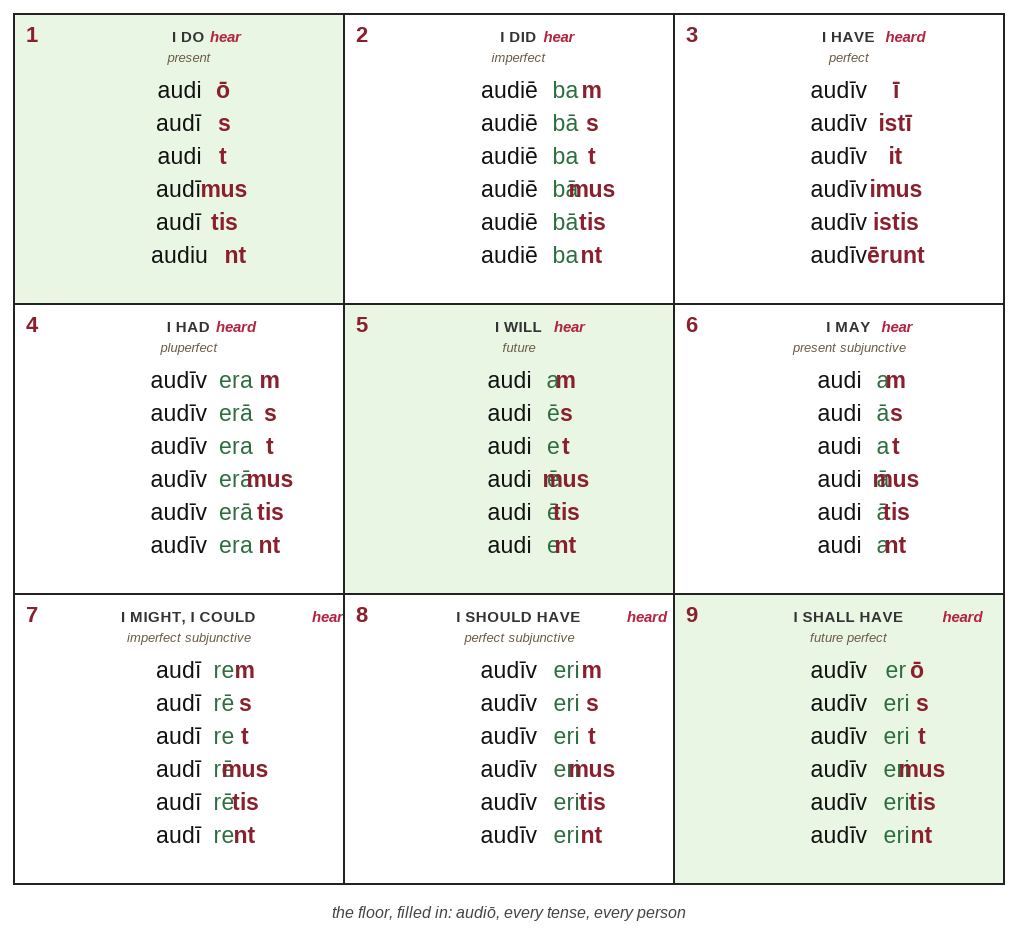
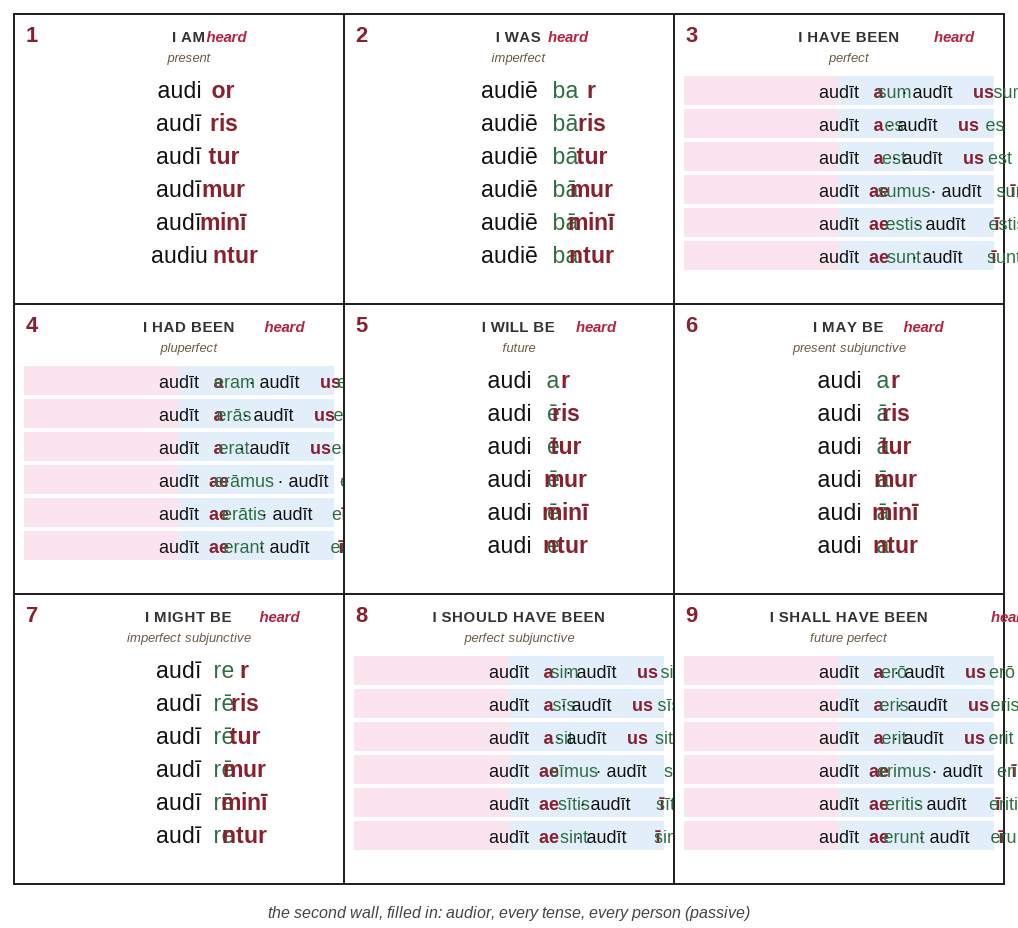
Audiō goes into the same squares, with the same six endings in every square.
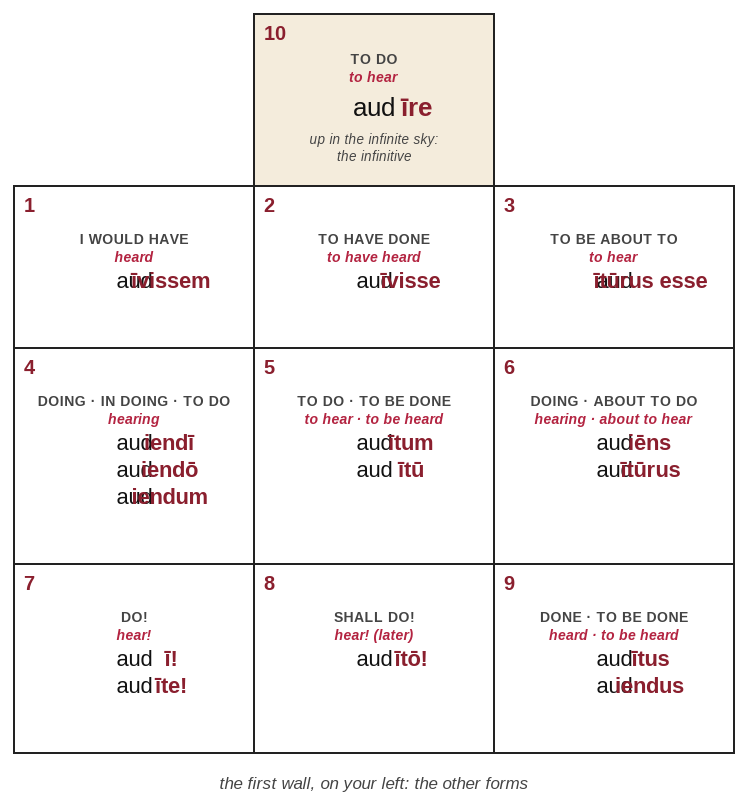
The dictionary gives four forms: audiō, audīre, audīvī, audītum:
The infinitive in square 10 ends in -īre, with a long ī. That is the mark of the fourth conjugation.
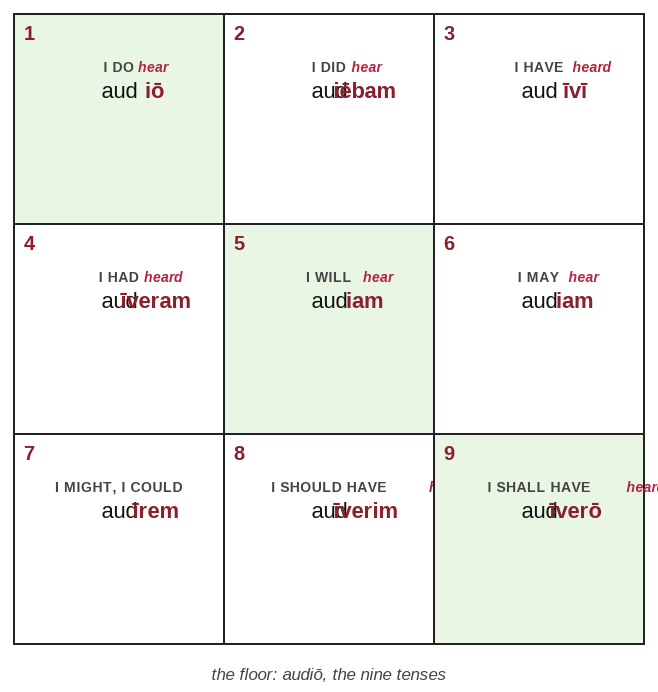
Audiō has two faces. Before a consonant, its ī is long: audīs, audīmus, audītis, audīre, audīrem, audī!. Before another vowel, it is a short i: audiō, audiunt, audiēbam, audiam.
Things to notice:
The passive infinitive in square 20 is audīrī, to be heard. On the second wall, pink is what a woman says and blue what a man says: audīta sum, I have been heard (a woman); audītus sum (a man).
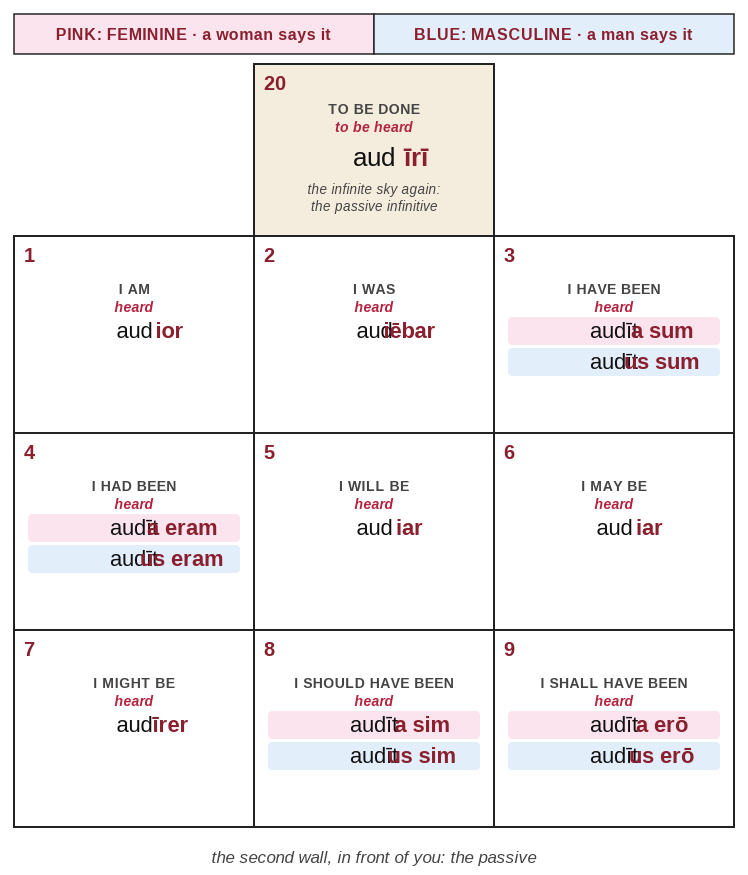
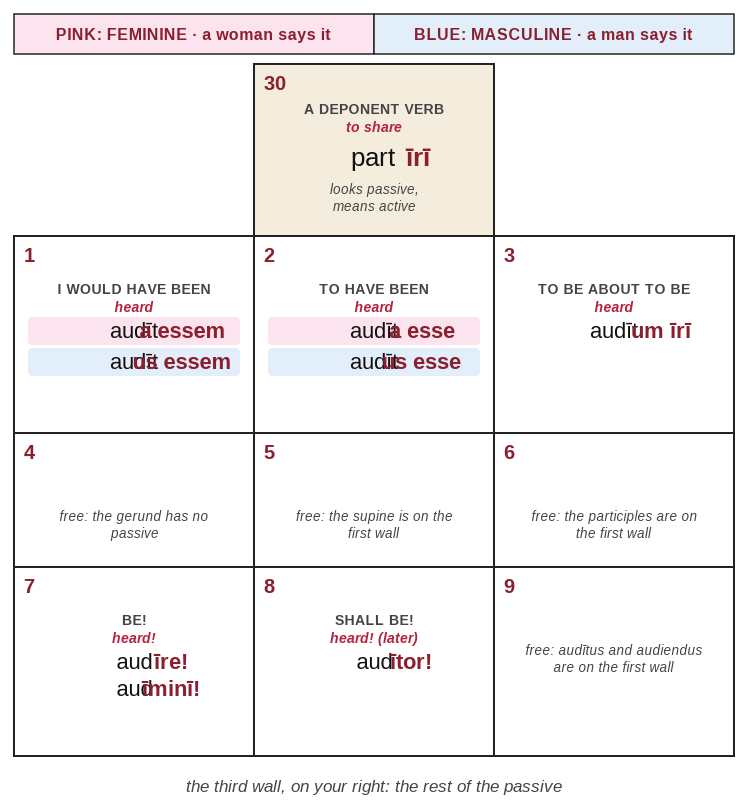
Audīta essem or audītus essem in square 1, audīta esse or audītus esse in square 2, audītum īrī in square 3, audīre! and audīminī! in square 7, audītor! in square 8.
On the ceiling, in square 30: a deponent of the fourth conjugation, partior, partīrī, partītus sum, I share, I divide. English has kept it in partition.
An audience is those who hear; an audition is a hearing; what can be heard is audible; and an audit was once a hearing of the accounts, read aloud.

Memorising for Latin — Book Three: Verbs · Evan Millner · Published by Abecedaria Press